

BigStep's Talent, Enablement & Advisory practice exists because AI capability is often easier to buy than it is to hire.
We place Senior AI Engineers within your team who can start contributing from week one. We also help your existing engineers build the same skills through structured programmes and advise you on the approach that makes the most sense for your roadmap.
Teams We've Built For








































- Valcre
What We Do
Three ways to build AI capability, in a single one practice offering.
AI Engineering Talent — Engineers, FDEs & Pods
Senior AI engineers who work inside your team, instead of alongside it.
Know More about AI Engineering Talent — Engineers, FDEs & PodsAI Training & Capability Enablement
Your engineers working on your own codebase, to our standards
Know More about AI Training & Capability EnablementAI Strategy, Governance & Advisory
We guide you on where to invest, how to govern it, and what the regulator will ask.
Know More about AI Strategy, Governance & Advisory
How do you know which BigStep offering you require?
If you already have a product that is built or ready-to-be-deployed, the next logical question is — who will keep it running?
That is where the Talent, Enablement & Advisory practice by BigStep comes in. Some clients keep one or two of our engineers on the team, while others have us train their own team to take over.
Here is what we recommend:
- If you need the capability ASAP and cannot hire for it, start with an embedded engineer; our AI Engineering Talent offering.
- If you already have a team but you need to equip them with the right skills, start with AI Training & Capability Enablement.
- If you are still figuring out what you need to build, explore our AI advisory offering. It is a practical way to avoid spending time and money on the wrong thing.
You are probably here because one of these is true for you.
We all know how difficult it is to hire the right talent at the right time.
A senior AI engineer demands anywhere between USD 180K – USD 400K with a 2–3 months hiring cycle.
Demand always almost outruns supply by 3–4X, if not more. This is a real-life constraint that we must build around and is almost never solvable in real-time.
We have had an AI engineer requisition open for 4 months.
Somebody built it. Now somebody has to keep it running, and it is not going to be the people who built it.
We want this capability in-house. We do not want to rent it forever.
The board has asked for an AI strategy and I do not want to hand them a deck that is not implementable.
The thinking that you need to do next
If any of the above holds true, you need to evaluate either of these 3 scenarios: whether the capability sits with us, with your team, or with someone you have not hired yet. An Embedded Engineer is the fastest way to start shipping.
A build engagement eventually brings up the same question: who keeps it running? Most teams answer that by keeping one of our engineers on, or by having us train the people who take over — whatever you're comfortable with. Our advisory helps you make that decision before you commit to either.
How we work with your team
You interview them
You meet the engineer before you commit, using your own evaluation process and questions, with a complete flexibility to say no if they are not the right fit. Nobody joins your team without your team agreeing to it, no matter how many you interview.
Time zone friendliness
Our engineers work in your timezone and are available during your working hours for ease of working. They will work around your standups, sprint cycles, and tools, so they fit naturally into the way that your team already works.
Your systems, your standards & your stand-up
An embedded engineer works inside your tooling, repository, review process, and ticketing system, with your engineering lead directing their work on a day to day basis, just like everyone else. Everything they write belongs to you from the first commit and more.
You control what we access
Access is handled through your identity provider, with named engineers getting access only when they need it, and you can revoke that access at any time. MFA and managed devices are required throughout, and we DO NOT keep local copies of your data, ever.
What if an engineer leaves the team?
The attrition is completely ours to manage, not yours. If a named engineer moves on, we provide a named replacement and a paired handover at our cost, with the notice period written into the contract already, rather than something that you discover later.
How the engagement comes to a close
Every engagement has a clear exit, with the notice period agreed upfront between both sides. An embedded engagement ends with a written runbook, documented handover, and a support window post engagement. An enablement programme ends with all details in your hands, licensed for your team to run again, on your own.
Our compliance rulebook
Your security team gets the same information they would expect during an audit, including our current penetration test report, completed security questionnaire, and an access review they control. We also provide our subprocessor list, data-handling statement, insurance summary, and standard DPA.
Compare pricing in real-time. Free of cost.
Tell us which roles you are trying to fill and what work you need done. We compare the cost of hiring, embedding, and using a managed pod over 12 and 24 months for you. The pricing is based on what each option actually costs and how long it takes to get to a business-ready working system.
What the Work Looks Like
Three projects from the services above, with the problem each one started from and what changed.
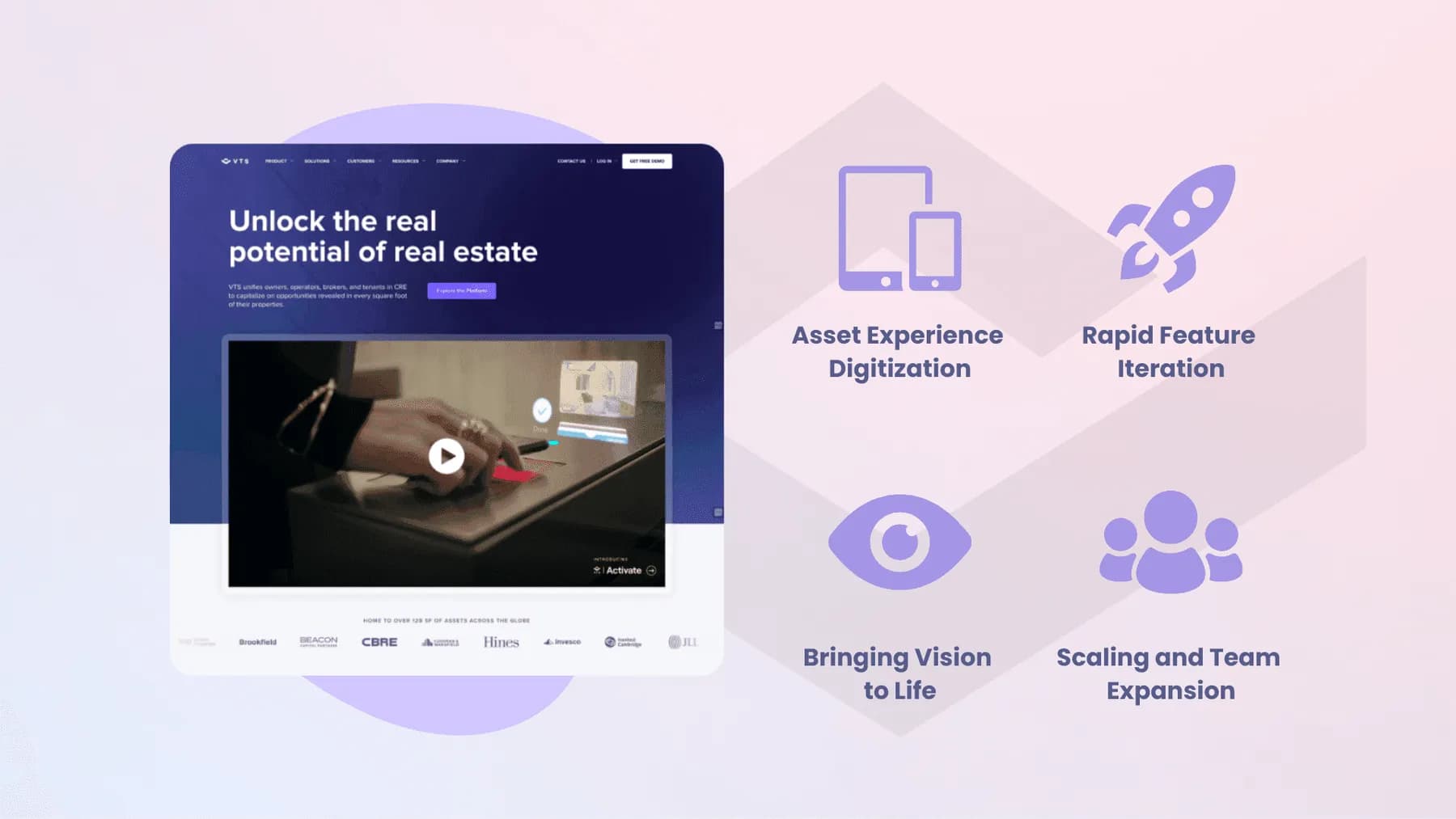 AI Engineering · United States
VTS
VTS Rise · Real Estate, PropTechVTS Rise is a property operations and tenant experience platform, that digitizes the entire asset experience, for landlords. It enables asset and property managers to power their portfolio-wide operations and provides a premium experience to residents, building operators, and visitors.Read the Full Case Study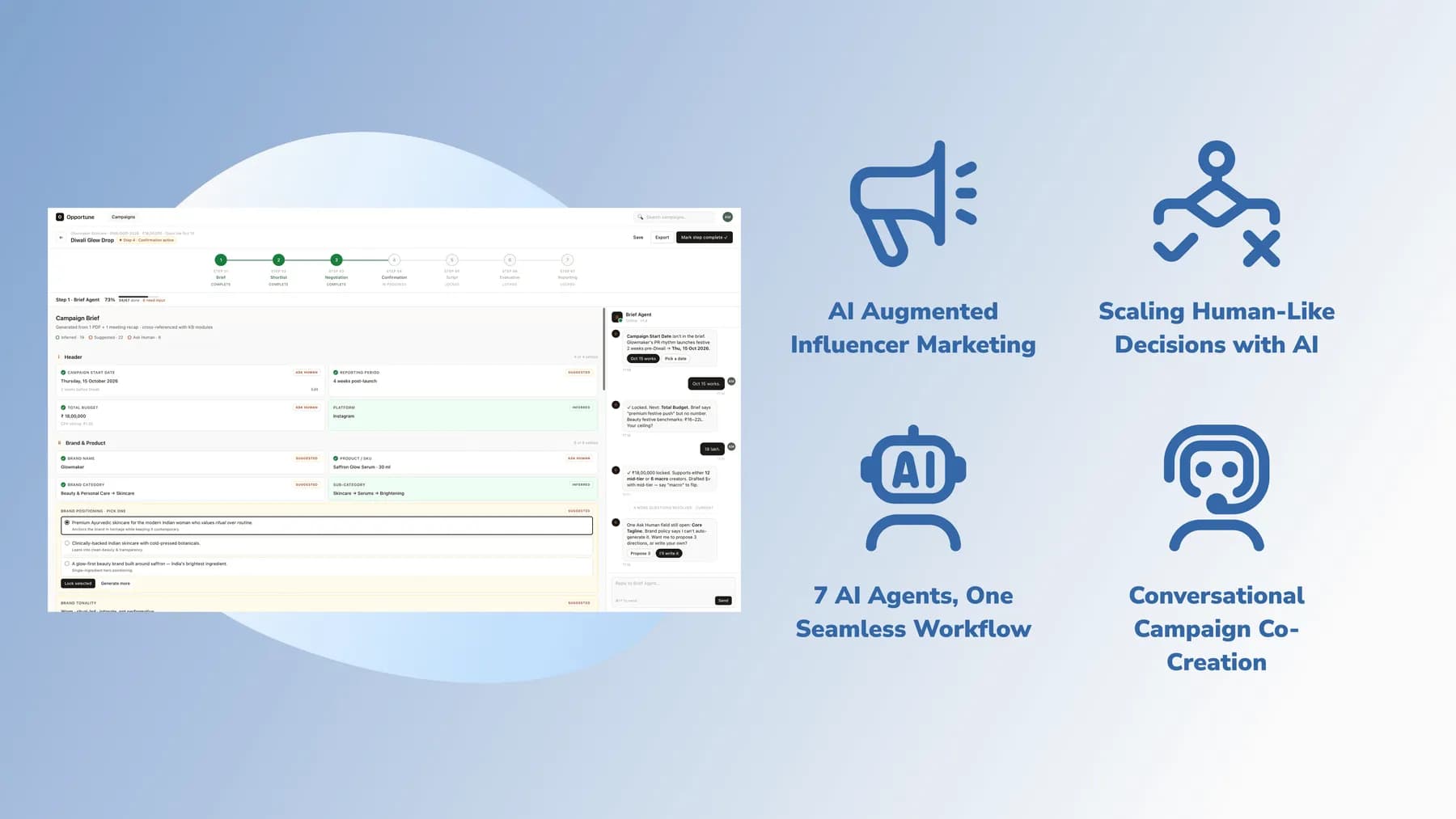 AI Engineering · India
Multi Agents Platform for Influencer Marketing Agency
AdvertisingWe built a system that shifts automation from rule-based logic to AI agents capable of handling subjective decisions, combining LangGraph orchestration, Claude models, and vector memory to not just automate workflows, but scale human judgment.Read the Full Case Study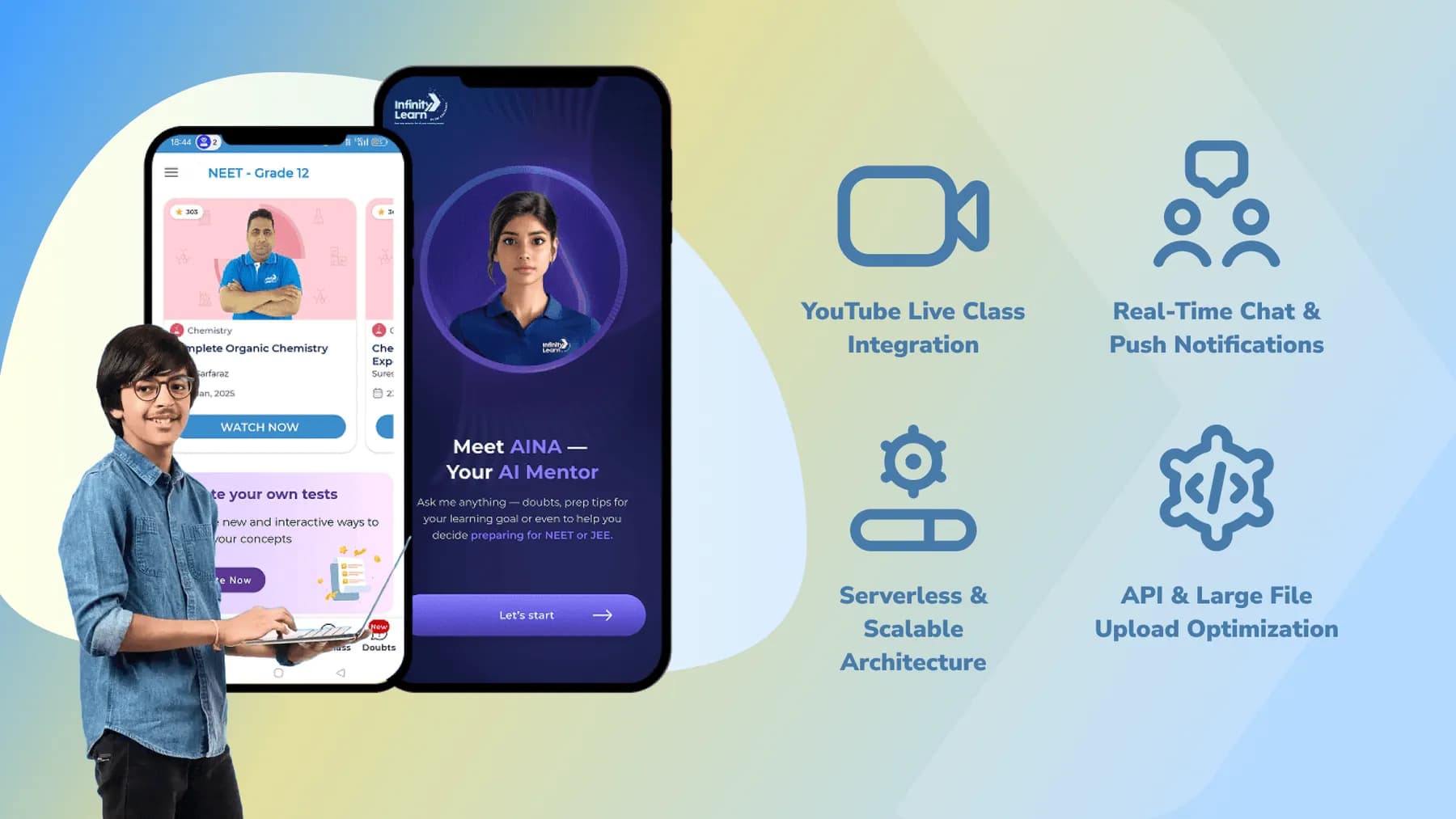 Software Engineering · India
Infinity Learn Live Learning Stack
Infinity Learn · EdTechWe built a scalable, serverless live learning infrastructure for Infinity Learn, enabling YouTube-powered live classes, real-time chat, and seamless notifications while optimizing costs and performance for millions of learners across India.Read the Full Case Study
Fair questions
Book a Free SessionAn embedded engineer joins your team and starts shipping from week one, working inside your tools and reporting to your engineering lead. That's AI Engineering Talent. Training, through the AI Practitioner Programme, works the other way: your own engineers build on your own codebase until they reach the same standard, so the capability stays in-house permanently instead of renting it. Most clients pick one to start with, based on how fast they need the work done versus how much they want to own the skill afterward.
If you already know what you're building and just need it staffed, start with an embedded engineer. If you have a team but they need the right skills, start with AI Training & Capability Enablement. If you're still working out what to build at all, BigStep's AI Strategy, Governance & Advisory offering exists so you're not spending time and money figuring that out the expensive way, through a build that turns out to be the wrong one.
A senior AI engineer typically costs between $180K and $400K to hire directly, with a hiring cycle that runs two to three months while demand for that talent outruns supply three to four times over. BigStep runs the comparison for you, free: tell them which roles you're trying to fill, and you get back what hiring, embedding, or a managed pod would actually cost over 12 and 24 months, based on how long each path takes to reach a working system.
BigStep's core enablement offering, the AI Practitioner Programme, leaves you with a team that can build AI features on your own codebase to BigStep's standards, plus a validated pipeline of internal AI use cases you can keep working through after it ends. It runs four to six weeks. Exactly what you leave with depends on the specific programme, but that's the baseline for the most common one.
Let's have a conversation
Get ninety minutes with a Senior Engineer and one of our founders, focused purely on the capability you are actually missing.
This is NOT a discovery call.
- Time investment
- 90 Minutes
- What you get
- An honest view of whether you should hire, embed, or enable, what each option would cost over two years, and a two-page written summary.