

BigStep's AI Platforms & Infrastructure practice makes AI easier to operate, control, and manage at scale. These three services help you address what an AI system generally needs after it has been built by your team. Building AI is a project, but running it is an ongoing operating cost, and this practice helps you manage that cost over time.
Teams We've Built For








































- Valcre
What We Do
Three services present in a single one practice offering, and delivered by one team.
AI Platform Partnerships & Professional Services
We bring deep expertise on the AI platform you have already chosen, helping you get more from it.
Know More about AI Platform Partnerships & Professional ServicesAI Infrastructure & LLMOps
The infrastructure your AI runs on, built to be fast, cost-effective, private, and easy to operate.
Know More about AI Infrastructure & LLMOpsData Engineering for AI
The data layer underneath your AI, built for retrieval and designed around AI workloads rather than traditional reporting.
Know More about Data Engineering for AI
How do you know which BigStep offering you need?
If you already have AI in place, the next question is usually what is holding it back. Is the platform limiting what you can do, is the infrastructure costing more than it should, or is the data underneath not ready for AI?
This is where the AI Platforms & Infrastructure practice by BigStep comes in. Some of our customers need help getting more from the platform they have already chosen, while others need to bring down infrastructure costs or get their data ready for AI workloads.
Here is what we recommend to get the most out of what we offer:
- If you already have an AI platform but need help getting more from it, start with AI Platform Partnerships & Professional Services.
- If your AI is running but infrastructure costs, performance, privacy, or day-to-day operations are becoming a problem, start with AI Infrastructure & LLMOps.
- If your AI needs better data for retrieval and other AI workloads, start with Data Engineering for AI.
You are probably here because one of these is true for you.
Most companies running AI in production do not have someone whose full-time job is managing the AI platform.
It is usually one responsibility amongst many, which makes it easy for costs, infrastructure, and data issues to get overlooked often.
We committed to a platform to get a preferential rate, and we have never had time to use most of what we bought.
Our inference bill has become a line item someone asks about every month.
Legal will not let this data leave our network, so half the roadmap is blocked.
The model is fine. The answers are wrong because the data underneath is wrong.
The thinking that you need to do next
If any of the above holds true, the next question is where to start. You can look at either the platform you have already chosen, the infrastructure it runs on, or the data your AI depends on. A platform decision affects the infrastructure and data underneath it, so it is worth understanding the cost and effort before you commit. If the platform is already in place but your inference costs are too high, the problem may be in how the AI is running rather than which model you are using. And if the model is working but the answers are still wrong, the data underneath is often where you need to look first.
The goal is to make AI easier to run and manage over time. Where an ongoing managed service makes sense, we will say so, and where your team should own it, we will say that too.
Find out what your AI actually costs to run. Free. We get back in three working days.
Your own team can work out what you are spending now — by taking a look at the billing console. A spreadsheet may not be able to tell you what the same workload would have costed had it been self-hosted — at your token volume, latency target, and your concurrency.
All you need to do is to send us your last month's token and GPU spend.
You get three costed options back from us — your current stack tuned, a different model mix, and self-hosted at your volume — with the three biggest levers named for you.
The timeline
Your estimate is back within three working days, and we can be on a call inside a week.
No going back on choices
We estimate what your current stack costs. We do not re-open your platform choice unless you ask us to.
Our next steps
Before we initiate anything, a mutual NDA gets signed between us. You do not need to send a raw bill — approximate figures work well, and our one-page redaction guide will tell you the four fields we need and how to strip everything else. We will also delete the file on your request.
What the Work Looks Like
Three projects from the services above, with the problem each one started from and what changed.
 AI Platforms & Infrastructure · United States
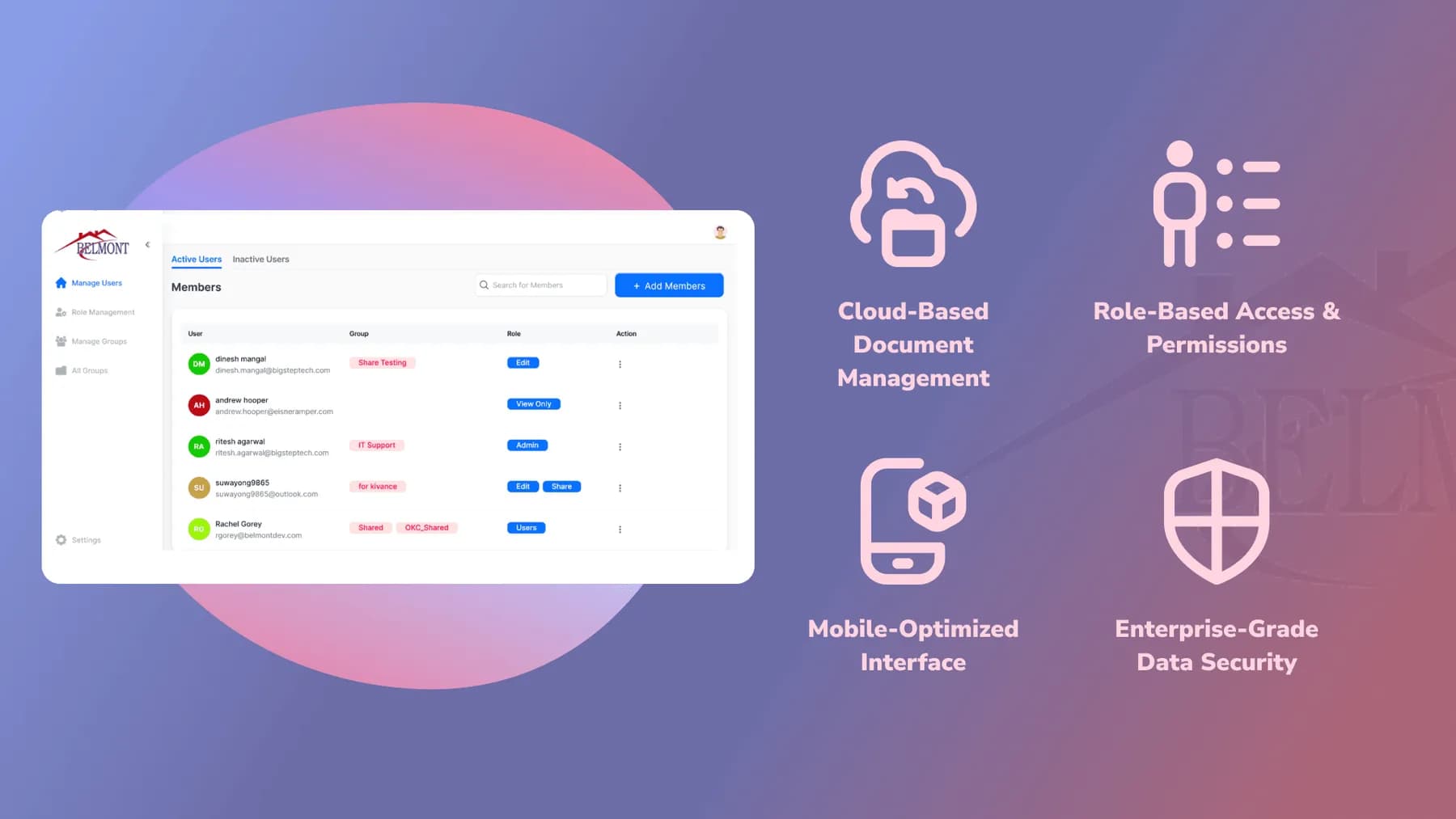
Secure Cloud DMS Stack
PropTechWe transformed a legacy on‑prem shared drive into a secure, cloud‑based document management system with granular roles, rich collaboration, and seamless access across locations for a fast‑growing PropTech leader.Read the Full Case Study AI Platforms & Infrastructure · New Zealand
Fine-Tuning a Sovereign LLM for an AI Agent Platform
Confidential ClientThe whole product ran on someone else’s frontier-model API, so a change in that provider’s price, speed or behaviour became a change in the product. We fine-tuned an open-weight model (Qwen3) and hosted it ourselves. Around it we set up a versioned model registry, a data flywheel that feeds real usage back into training, and live evaluation to show how each version performs.Read the Full Case Study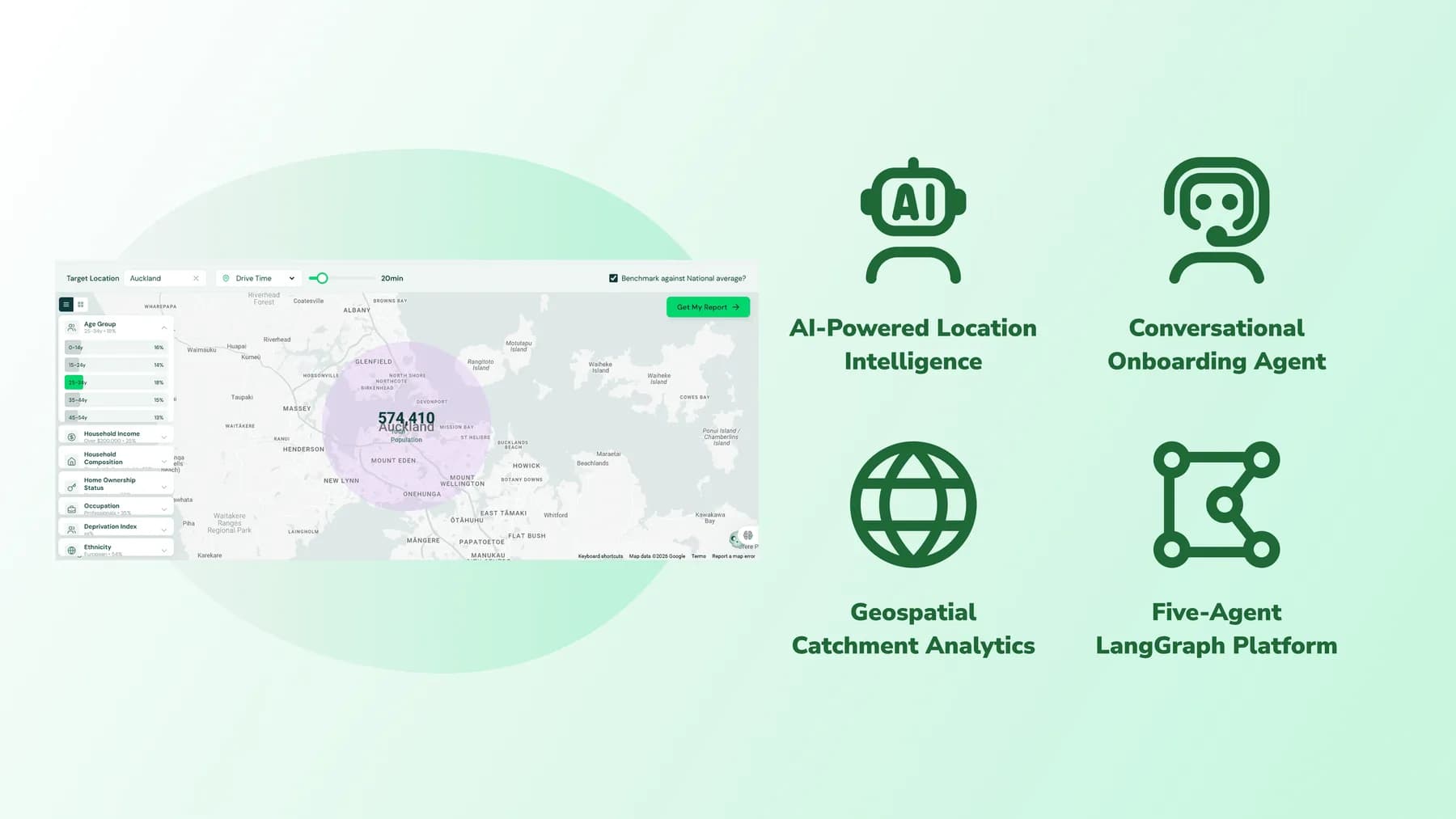 AI Engineering · New Zealand
A LangGraph Platform for AI-Powered Location Intelligence
MarketingWe built five production AI workflows on a unified LangGraph + Gemini stack, improving speed with early-return results and URL-level caching. The system supports resumable conversations, enforces governance within AI nodes, uses optimized multi-layer storage, and ensures reliability through schema-validated outputs—all accelerated by reusing Reach’s existing AI framework.Read the Full Case Study
Fair questions
Book a Free SessionBuilding AI is typically a one-time engineering effort: a model gets integrated, a feature ships, a prototype goes live. Running it is a different, ongoing problem: the platform costs money every month whether or not you're getting full value from it, the infrastructure underneath has to stay fast, private, and affordable at scale, and the data feeding the system has to stay accurate as it grows. Most teams budget for the first problem and get surprised by the second. BigStep's AI Platforms & Infrastructure practice is built around that second problem specifically, three services under one team covering the platform, the infrastructure, and the data layer, so running AI gets managed down the same way building it got planned for.
Because picking the platform is actually not the hard part, getting full value out of it, really is. Most teams commit to a platform and then don't have anyone whose full-time job is squeezing value from it, so you end up paying for features you're not using or discovering the platform can't do something six months in. BigStep's AI Platform Partnerships & Professional Services offering starts with a Platform Fit Assessment: a clear picture of what you're paying for, what you're actually using, and what it would cost to switch if the platform's wrong for where you're headed.
LLMOps is the discipline of keeping an AI system fast, affordable, private, and easy to operate after launch: the operational layer most teams don't build until something breaks. If your inference bill has become a line item someone asks about every month, or performance and privacy are becoming a problem, that's what BigStep's AI Infrastructure & LLMOps offering is built to fix, starting with an Inference Cost Teardown that shows exactly where the spend is going.
Because a model can be working exactly as designed and still give wrong answers if the data it's retrieving from is incomplete, poorly structured, or not built for AI in the first place. An inference bill you can't explain is often a sign the real problem is upstream, in the data and retrieval layer, not the model. BigStep's Data Engineering for AI offering starts with a Data Readiness Audit: an inventory of your data, a view of its quality, and a costed out roadmap for closing the gaps.
There's no way to get this from your own billing console, since it only shows what you're spending now, not what a different model mix or a self-hosted setup would cost at your volume, latency target, and concurrency. That number only comes from someone who's actually stood that configuration up before. BigStep runs this as a free teardown: send over last month's token and GPU spend under a same-day mutual NDA, and you get three costed options back within three working days, your current stack tuned, a different model mix, and self-hosted at your volume, with the biggest cost levers named in writing.
Yes. When data residency, a regulator, or an internal policy means nothing can leave your network, AI can still be built and run entirely inside your own environment rather than through a hosted API. BigStep handles this through a Sovereign AI Readiness Assessment and a Private AI Deployment Sprint: deployment architecture, control evidence, and an open-weight model running in your own VPC or on-premise, with benchmarked throughput and cost instead of a black-box API you don't fully control.
Let's have a conversation
Ninety minutes with a senior AI engineer and an architect, working on your actual problem. This is not a discovery call or a demo.
Rather, you get a clear view of where your cost, latency, privacy, or governance constraints are coming from, what it would take to address each one, and a two-page well-documented summary.