

AI EngineeringAI Quality Engineering & Evals
Know When Your AI Gets Worse, Before Your Customers Do
Your AI is already in front of users, and sooner or later someone will ask how you know it’s still working. We build the evaluation harnesses, agent tests, red teaming, guardrails and production monitoring that answer that, so you see a drop in quality before a customer does.
Start with an AI Reliability Audit · 2 weeks · $18K–$30KTeams We've Built For







































- Valcre
Where You Start Depends on Where Your AI Is
Most teams come to us before launch, after launch, with an agent that keeps failing, or when someone asks for proof. Each needs a different first step.
You’re about to launch with no way to test it
Without a test set, “is it better?” is a matter of opinion, and every prompt or model change is a guess. Our Eval Harness Sprint programme builds the test set and graders, and scores every change in your build pipeline.
It’s live, and nobody is watching quality
Your monitoring tells you when something is down, but not when accuracy slips a few points a week until a customer notices first. Our AI Reliability Audit programme gives you a scored report and a ranked fix plan, and continuous evaluation then catches a drop within hours. The free Agent Reliability Scorecard is a lighter first step.
An agent keeps failing and you can’t see where
It rarely fails on the last step, so the final answer doesn’t show you the cause, and a failure is hard to repeat once it has happened. We test the whole path step by step and replay a failure exactly as it happened.
You expect someone to try to break it, or to ask you for proof
The AI may make things up, get talked into ignoring its instructions or leak something it shouldn’t, and a normal bug report wasn’t built for that. Our AI Red Team Sprint programme finds the weaknesses first and guardrails catch what’s left, while audit readiness prepares model cards, decision trails and evidence for the EU AI Act and ISO 42001.
We know because a few of our own agentic builds degraded after launch.
What We Do
Knowing your AI works takes more than a test suite. Some of the work is measuring it, with evaluations, agent tests and monitoring in production. The rest is protecting it and proving it, with red teaming, guardrails and audit evidence.
| Capability | What it covers | Where you start |
|---|---|---|
| AI evaluation engineering | You need a way to grade an AI answer the same way every time instead of eyeballing it. We build the golden datasets, automated graders and scoring that runs inside your build pipeline on every change, so a regression gets caught before it reaches a user. | Eval Harness Sprint: 4 weeks, $35K–$55K. |
| Agent testing & reliability engineering | Your agent doesn't fail on the last step, it fails somewhere in the ten steps before it. We test the whole path it takes, not just what it hands back, with simulation environments and regression suites that let you replay a failure exactly. | AI Reliability Audit: 2 weeks, $18K–$30K. |
| AI red teaming & adversarial testing | Someone's going to try to break your AI: a prompt injection, a jailbreak attempt, a way to pull data it shouldn't hand over. Better that's us, on a schedule you set. Available as its own engagement if that's all you need right now. | AI Red Team Sprint: 2–3 weeks, $25K–$45K. |
| Guardrails & output validation | You can't review every AI output by hand, so we build the layer that does it for you: filtering what goes in and out, catching a hallucination before it ships, enforcing citations, redacting anything sensitive, and handing off to a person when confidence drops too low. | Eval Harness Sprint: 4 weeks, $35K–$55K. |
| Continuous production evaluation & observability | Once your AI is live, you need to know it's still working without waiting for someone to complain. We watch quality in production continuously, so degradation shows up on a dashboard in hours, not in your support queue weeks later. | Managed Services: from $5K a month. |
| AI-accelerated software QA | Your QA team is probably still rewriting the same brittle test scripts every release. We modernise that: AI-generated test suites, self-healing automation that doesn't break over a minor UI change, and visual regression that catches what a script would miss. | AI Reliability Audit: 2 weeks, $18K–$30K. |
| AI audit & compliance readiness | Sooner or later, your risk team, an auditor or a regulator is going to ask you to prove your AI behaves the way you say it does. We build that proof in advance: model cards, decision trails, bias testing, EU AI Act and ISO 42001 readiness. | AI Reliability Audit: 2 weeks, $18K–$30K. |
Our AI Quality engineering service covers testing and measuring AI that already exists. If the AI feature itself still has to be built, that's AI Product Engineering, and if it's an agent doing work inside your organisation, that's Agents & Agentic Workflows.
How We Test an AI System
Six steps. Which ones you need depends on what’s already in place, and we’ll say so when one isn’t needed.
01 Agree what a good answer looks like
Two different answers can both be reasonable, so we write down what good means for your system, in a form a program can score.
Includes:- a golden dataset from your real inputs
- automated graders
- a score for each metric
02 Test the whole path
For an agent, the failure is usually somewhere before the final answer, so we test each step it took.
Includes:- simulation environments
- regression suites
- exact replay of a failure
03 Run the tests on every change
Scoring runs in your build pipeline, so each change to a prompt, model or tool is scored against the baseline before a user sees it.
Includes:- a baseline for every metric
- regressions caught in the pipeline
04 Attack it, then add guardrails
We try prompt injection, jailbreaks, data leakage and tool misuse first, rank what we find and plan the fixes. Guardrails catch what’s left.
Includes:- findings ranked by severity
- input and output filtering
- citation checks
- handoff to a person when confidence is low
05 Watch it in production
Quality can slide without anything going down, so we watch it continuously and a drop shows up on a dashboard within hours.
Includes:- continuous evaluation of live behaviour
- a dashboard of your scores
06 Keep the evidence ready
Your risk team, an auditor or a regulator will eventually ask you to show how your AI behaves, so we assemble the evidence in advance.
Includes:- model cards
- decision trails
- bias testing
- EU AI Act and ISO 42001 readiness
If your AI is a prototype with a handful of users, a full harness is more than you need yet, and we’ll say so. If what you need is the AI built first, we’ll point you to the right service.
What We Build On
When you're deciding who will test your AI, the specific tools matter, so we name them. We work with Claude, Gemini and OpenAI models, plus open-weight models where self-hosting is the right answer, and we don't resell any of them. That matters most when the job is grading a model's output, because we have no stake in the result.
- Models and platforms
- Claude
- Gemini
- OpenAI models
- Open-weight models where self-hosting is the right answer
- Amazon Bedrock
- Google Vertex AI
- Orchestration and tool layers we test
- LangGraph
- Claude Agent SDK
- MCP servers
- Tracing and observability
- LangSmith
- Langfuse
- Arize
- Where it runs
- Your build pipeline
- Your cloud accounts
Partnerships
We hold Google Cloud and AWS partnerships. We're not a reseller for any model provider or framework vendor, which is why we can tell you when the cheaper model, or no extra testing at all, is the right answer.
What the Work Looks Like
Three projects from the services above, with the problem each one started from and what changed.
 AI Engineering · New Zealand
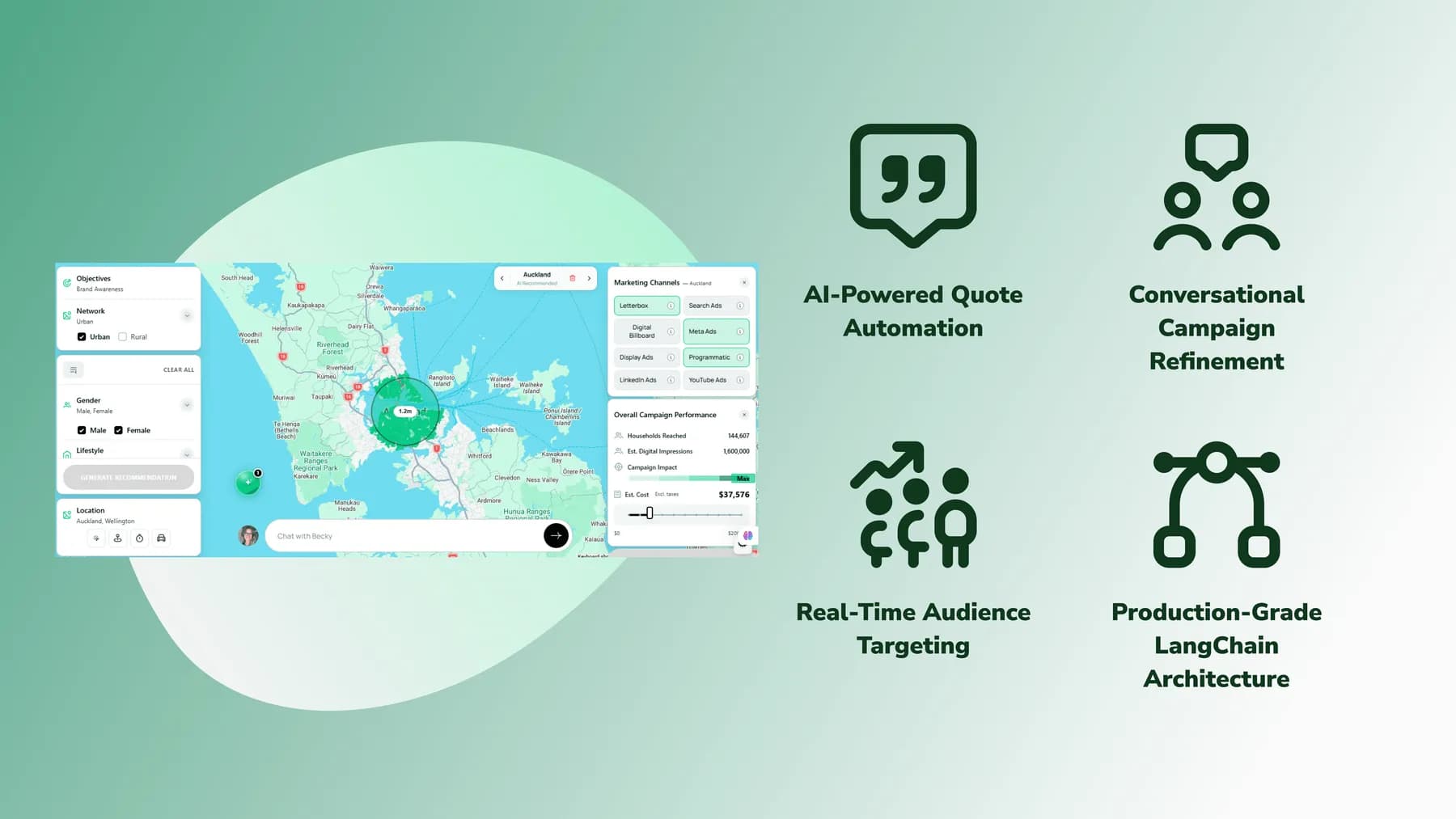
Building an AI Agent for advertisement Targeting & Campaign Planning
AdvertisementWe built a system that combines a fast 5-step LangGraph pipeline with a real-time conversational agent to turn raw inputs into structured, cached recommendations and let users refine them via chat. It uses layered memory, tool-driven updates, and strong validation with caching to ensure reliable, efficient results.Read the Full Case Study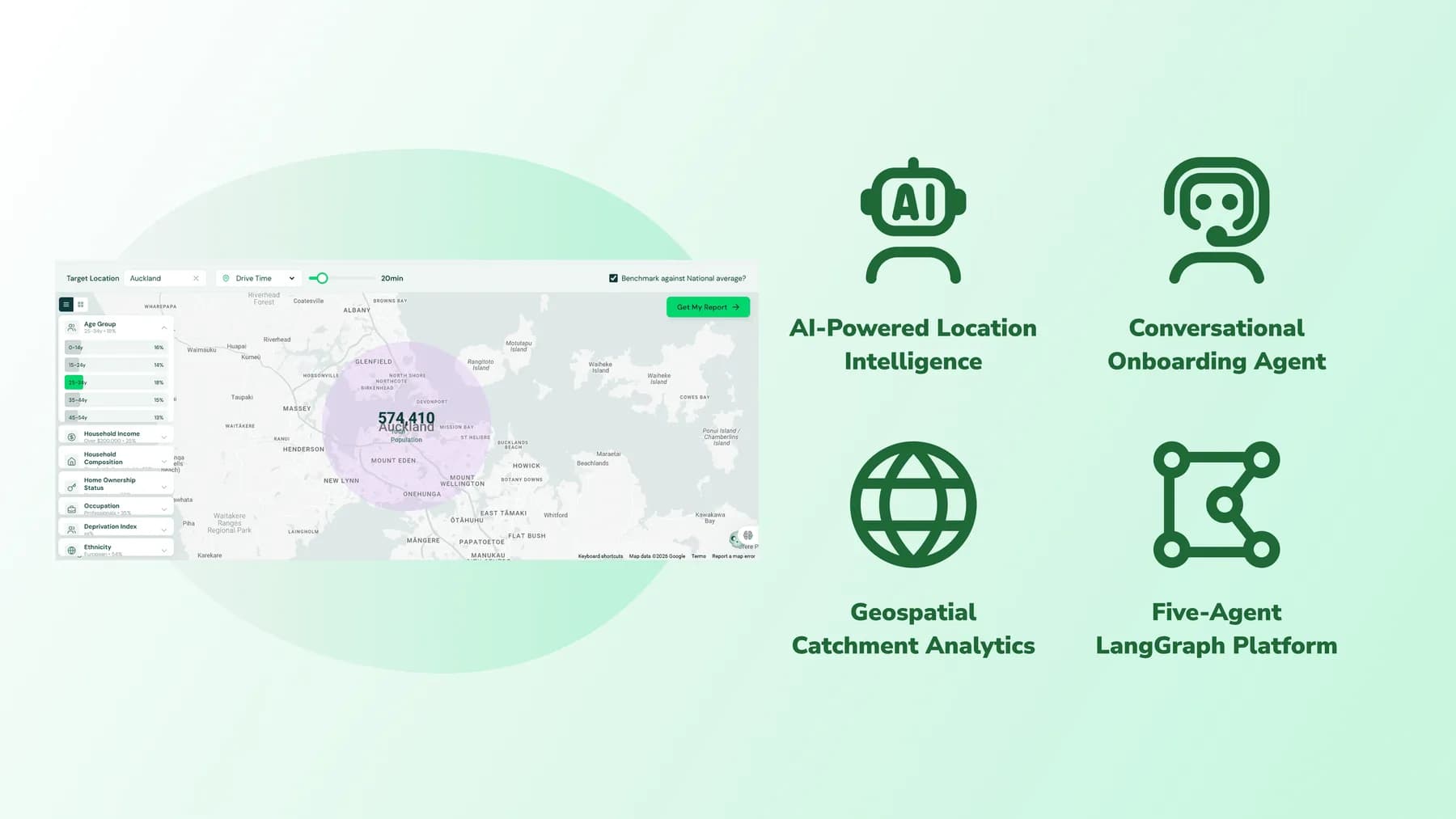 AI Engineering · New Zealand
A LangGraph Platform for AI-Powered Location Intelligence
MarketingWe built five production AI workflows on a unified LangGraph + Gemini stack, improving speed with early-return results and URL-level caching. The system supports resumable conversations, enforces governance within AI nodes, uses optimized multi-layer storage, and ensures reliability through schema-validated outputs—all accelerated by reusing Reach’s existing AI framework.Read the Full Case Study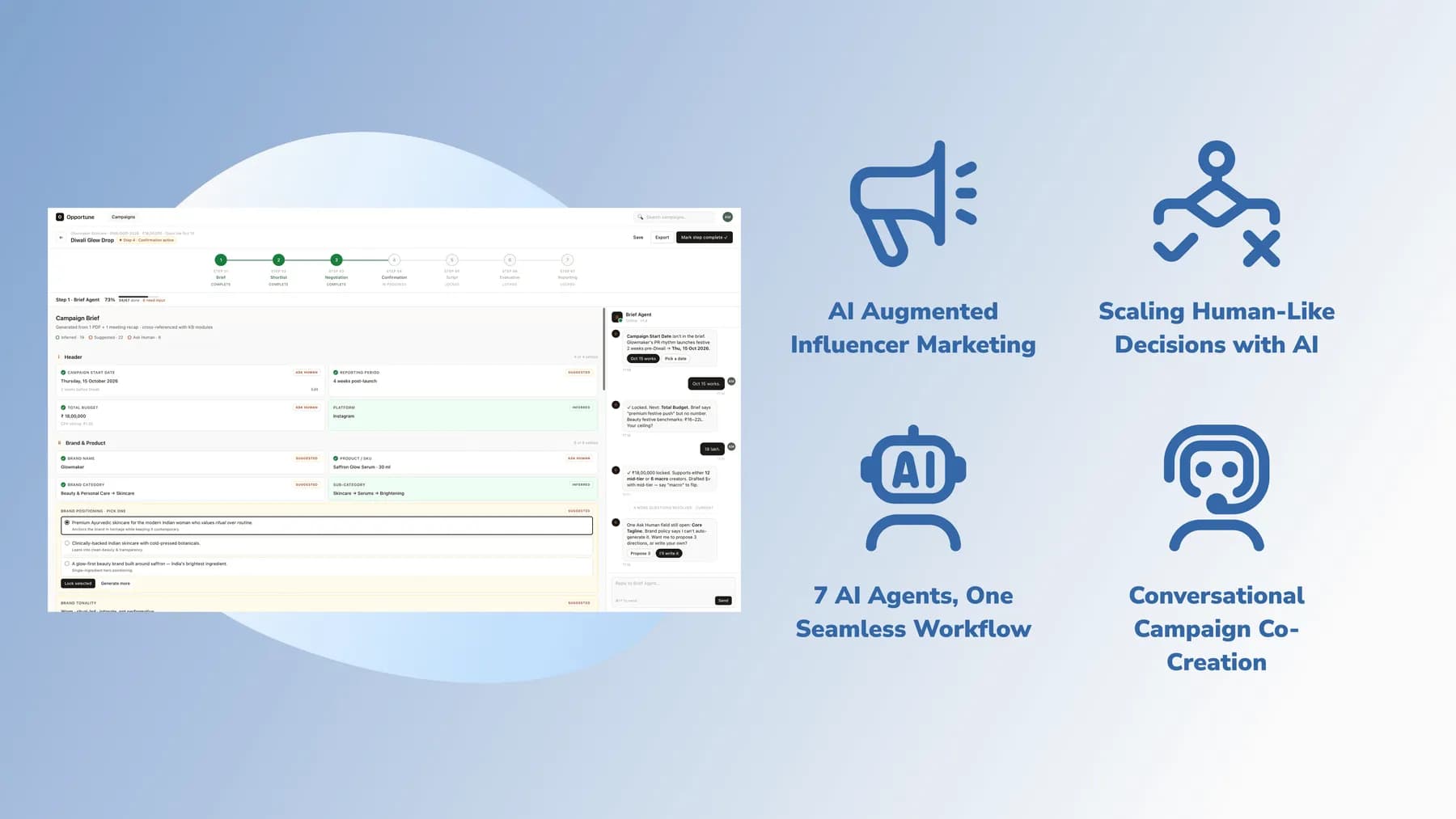 AI Engineering · India
Multi Agents Platform for Influencer Marketing Agency
AdvertisingWe built a system that shifts automation from rule-based logic to AI agents capable of handling subjective decisions, combining LangGraph orchestration, Claude models, and vector memory to not just automate workflows, but scale human judgment.Read the Full Case Study
Where This Service Is Most Applied
We test AI systems across industries, each with its own documents, terminology and risks. What counts as a wrong answer changes from one industry to the next, but the testing behind it follows the same principles.

Financial Services
- Underwriting Accuracy Testing
- Compliance Monitoring Checks
- Research Agent Testing

Healthcare
- Clinical Note Accuracy Testing
- Patient Data Leakage Testing
- Prior Authorisation Agent Testing

Real Estate & PropTech
- Lease Extraction Accuracy Testing
- Property Research Agent Testing
- Tenant-Facing Guardrails

Insurance
- Claims Triage Evaluation
- Fraud Detection Testing
- Voice Agent Quality Checks
Questions We Get Asked
It’s the work of proving your AI systems work, and keep working. That means evaluation harnesses, agent testing across the whole path an agent takes and not just its final answer, red teaming for how a system breaks, guardrails for hallucinations and unsafe output, and continuous production evaluation so you catch degradation before a customer does. BigStep offers this as its own service because a few of its own agentic builds looked solid in the demo and then got worse once real production traffic hit them.
Your existing QA checks deterministic features against a fixed spec with a pass or fail. AI outputs are probabilistic, so they’re graded against golden datasets and automated scorers instead of matched against one right answer. AI quality engineering also tests an attack surface your current QA process wasn’t built for: prompt injection, jailbreaks, data leakage and tool misuse. BigStep’s AI Reliability Audit applies this to a live system in two weeks and ends with a scored report and a ranked plan for what to fix first.
An evaluation harness is a set of test cases with agreed good answers, automated graders that score what your AI produces, and a way to run all of it every time something changes. It’s wired into your build pipeline, so a new prompt, model or tool gets a score against the baseline before it reaches a user. Without one, whether an AI change made things better is a matter of opinion. BigStep’s Eval Harness Sprint builds one in 4 weeks for $35K to $55K, running in your pipeline with a baseline score for every metric you track.
AI red teaming is deliberately attacking your own AI system to find out how it breaks before someone else does: prompt injection, jailbreak attempts, ways of pulling out data it shouldn’t hand over, and misuse of the tools it has access to. It ends with a report of findings ranked by severity and a plan to fix them. It can be a one-off if you want a point-in-time read without committing to an ongoing programme, or part of continuing evaluation work. BigStep offers it on its own as an AI Red Team Sprint, 2 to 3 weeks and $25K to $45K.
Not from the monitoring you already have. Uptime and error monitoring tell you when something is down, not when answers are slowly getting less accurate, a few points a week, until a customer notices before you do. You need to keep scoring what the AI actually produces in production against the standards you agreed up front, and put those scores on a dashboard so a drop shows up in hours instead of in your support queue weeks later. BigStep builds this as continuous production evaluation and observability, run as a managed service from $5K a month, and its free Agent Reliability Scorecard is a quick first check on where a live system stands today.
Generally, you’ll be asked to show how the system behaves, how its decisions can be traced, and whether it’s been tested for problems like bias, with documentation behind each of those. In practice that tends to mean model cards, decision trails, bias testing results and evaluation evidence, assembled before anyone asks for them instead of scrambled together afterwards. The exact requirements depend on the regulation and your use case, so check them with your legal or compliance team. BigStep builds that evidence and prepares AI systems for EU AI Act and ISO 42001 readiness, starting from a two-week AI Reliability Audit.
Often not yet. If the AI is an internal prototype with a few users and low stakes, a full harness costs more than the mistakes it would catch. It starts paying for itself when real users, real money or a regulator are involved, or when you change models and prompts often enough that you can’t re-check by hand. If you’re not sure which side you’re on, the free Agent Reliability Scorecard scores a live system in about an hour, and it’s fine for the result to be that you don’t need more yet.
Bring a Live AI System and We'll Score It
Your AI is already running, and you'd like to know where it stands. In two weeks, at a fixed price, you get a scored report on how reliable it is today and a ranked plan for what to fix first. If you'd rather start smaller, the Agent Reliability Scorecard is free and takes about an hour.