

Software EngineeringAI-Native SDLC Transformation
You already have the AI tools, now it’s time to change how you deliver
Giving engineers an AI coding tool doesn't change how work gets planned, reviewed and released, and that's where much of the time goes. We work through the tools, the review process and the measurement with your team, on your own codebase. We did it to our own engineers first.
Start with an SDLC AI Maturity Audit · 2 weeks · $15K–$28KTeams We've Built For






































- Valcre
Where You Start Depends on Where You Are
Most teams come to us at one of four points: after buying the licences, with a few engineers ahead of the rest, once everyone uses the tools, or when someone asks for proof. What you need is different at each one.
You’ve bought the licences and nothing looks different
Your engineers may have Claude Code, Cursor or Copilot while delivery speed stays where it was, you may not know which phase is losing the time, and buying more tools may not change that. Our SDLC AI Maturity Audit programme measures your four DORA numbers and audits each phase from planning to release, then gives you a prioritised roadmap and a costed tooling plan.
A few engineers use the tools well and the rest don’t
The pilot may have worked for the people who ran it, everyone else may be working their own way, and results may depend on who happens to be on the task. Our Claude Code Rollout Programme sets the tools up on your own codebase, and our Cohort AI-Native Engineering Programme teaches the practices on your real tickets.
Everyone uses them, and you can’t tell whether it’s helping
More code may be getting written while reviews, testing and releases pile up behind it, nobody may have set rules for what AI may change, and there may be no before-and-after to compare. Our free AI-Native Delivery Benchmark gives you a DORA baseline, and the rules for what AI may change and how its output is reviewed are scoped from the audit.
Someone is asking you for proof
A board, a CFO or a customer may want to know why output hasn’t moved, you may not have a baseline you can defend, and there may be no costed plan to show them. Our SDLC AI Maturity Audit puts both in writing, and the Cohort AI-Native Engineering Programme then measures the change against that baseline.
Measuring first is faster than buying more tools.
What We Do
Changing how a team builds software takes five kinds of work, and most teams need more than one of them. Here's what each covers.
| Capability | What it covers | Where you start |
|---|---|---|
| Finding where delivery loses time | Measure your four DORA numbers, survey your developers, and audit each phase from planning to release to see where AI can help and where it can't. You get a prioritised roadmap and a costed tooling plan. | SDLC AI Maturity Audit: 2 weeks, $15K–$28K. |
| Rolling out the tools | Choose and set up AI coding tools such as Claude Code, Cursor and GitHub Copilot on your own codebase, with the configuration, permissions and shared instructions that make them work in your repository. | Claude Code Rollout Programme: 6 weeks, $30K–$50K. |
| Changing engineering practices | Change how work is planned, written, reviewed and tested so engineers direct AI and check its output. The programme runs as a cohort on your real tickets, and results are measured against your own baseline. | Cohort AI-Native Engineering Programme: 8–12 weeks, $50K–$120K. |
| Governing AI-written code | Set the rules for what AI may change, review its output twice, scan for licence and provenance problems, and keep an audit trail your security and compliance teams can read. | Scoped from the SDLC AI Maturity Audit. |
| Measuring the effect | Track deployment frequency, lead time for change, change failure rate and time to restore before and after, so you can show leadership what changed and what didn't. | Free benchmark, or inside the audit. |
| Keeping it going | Ongoing support after the first rollout, so new engineers, new tools and new models don't slowly undo the practices you set up, with regular check-ins against your DORA numbers. | AI SDLC Managed Enablement: $8K–$25K a month. |
Our AI-Native SDLC Transformation service covers how your engineers build software. Building the product itself is Software & Application Development, and training leaders and other teams in AI is AI Training & Capability Enablement.
How We Work
How We Change How Your Team Builds
Here are the five things we work through. If your delivery is already close to where it should be, we'll say so and look for the constraint somewhere else.
01 Measure where you are first
We start with your four DORA numbers and a survey of your developers. It takes no access to your source code. It measures the system your engineers work in and says nothing about any individual engineer.
This includes: your four DORA numbers · a developer survey · a baseline you can compare against later
02 Find where AI can help and where it can't
We go through each phase of how you build, from planning to release, and find where time is lost. Some of it AI can change, and some of it, such as unclear requirements or a codebase no tool can read yet, it can't.
This decides: which phases to change first · which tools are worth buying · what to leave alone
03 Set up the tools and the rules on your codebase
We set up the tools in your repository and write the rules for what AI may change and how its output is reviewed. Everything is built in your own tooling and follows your standards.
This includes: tool configuration in your repository · shared instructions for the AI · double review of AI-written code · licence and provenance scanning
04 Teach the practices on real work
Engineers learn by doing their own tickets in the new way, with ours alongside. A cohort works through your real backlog, so what they learn is what they use on Monday.
This includes: working sessions on your own tickets · new habits for planning, review and testing · a shared way of working your team can teach on
05 Measure again and hand over
We measure the same four numbers again and compare them with your baseline. Then we leave you a playbook your own engineering leads can run.
This includes: before-and-after DORA numbers · what moved and what didn't · a playbook and a plan for what comes next
If you don't have an engineering team yet and need the product built, the right page is Software & Application Development, and we'll point you there.
What We Build On
When you're deciding who will help change how your engineers work, the specific tools matter, so we name them. These are the ones in use across our own engineering team.
- AI coding tools
- Claude Code
- Cursor
- GitHub Copilot
- Measurement
- DORA metrics: deployment frequency
- lead time for change
- change failure rate
- time to restore
- Review and governance
- Double review of AI-written code
- Licence and provenance scanning
- Audit trail
- Where it runs
- Your repository
- Your CI
- Your review process
What the Work Looks Like
Three projects from the services above, with the problem each one started from and what changed.
 Software Engineering · United States
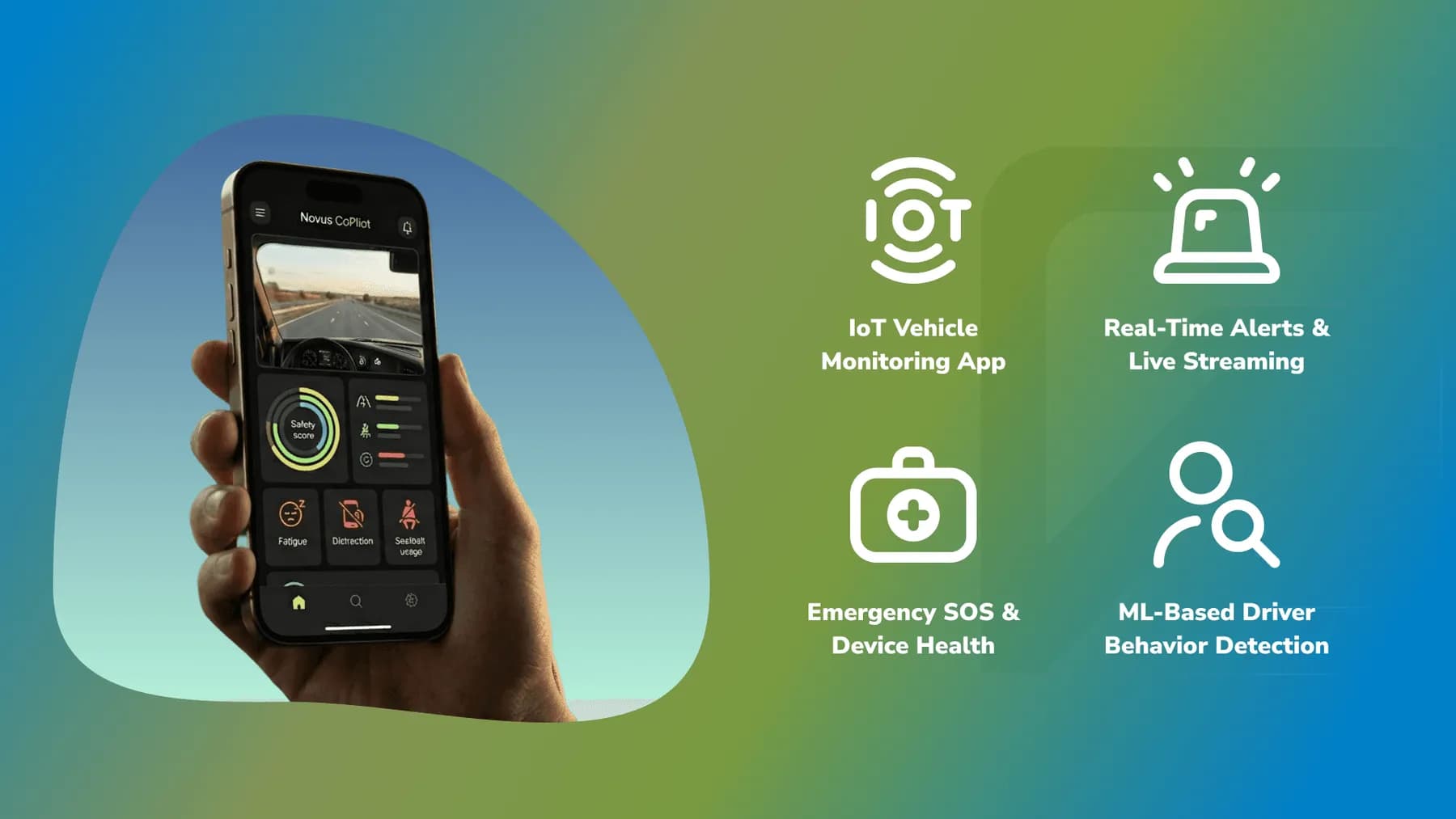
Smart CoPilot Safety Stack
Logistics, AutomationWe built a next‑gen IoT driving companion that brings together real-time risk alerts, live video streaming, and continuous device health monitoring to reduce accidents, cut fleet costs, and make every journey safer.Read the Full Case Study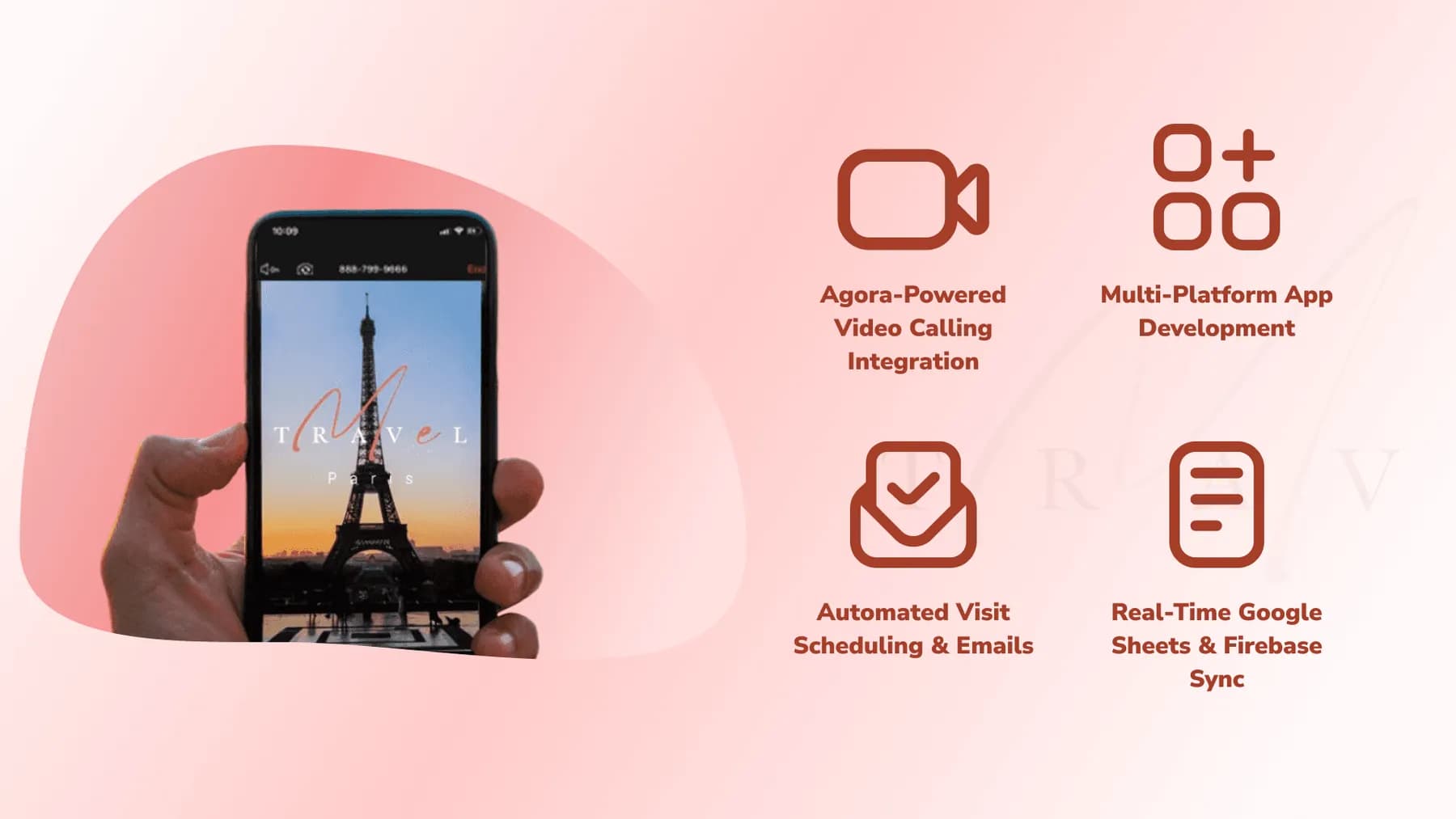 Software Engineering · France
Virtual Heritage Tour Stack – Agora‑Powered Travel Me Platform
Travel Me · Real‑Time Communication / Virtual TourismWe replaced generic Zoom calls with a fully branded, Agora‑powered virtual tour platform that lets guides host multi-party visits, automate scheduling and emails, and deliver high‑quality, real‑time Paris experiences to residents with limited mobility.Read the Full Case Study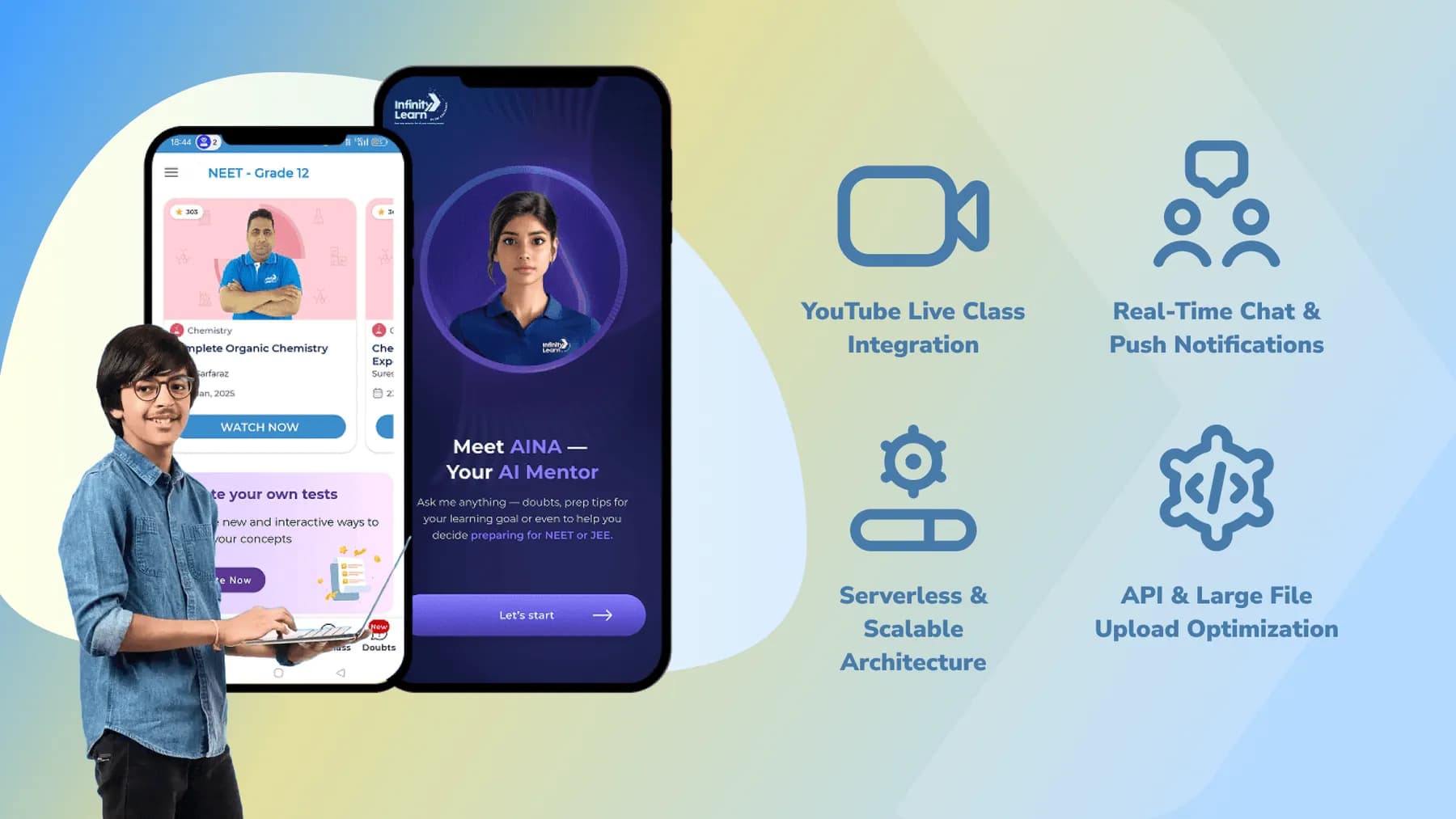 Software Engineering · India
Infinity Learn Live Learning Stack
Infinity Learn · EdTechWe built a scalable, serverless live learning infrastructure for Infinity Learn, enabling YouTube-powered live classes, real-time chat, and seamless notifications while optimizing costs and performance for millions of learners across India.Read the Full Case Study
Where This Service Is Most Applied
Every company that builds software has a delivery process, and what changes by industry is how much review, audit and record-keeping it needs.

Financial Services
- AI Code Approval Trails
- Rules for What AI May Change
- Double Review of AI Code

Healthcare
- Licence and Provenance Scanning
- Rules for Patient-Data Code
- Compliance-Readable Audit Trail

Insurance
- Legacy Codebase Readiness
- Phase-by-Phase SDLC Audit
- Claude Code Rollout on Older Systems
Fair Questions
An AI-native software development lifecycle uses AI at each step of building software, from planning and writing code to review, testing and release. It changes how work is planned, how AI-written code is reviewed and how delivery is measured, so the gain shows up in how fast and how reliably you ship. Our Cohort AI-Native Engineering Programme (8 to 12 weeks, $50K to $120K) does this on your real tickets and measures the result against your own baseline.
Writing code is only part of delivery. If review, testing and release stay as they were, faster coding can pile work up behind them. Google’s 2024 DORA research found AI adoption associated with slightly lower delivery throughput and stability, which shows that the tools alone don’t produce the gain. The change has to come from how the team works around them. Our SDLC AI Maturity Audit (2 weeks, $15K to $28K) finds which phase, from planning to release, is losing the time, and what AI can and can’t change there.
DORA metrics are four measures of software delivery: how often you deploy, how long a change takes to reach production, how often a release causes a failure, and how quickly you recover from one. Taken before and after an AI rollout, they show whether delivery actually changed. Your team can usually pull them from the systems it already uses. Our free AI-Native Delivery Benchmark gives you a DORA baseline, and the same measurement sits inside the SDLC AI Maturity Audit.
A rollout puts a tool in engineers’ hands and sets it up in your repository. A transformation also changes the practices around the tool: how work is planned, how output is reviewed and how results are measured. A rollout can be one part of a transformation, and on its own it often leaves delivery where it was. Our Claude Code Rollout Programme (6 weeks, $30K to $50K) covers the first, and our Cohort AI-Native Engineering Programme covers the second.
If your delivery is already close to where it should be, you may not. Sometimes the real constraint is somewhere else, such as unclear product decisions, a heavy review load or a codebase no tool can read yet, and changing how engineers use AI won’t fix it. Our SDLC AI Maturity Audit is designed to tell you that, and if the constraint is elsewhere, that’s what we’ll say.
It depends on which of the work you need, but you can start with a fixed-price measurement and decide from there. Our SDLC AI Maturity Audit is 2 weeks at $15K to $28K, the Claude Code Rollout Programme is 6 weeks at $30K to $50K, and the Cohort AI-Native Engineering Programme is 8 to 12 weeks at $50K to $120K. After a rollout, AI SDLC Managed Enablement is $8K to $25K a month. The AI-Native Delivery Benchmark is free if you want a baseline first.
Send Us Your Delivery Numbers and We'll Tell You Where AI Can Help
Two weeks, a fixed price and a written audit: your DORA baseline, where your delivery loses time, what AI can and can't change, and a costed plan. If your delivery is already close to where it should be, that's the answer, and the constraint is somewhere else.