
Talent, Enablement & AdvisoryAI Training & Capability Enablement
We help your team learn AI by applying it to their own work
A training session can be good and still change nothing, because people go back to a way of working that hasn't changed. We train engineers on their own codebase, leaders on the decisions in front of them, and finance, operations and other teams on their real workflows, and we leave you able to keep it going yourselves.
Teams We've Built For




































- Valcre
Where You Start Depends on Where You Are
Most teams come to us at one of five points, from nobody being trained to training that faded after the trainers left. What you need is different at each one.
Nobody has been trained, and people are using AI on the side
Some of your team may already use it in their own way, there may be no shared rules, and nobody may know what’s allowed or how to check what comes out. We help teams get started with sessions built on their own weekly work.
You’ve bought licenses and few people use them
The tool may not have been set up, nobody may have had time to learn it, and nobody may be sure what’s allowed. Our engineers can run hands-on sessions using your own codebase, and we use examples from your team’s own work.
One team is good at it and the others aren’t
One team may have a manager who makes room and a colleague who shows the way while the others have neither, and training that only reaches the people in the room may not travel. We help train a champion in each team and license the materials, so your own trainers can run it again.
Your leaders can’t judge the AI proposals in front of them
Budget requests and vendor pitches may arrive with nobody in the room able to say which is sound, leaders may lack a shared vocabulary, and nobody may know how to weigh the risk. We help build the understanding leaders need to question and assess the decisions they actually face.
Training worked for a while and then faded
People may have been keen at first and gone back to the old way, nobody inside may own it, and the work itself may not have changed. We follow up some weeks after the sessions to see what changed, and help redesign how work flows so the new way is the easy one.
What We Do
AI training covers five different groups of people, and each learns best from something different. Here's the work behind each.
| Capability | What it covers | Where you start |
|---|---|---|
| Engineers on their own codebase | Hands-on sessions where your engineers use AI coding tools and build an agent on your own systems, learning when to trust the output and how to review it. Wider engineering change is on the AI-Native SDLC page. | Hands-on sessions using your own codebase, tools and workflows. |
| Leaders and boards | Short sessions for executives and boards on how to judge AI proposals: where AI belongs, how much to trust it, where the risk sits and what success looks like. | Sessions built around the AI decisions your leaders need to make. |
| Teams in finance, operations, legal and marketing | Workshops built on a team's real weekly tasks, so people practise on their own work and leave with shared prompts and review rules. A longer programme builds a team and a list of use cases worth pursuing. | Workshops based on your team's day-to-day work and priorities. |
| Champions inside your company | Train the people who will keep it going, with a curriculum you can license and run yourselves, so the training doesn't end when we leave. | Training and materials your team can use to continue learning internally. |
| Changing how work flows | Redesign the steps of a job when AI takes part of it, and deal with the resistance that comes with it. Training alone can't do this, and it's where most adoption stalls. | Scoped around your workflows, the role AI will play and the changes needed. |
Our AI Training and Capability Enablement service covers training and adoption. Changing how your engineers build, measure and govern their delivery is AI-Native SDLC Transformation, and putting engineers into your team is AI Engineering Talent.
What We Build On
When you're deciding who will train your team, the specific tools matter, so we name them. These are the ones we teach and use ourselves.
- AI coding tools
- Claude Code
- Cursor
- GitHub Copilot
- Building agents
- Claude Agent SDK
- LangGraph
- LangSmith
- MCP
- Models
- Claude
- Gemini
- OpenAI models
- Where it happens
- Your codebase
- Your tools
- Your own workflows
What the Work Looks Like
Three projects from the services above, with the problem each one started from and what changed.
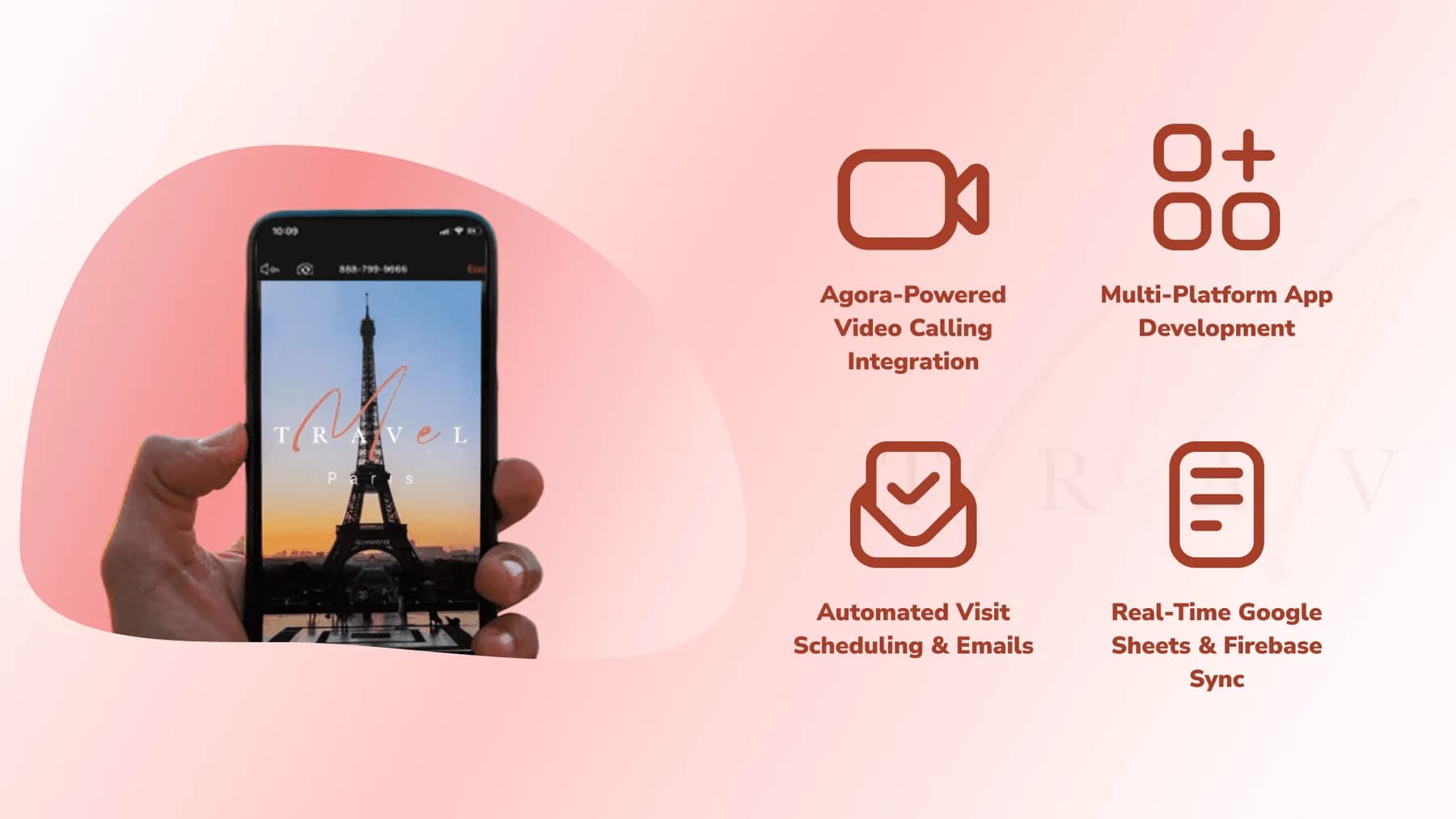 Software Engineering · France
Virtual Heritage Tour Stack – Agora‑Powered Travel Me Platform
Travel Me · Real‑Time Communication / Virtual TourismWe replaced generic Zoom calls with a fully branded, Agora‑powered virtual tour platform that lets guides host multi-party visits, automate scheduling and emails, and deliver high‑quality, real‑time Paris experiences to residents with limited mobility.Read the Full Case Study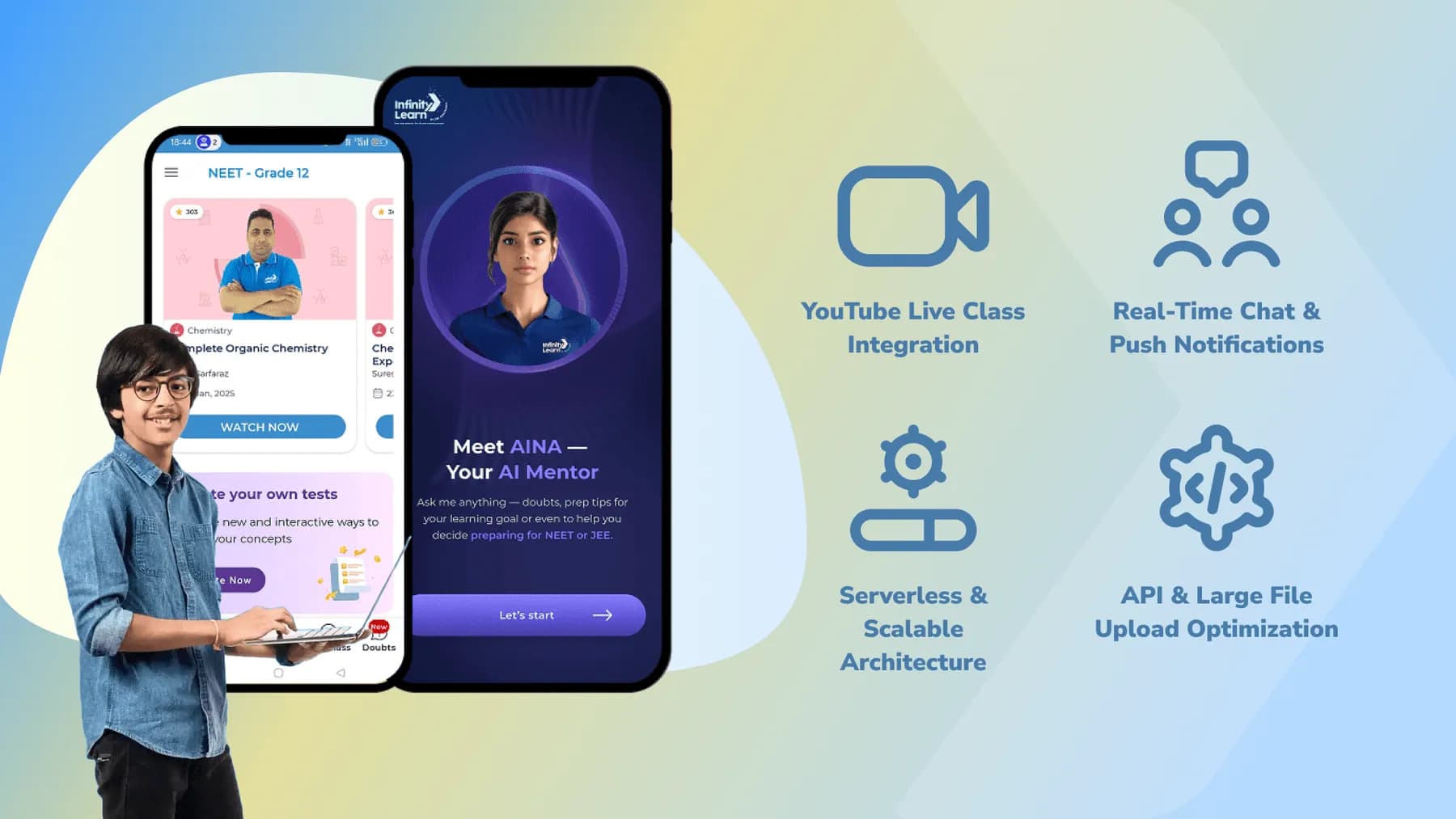 Software Engineering · India
Infinity Learn Live Learning Stack
Infinity Learn · EdTechWe built a scalable, serverless live learning infrastructure for Infinity Learn, enabling YouTube-powered live classes, real-time chat, and seamless notifications while optimizing costs and performance for millions of learners across India.Read the Full Case Study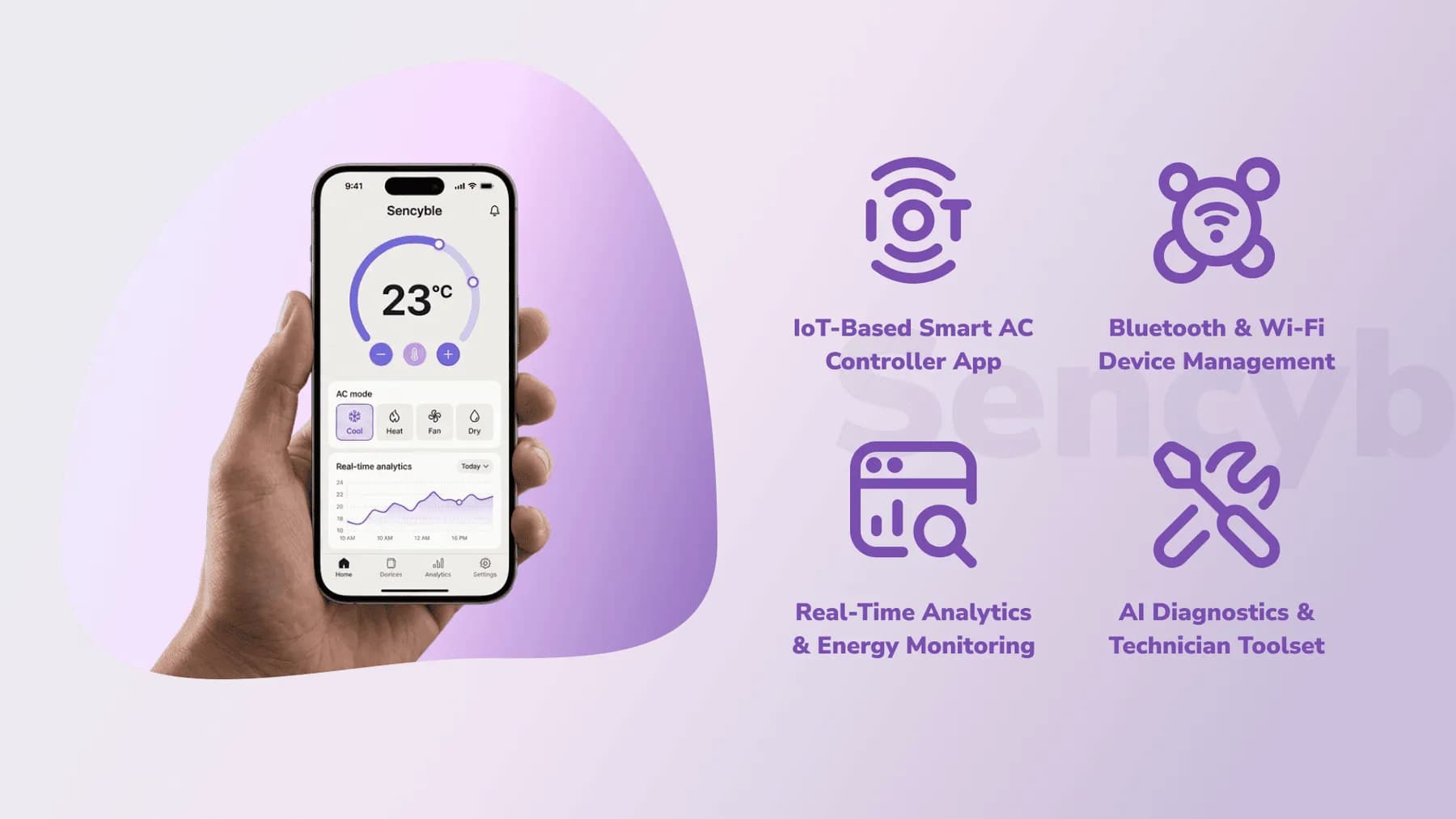 Software Engineering · India
Smart AC Control Stack
HVAC, Smart Home / IoTWe built a cross‑platform smart AC controller app that connects units over Bluetooth and Wi‑Fi, enabling remote control, real‑time analytics, diagnostics, and technician tools through a secure, IoT‑ready architecture powered by React Native and MQTT.Read the Full Case Study
Fair Questions
AI training teaches people what AI can do and how to use it. AI adoption is whether they actually use it on their own work afterwards. Training is one part of adoption, and a session can go well while adoption doesn’t move, because the tool wasn’t set up, nobody made time or the work itself didn’t change. Our enablement programmes cover both: sessions built on your own work, and a follow-up some weeks later to see what changed.
Ask why people aren’t using AI already. If the answer is a blocked tool, an unclear policy or a manager who hasn’t made room to try it, more training won’t help. If the workflow hasn’t changed, redesigning one workflow can matter more than a session. We check for those barriers first and will tell you before you spend anything if training isn’t the answer yet.
Leaders mostly need to judge proposals. That means knowing where AI belongs in the business, how far to trust its output, where the risk sits and what success should look like. Two or three short sessions built around real decisions are usually enough to give them a shared vocabulary, and that’s how we run ours, around the decisions your leaders actually face.
Rarely. Information fades without practice, and a generic workshop has no connection to what people do on Monday. A workshop works as a start when it’s built on the team’s own tasks and followed up. For engineers, we run hands-on sessions on your own codebase that end with a working agent your own engineers built, which gives the follow-up something to build on.
It depends on who you’re training, how many people are involved and how deep it goes. A few short sessions for a board or executive team usually cost less than a multi-week programme for several teams, and hands-on work on your own codebase is scoped differently from workshops built on a finance or operations team’s weekly tasks. Licensing a curriculum so your own trainers can run it is a yearly cost, not a project cost. Redesigning how a job’s steps flow when AI takes part of it is scoped separately. A free session is a good place to work out who needs what, and what each group would need.
Tell Us Who Needs to Learn What and We'll Tell You Where to Start
A free 90-minute session with a senior engineer, on the capability you want your own people to have. You leave with an honest view of what to train, for whom, and whether training is what's holding you back.