

AI Platforms & InfrastructureData Engineering for AI
When your AI gets something wrong, the problem might be the data behind it.
Most of what your company knows sits in PDFs, emails, scans and recordings, and an AI can only use what it can find. When it can't find the right thing, it guesses. We turn that material into data an AI can search, build the pipelines that keep it current, and test whether the right information is actually being found.
Start with a Data Readiness Audit · 2–3 weeks · $20K–$35KTeams We've Built For







































- Valcre
Where You Start Depends on Where You Are
Most teams come to us at one of three points: before they know what shape their data is in, while their documents still can’t be searched by an AI, or once an agent is running on data that keeps changing. The first step is different for each one.
You don’t know if your data is ready
Your data may be spread across systems nobody has fully mapped, you may not know how good it is or who is allowed to see what, and there’s no ranked list of what stops an AI from using it. Our Data Readiness Audit programme inventories where your data lives, scores its quality and gives you a costed plan to close the gaps.
Your documents can’t be searched by an AI yet
Your PDFs, emails, scans and recordings may need reading before an AI can use them, tables may lose their headings along the way, and the AI may find pieces it was never meant to show a particular person. Our Unstructured Data Pipeline Sprint programme reads each type with the right method and indexes the pieces with permissions attached, while our Vector Store Build programme runs the store your AI searches, including re-indexing when the model changes.
An agent is running on data that keeps changing
A field may be renamed upstream without warning, the agent may act on the change instead of noticing it, and the data feeding it may not refresh as often as the agent needs. Our Data Contracts for Agents programme writes down what an agent may read and write and catches a breaking change before the agent acts on it. The pipelines that keep the data current are scoped from the audit roadmap.
Checking the data first is faster than fixing wrong answers one at a time.
What We Do
AI works from three things you control: the material it can read, the pipelines that keep it up to date, and the way it finds the right piece at the right moment. Here's the work behind each one.
| Capability | What it covers | Where you start |
|---|---|---|
| Checking your data first | Inventory where your data lives, score its quality, find what stops an AI from using it, and get a costed plan to close the gaps, including lineage and rules for who may see what. | Data Readiness Audit: 2–3 weeks, $20K–$35K. |
| Turning documents into searchable data | Read PDFs, emails, scanned documents, images, audio and video, split them into pieces that keep their meaning, and index them with permissions attached, so an AI can find what it needs. | Unstructured Data Pipeline Sprint: 4–5 weeks, $35K–$55K. |
| Pipelines that keep it current | Build the batch pipelines that refresh your data on a schedule, and the streaming pipelines for agents that need to know what is happening right now. | Scoped from the Data Readiness Audit roadmap. |
| A platform built for AI | Design the lakehouse, storage and governance that AI workloads need, on Databricks, BigQuery or Snowflake, with documents, audio and video managed as governed data and a clear record of where each piece came from. | Databricks Lakehouse Sprint: 4–6 weeks, $40K–$70K. |
| Vector stores, run properly | Build and run the store your AI searches, on your existing data platform wherever possible, including re-indexing when the model changes, mixed keyword and meaning search, and the cost of each query. | Vector Store Build: 3–4 weeks, $28K–$45K. |
| Data contracts for agents | Write down what an agent may read and write, version those agreements, and catch a breaking change upstream, such as a renamed field, before the agent acts on it and does the wrong thing. | Data Contracts for Agents: 2–3 weeks, $18K–$32K. |
| Test data without real records | Generate realistic test, training and evaluation data where the real data is sensitive, scarce or legally restricted, so development doesn't wait for access to production records. | Scoped on the call. |
Our Data engineering for AI covers the data underneath your AI. How retrieval reaches the model is AI Product Engineering, whether the answers hold up is AI Quality Engineering & Evals, and where the models run is AI Infrastructure & LLMOps.
What We Build On
When you're deciding who will handle the data behind your AI, the specific tools matter, so we name them. We build on the platform you already have where we can.
- Pipelines
- Airflow
- dbt
- Spark for scheduled work
- Kafka
- Flink
- Kinesis for live data
- Vector stores
- Pinecone
- Weaviate
- pgvector
- Data platforms
- Databricks (Unity Catalog, Delta Lake)
- BigQuery
- Snowflake
- Reading documents
- AWS Textract
- Google Document AI
- Where it runs
- Your AWS or Google Cloud account
- Your repository
Partnerships
We hold Google Cloud and AWS partnerships. We build on Databricks, BigQuery and Snowflake as well.
What the Work Looks Like
Three projects from the services above, with the problem each one started from and what changed.
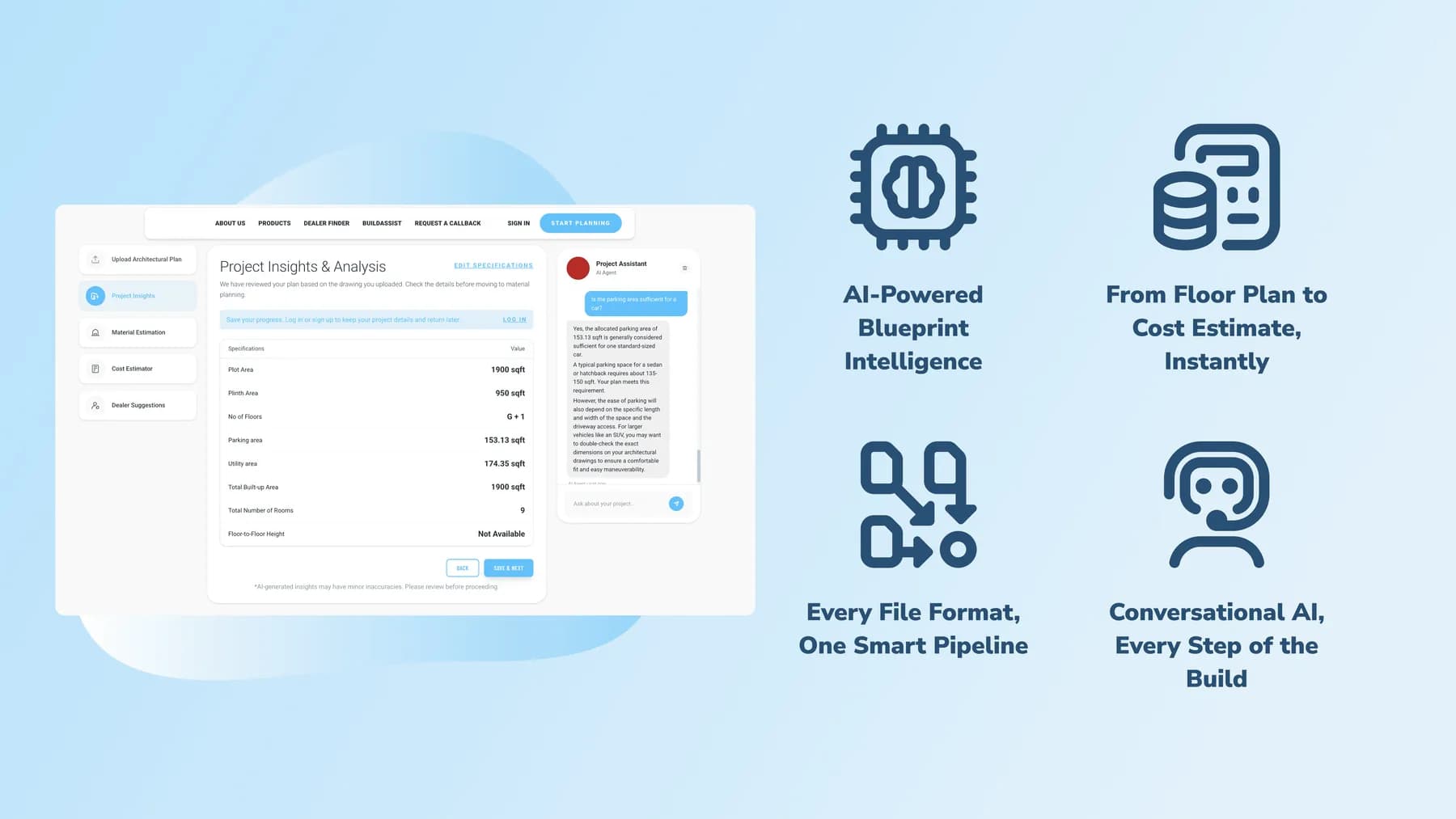 AI Engineering · India
HomeBuild Assist — AI-Powered Construction Planning Wizard
ConstructionWe built a self-serve planning and estimation system that turns architectural drawings into structured cost insights in minutes instead of days. It improves accuracy through multi-pass extraction and delivers city-specific material and labour estimates across 6 Indian cities. It seamlessly connects estimation to dealer discovery, with persistent projects you can resume anytime, anywhere.Read the Full Case Study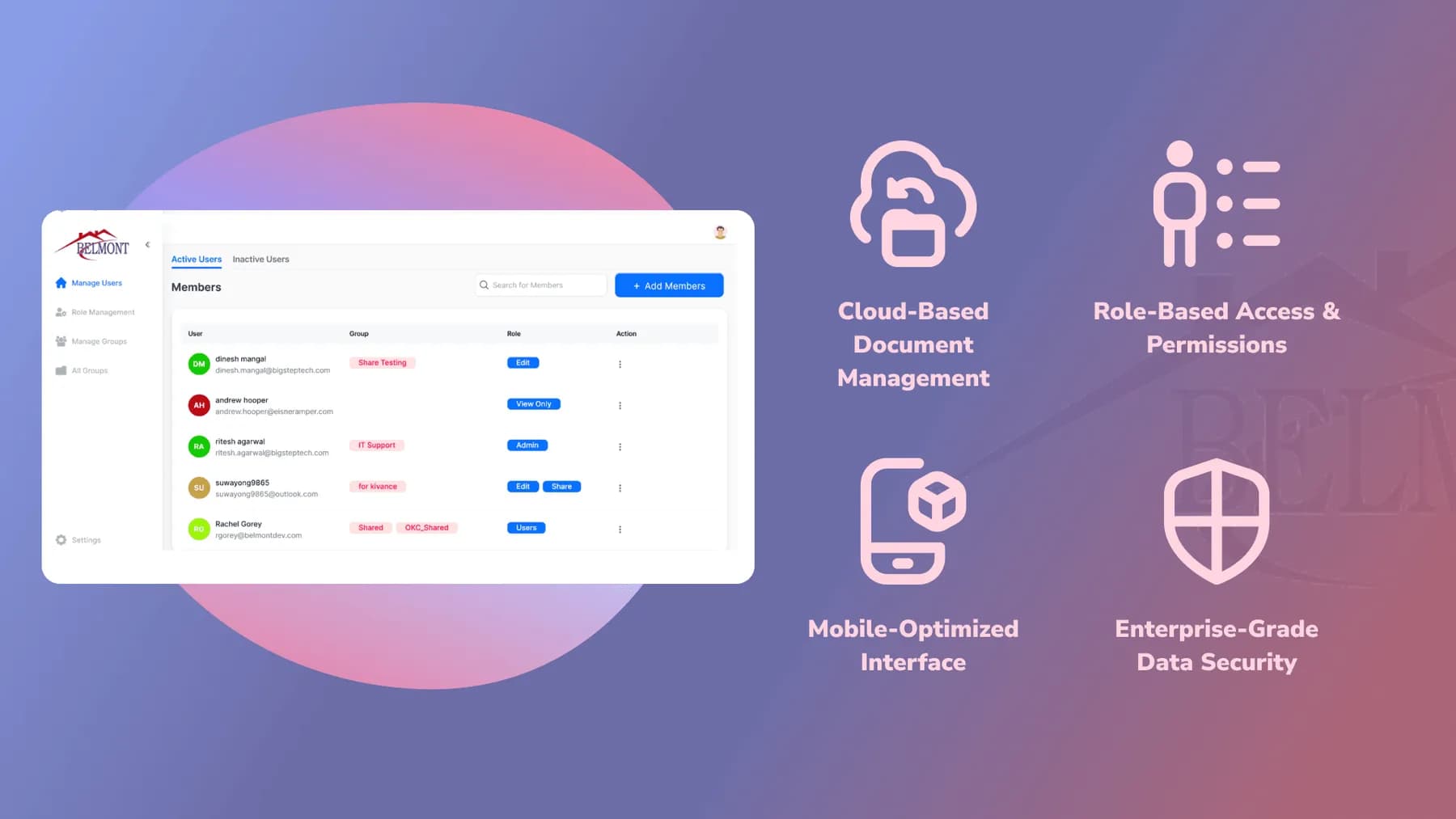 AI Platforms & Infrastructure · United States
Secure Cloud DMS Stack
PropTechWe transformed a legacy on‑prem shared drive into a secure, cloud‑based document management system with granular roles, rich collaboration, and seamless access across locations for a fast‑growing PropTech leader.Read the Full Case Study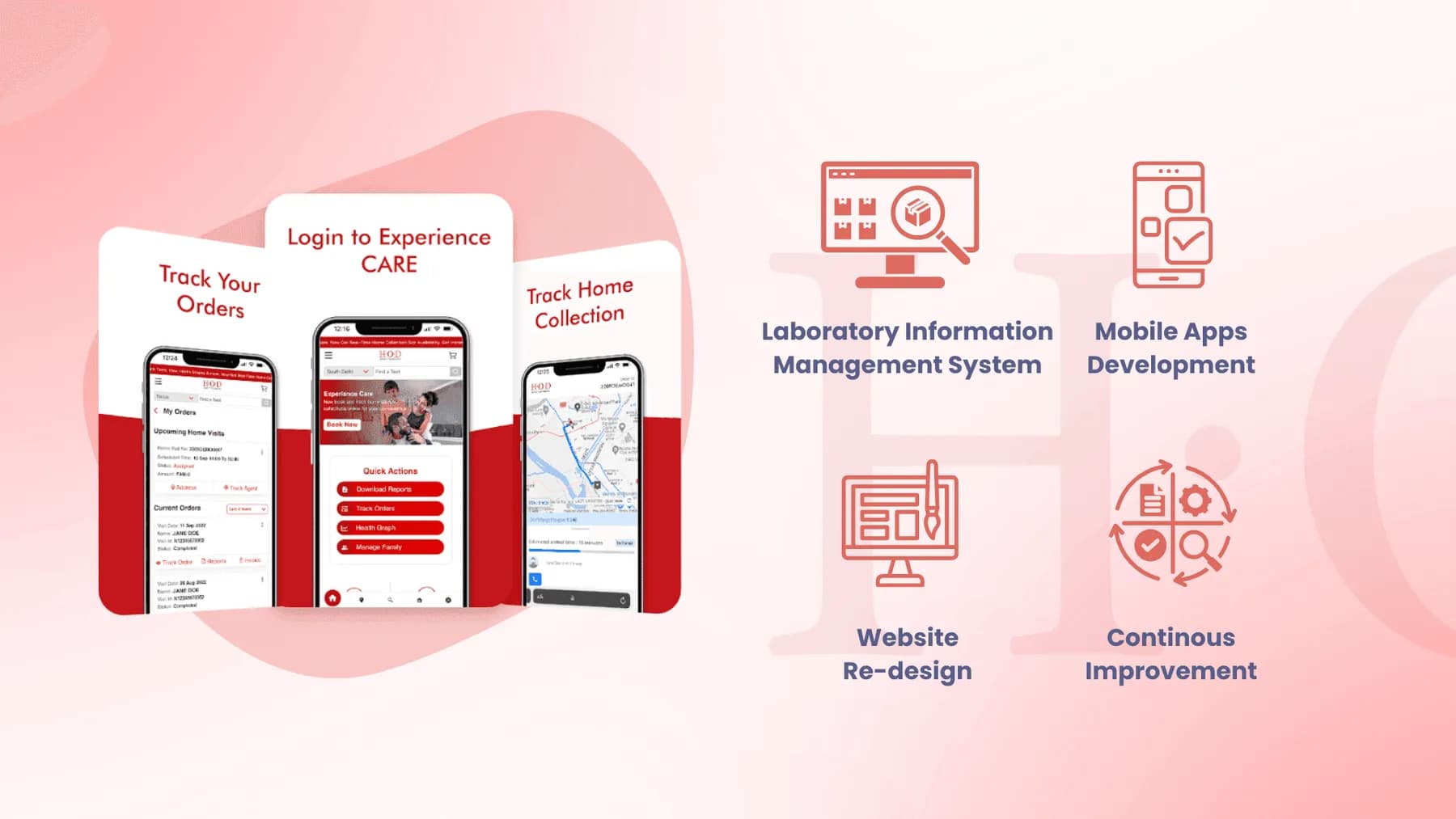 Software Engineering · India
AI Integration for Diagnostics Services Provider
HealthcareBigStep Technologies transformed the online and mobile presence of a leading diagnostics services provider in the healthcare industry by developing a new website and mobile applications, enhancing user experience and operational efficiency.Read the Full Case Study
Where This Service Is Most Applied
We build the data behind AI across industries, each with its own source material, rules on who may see it and the cost of a wrong answer. The data work differs from one industry to the next, but the engineering behind it follows the same principles.

Real Estate & PropTech
- Ingestion Across Siloed Systems
- Permission-Aware Document Search
- Email, Text and Call Ingestion

Financial Services
- Financial Document Extraction
- Role-Based Access to Deal Data
- Synthetic Test Data

Healthcare
- Handwritten Prescription Reading
- Invoice and Document Extraction
- Synthetic Test Data

Manufacturing & Construction
- Plan and Specification Reading
- Source-Priority Reconciliation
- City-Aware Cost Data
Fair Questions
Data engineering for AI is the work of building the data infrastructure that feeds machine learning models, large language models and retrieval systems. Traditional data engineering mostly prepares tidy, structured data for reports and dashboards. Data engineering for AI also has to handle documents, emails, scans, audio and video, keep them searchable and up to date, and make sure the AI finds the right piece when it needs it. We start with a Data Readiness Audit (2 to 3 weeks, $20K to $35K), then build the pipelines, document processing and search layers the audit calls for.
Unstructured data is information that doesn’t sit in rows and columns, such as PDFs, emails, scanned documents, images, audio and video. An AI can’t use it as it is because the text has to be read out of it first, then split into pieces and indexed so the right piece can be found. A scanned contract is only a picture until something reads it. Our Unstructured Data Pipeline Sprint (4 to 5 weeks, $35K to $55K) reads each type with the right method, using tools such as AWS Textract and Google Document AI, and indexes the pieces with permissions attached.
Often because it was given the wrong information. The right passage may not have been found, a document may be out of date, or a table may have lost its headings when it was read. The way to tell is to test the search behind the answer: for a set of real questions, check whether the right passage came back. If it did and the answer was still wrong, the model is the problem. If it didn’t, the data is. Send us the questions your AI gets wrong and we’ll look at the data first, as part of a Data Readiness Audit.
A data contract is a written, versioned agreement that says what data an agent may read and write and what shape that data should take. Agents need one because they act on data rather than just display it. If a field is renamed upstream, a dashboard shows a wrong number that someone eventually notices, but an agent that doesn’t know the field changed carries on and takes a wrong action. A contract catches the change before the agent acts on it. Our Data Contracts for Agents programme (2 to 3 weeks, $18K to $32K) writes down what your agent may read and write, and flags a breaking change, such as a renamed field, before the agent acts on it.
Your data is ready for AI when you know where it lives, you know how good it is, you know who is allowed to see what, and an AI can find the right piece of it when it’s asked. If you can’t say yes to every one of those, the data probably isn’t ready yet. Our Data Readiness Audit answers all of them, takes 2 to 3 weeks and costs $20K to $35K at a fixed price. You get an inventory of your data, a quality score for each source, a ranked list of the gaps that stop an AI from using it, and a costed roadmap for closing them. If your data turns out to be in good enough shape, that’s the answer, and the problem is somewhere else.
You stop it by indexing each piece of a document with its source’s access rules attached, and checking those rules for the person asking before anything reaches the AI. It’s much harder to add permissions after the fact, because the AI may already have found pieces it was never meant to show. We built this for a property management company, using a Bedrock Knowledge Base over its document system, Outlook and property management software, so each answer reflects what the person asking is allowed to see. Our Unstructured Data Pipeline Sprint (4 to 5 weeks, $35K to $55K) builds the same kind of permission-aware indexing for your documents.
If your AI works from a small set of clean documents, or from one system that already has good search, you may not. A platform’s built-in knowledge features can be enough at that size. Data work starts to pay when you have many sources, when permissions differ between people, when data changes often, or when answers are wrong and you can’t tell why. A Data Readiness Audit will tell you which side you’re on.
Show Us the Questions Your AI Gets Wrong and We'll Look at the Data
Two to three weeks, a fixed price and a written audit: where your data sits, how good it is, what stops an AI from using it, and a costed plan for fixing it. If your data is already in good enough shape, that's the answer, and the problem is somewhere else.