

AI Engineering · India
WondrAgents - An AI-Powered Multi-Agent Platform for Influencer Marketing Operations
An AI-powered platform that brings the entire influencer marketing lifecycle into one automated workflow, from creator discovery to campaign execution and evaluation.
Discuss Your AI Project- Agentic AI Orchestration
- WhatsApp & Instagram Integration
- RAG-Grounded Agents
- Seven-Agent LangGraph Pipeline
About Opportune
Opportune is an influencer marketing agency that manages end-to-end influencer campaigns on behalf of brands. Its operations team runs the full campaign lifecycle, from writing briefs and shortlisting creators, through outreach, negotiation, contracting and scripting, to content review and post-campaign reporting. As campaign volume grew, the agency needed a way to run this workflow faster and more consistently without expanding headcount proportionally.
- Industry
- Influencer Marketing / AdTech
- App Type
- AI-Powered Multi-Agent Automation Platform (Influencer Marketing Operations)
Tech Stack
- Claude (Opus 4.6, Sonnet 4.6, Haiku 4.5) on Amazon Bedrock
- Google Vertex AI (Gemini 3.1 Pro preview, 3.1 Flash-Lite, 2.5 Flash)
- Claude Code
- LangGraph
- LangChain
- Qdrant
- FastAPI
- PostgreSQL
- Redis
- Google Cloud Pub/Sub
- AWS SQS
- WhatsApp Business API
- Instagram Messaging API
- Langfuse
- & more
Engagement Summary
We built a seven-agent automation platform that runs an influencer marketing agency’s campaign lifecycle end to end, compressing a process that once took days into minutes.
Deterministic systems handle rule-based work like filtering, validation, and metrics, while Claude models on Amazon Bedrock handle judgment-heavy tasks including strategy, influencer matching, negotiation, content generation, and evaluation.
Two-way WhatsApp and Instagram integrations let the platform manage creator conversations from outreach through contracting and content feedback, with humans stepping in only at key checkpoints.
Results
Campaign turnaround cut from days to minutes across the preparation workflow
Brief creation reduced from 2-4 hours down to minutes
Consistent, standardised output regardless of which team member runs the campaign
Fewer errors thanks to automated handoffs between stages
Campaign capacity no longer tied to headcount, so volume can scale without proportional hiring
- Seven agents handle judgment-driven campaign tasks, while deterministic systems handle filtering, validation, and metrics.
- Creators are matched to campaigns based on content style and on-screen persona, not just follower or engagement counts, thanks to frame-by-frame reel analysis feeding shortlisting
- A single ongoing WhatsApp and Instagram conversation carries a creator through outreach, negotiation, contracting, scripting, and content feedback, with humans stepping in only at approval checkpoints
Our Process
Discovery, Workflow Mapping & Agent Boundaries
The campaign lifecycle was mapped stage by stage, covering briefing, shortlisting, outreach, negotiation, contracting, scripting, content QA, and reporting. This established clear agent boundaries and defined the inputs, outputs, and handoffs across the workflow.
Agent Architecture & Orchestration Design
We designed the seven-agent pipeline on Claude via Amazon Bedrock, with LangGraph and LangChain coordinating the pipeline. State management, cross-stage context, tool access, structured outputs, and human-in-the-loop checkpoints were defined upfront.
Data Foundation & Knowledge Base Construction
The Instagram influencer database powering the Shortlisting Agent was structured around audience, niche, engagement, and historical performance. Creator reels were also analysed frame by frame for content style and on-screen persona, adding qualitative signals alongside performance data for shortlisting.
RAG (Retrieval-Augmented Generation) Implementation
Agents were grounded in Opportune’s own data rather than relying on model knowledge alone. The influencer database, past campaign briefs, brand guidelines, and negotiation and contract templates were chunked and embedded into a Qdrant vector store for semantic retrieval, with grounding happening at generation time to keep outputs factual, on-brand, and tied to real data.
Prompt Engineering & Agent Development
Each agent was developed iteratively around Claude’s contextual reasoning and instruction-following: system prompts, roles, few-shot examples, structured JSON schemas, tool-use patterns, and reasoning workflows. Claude Code was used throughout development to speed up implementation, debugging, refactoring, and iteration across the codebase. Agents were built and tested in isolation, then chained into the full pipeline.
WhatsApp & Instagram Chat Integration
A two-way WhatsApp and Instagram chat integration became the shared communication backbone for agents 03 through 07. Claude-powered agents use conversation context to manage multi-turn interactions, so the platform converses with each creator directly instead of the team messaging manually. It handles inbound and outbound messages, per-creator state and threading, media for contracts and reels, and routes each message to the correct agent, so one chat spans multiple stages.
Tool and External-System Integrations
We connected every system each agent depends on: document generation for contracts, Google Sheets and Drive for reporting, GCS buckets for media storage, and the Instagram Graph API as a second, authoritative source of post-live metrics alongside creator-reported figures. Claude agents use these tools and APIs to retrieve information and take structured actions.
Guardrails, Safety & Human-in-the-Loop Controls
We added guardrails for tone, brand safety, negotiation limits, including budget and price ceilings, and PII handling around Claude-powered workflows. Beyond these guardrails, critical stages route to a human for review and approval before the pipeline proceeds, keeping the team in control of high-stakes decisions.
User Acceptance Testing (UAT), Per Agent & End to End
Each of the seven agents underwent UAT with Opportune’s operations team against real campaign scenarios, comparing Claude-powered agent outputs to human baselines. Feedback fed back into prompts, retrieval, and guardrails through iterative cycles. Once each agent was signed off individually, the full chained pipeline was UAT-tested end to end to validate handoffs and overall campaign output.
Deployment, Monitoring & Observability
We deployed the platform for the operations team with logging and observability across agent runs, tracked via Langfuse. This includes tracking latency, cost, failures, and output quality. Claude model usage and agent performance are monitored as part of the production workflow, enabling continuous evaluation and improvement.
Handover, Documentation & Training
We delivered documentation for the platform, and trained the operations team on running campaigns through it. This covered interpreting Claude-powered agent outputs, and handling the human-approval checkpoints along the way.
Challenges faced by the Client
Opportune’s campaign workflow ran almost entirely on manual effort, and that created a few compounding problems.
Slow turnaround
A single campaign brief took 2-4 hours to put together manually, and shortlisting, negotiation, and script preparation added several more days on top of that.
Inconsistent output
Quality and approach varied from person to person, with no standard process to fall back on.
Frequent errors
Manual handoffs between stages left room for mistakes, and mistakes meant rework.
Limited scalability
Handling more campaigns meant hiring more people, not doing more with the team they already had.
Core Solution

Qualitative reel analysis, not just numbers
Shortlisting doesn’t rely on quantitative metrics alone. Each creator’s Instagram reels are analysed frame by frame to build a rich, frequently updated profile of their content style and on-screen persona. This qualitative signal is weighted alongside audience, niche, engagement, and historical performance when ranking and shortlisting, so creators are matched to campaigns that genuinely fit their style, not just their follower or engagement counts.

Conversational automation across the full creator relationship
The platform autonomously runs the two-way creator conversation on WhatsApp and Instagram, from first outreach through negotiation, contracting, scripting, content feedback, and metrics collection. It handles inbound and outbound messages, per-creator conversation state and threading, and media handling, so one ongoing chat spans multiple pipeline stages seamlessly.

The creator’s own content writes the script
The same reel analysis that shortlists a creator also grounds what they’re asked to make, so briefs sound like them and creators revise less.
More Case Studies
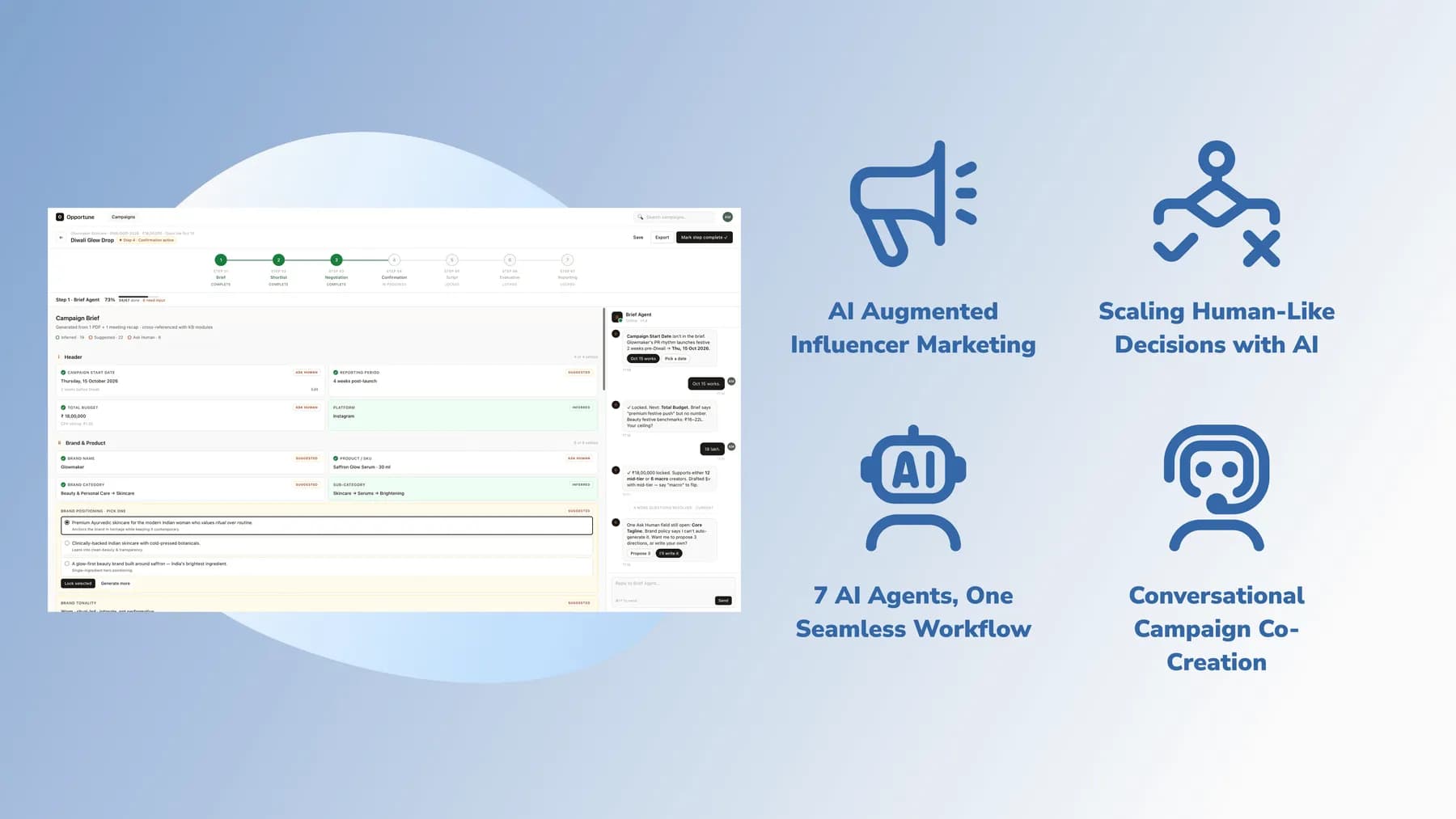 AI Engineering · India
Multi Agents Platform for Influencer Marketing Agency
AdvertisingWe built a system that shifts automation from rule-based logic to AI agents capable of handling subjective decisions, combining LangGraph orchestration, Claude models, and vector memory to not just automate workflows, but scale human judgment.Read the Full Case Study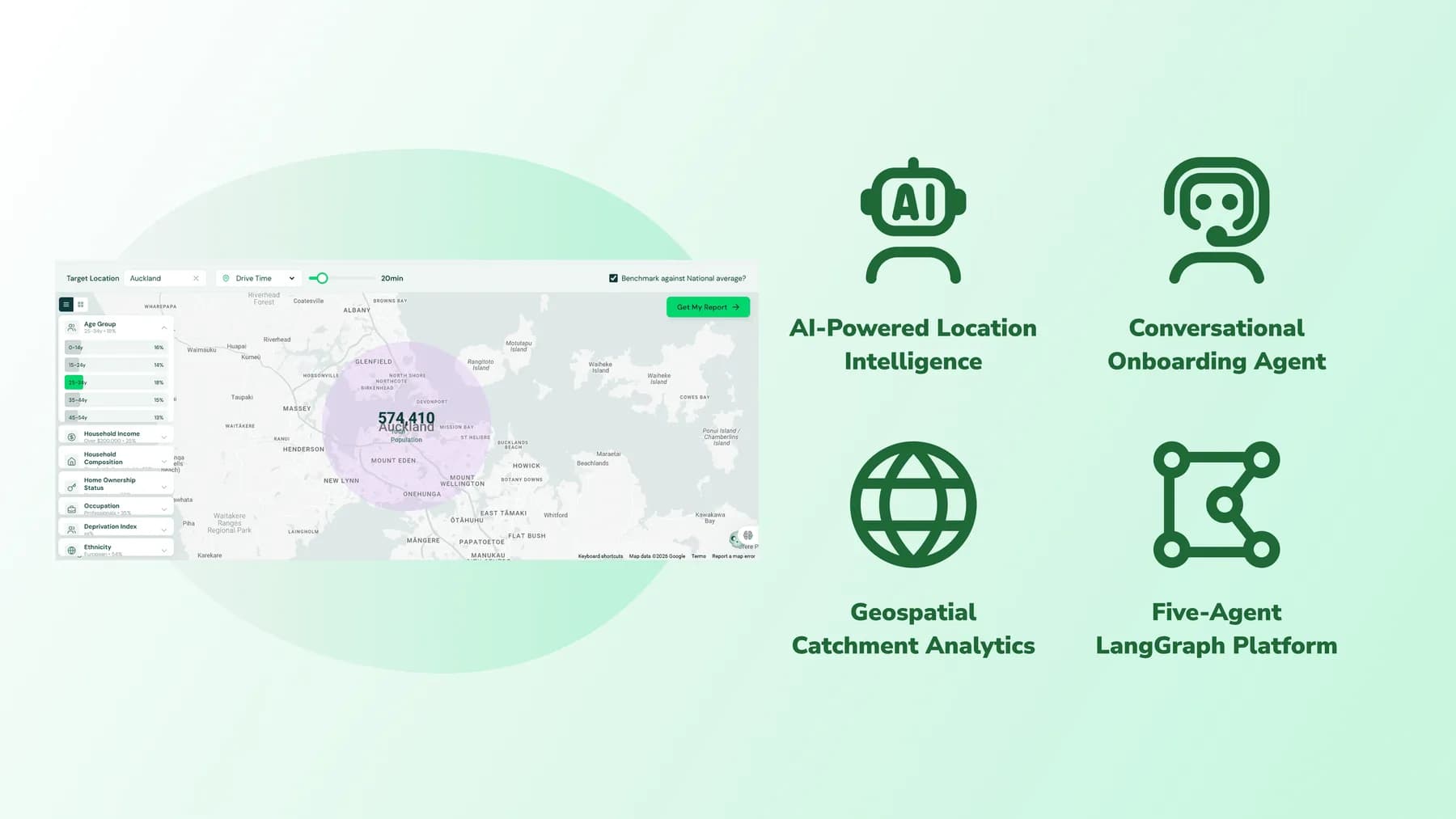 AI Engineering · New Zealand
A LangGraph Platform for AI-Powered Location Intelligence
MarketingWe built five production AI workflows on a unified LangGraph + Gemini stack, improving speed with early-return results and URL-level caching. The system supports resumable conversations, enforces governance within AI nodes, uses optimized multi-layer storage, and ensures reliability through schema-validated outputs—all accelerated by reusing Reach’s existing AI framework.Read the Full Case Study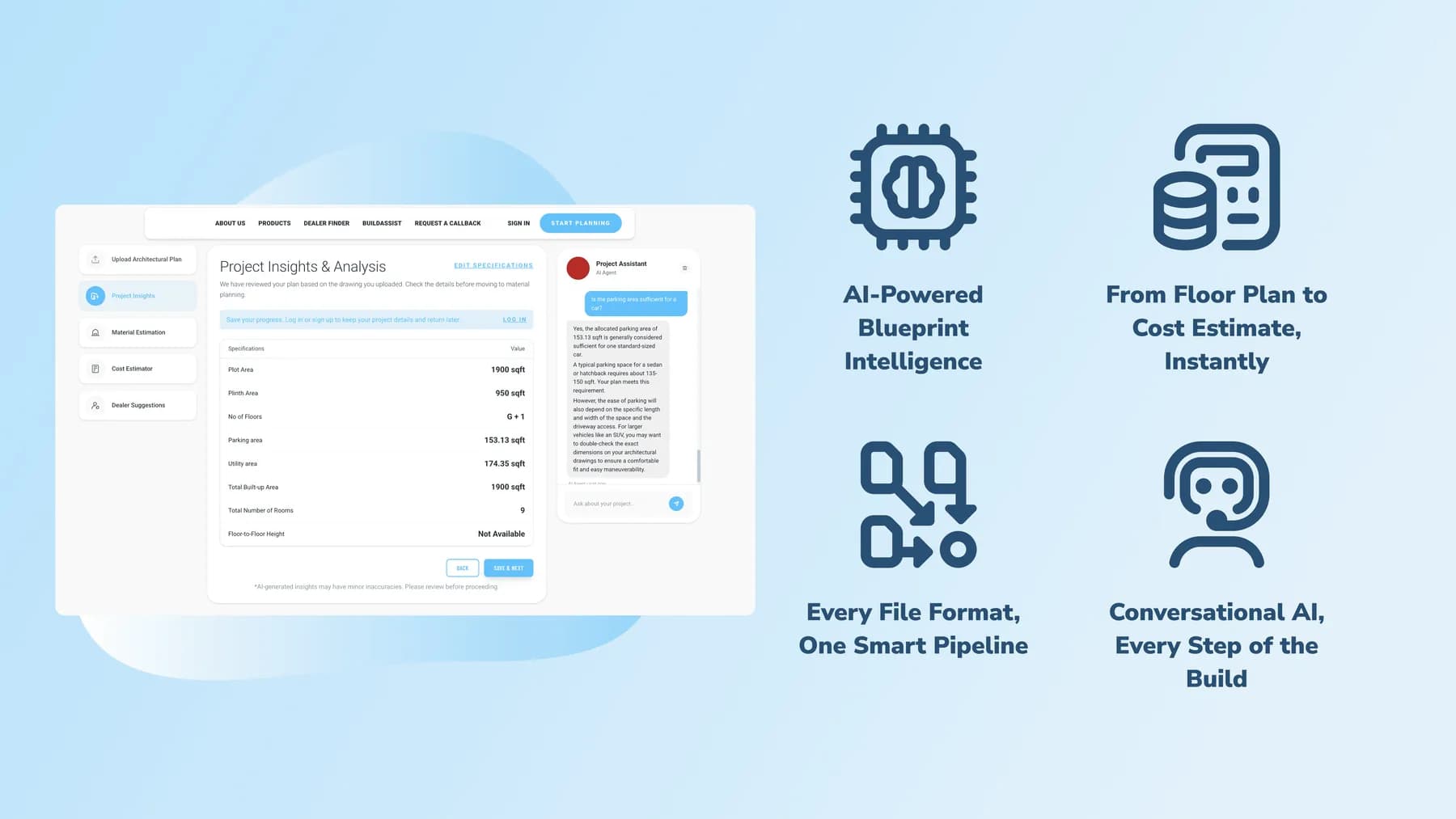 AI Engineering · India
HomeBuild Assist — AI-Powered Construction Planning Wizard
ConstructionWe built a self-serve planning and estimation system that turns architectural drawings into structured cost insights in minutes instead of days. It improves accuracy through multi-pass extraction and delivers city-specific material and labour estimates across 6 Indian cities. It seamlessly connects estimation to dealer discovery, with persistent projects you can resume anytime, anywhere.Read the Full Case Study