

AI Platforms & InfrastructureAI Platform Partnerships & Professional Services
The Right AI Platform for What You're Building
Claude, Gemini, Amazon Bedrock, LangChain and Databricks can all look capable in a demo, and moving off the wrong one later means rebuilding what sits on top of it. We help you choose the one that fits what you're building, then build on it.
Start with a Platform Fit Assessment · 2 weeks · $15K–$25KTeams We've Built For



























- Valcre
Where You Start Depends on Where You Are
Most teams come to us at one of three points: before choosing a platform, while building on the one they chose, or once they’re on one and moving is getting expensive. What you need is different at each one.
You haven’t chosen yet
The platforms may look alike in a demo, you may not know where your data would have to live or what each request would cost at real volume, and nobody advising you is paid to say another one fits better. Our Platform Fit Assessment programme compares Claude, Gemini, Bedrock, LangChain and Databricks against your data, your cloud and your use case in two weeks, and gives you a recommendation with a migration path.
You’ve chosen, and now you have to build
Your team may be new to the platform, the first feature may stall between demo and production, and what you build may only run on that one vendor’s tools. Our Claude-Powered Product Launch, Claude Code Rollout, Gemini Feature Launch and Agent Bricks Launch programmes take you from the choice to something running in front of your customers or your engineers.
You’re already on one, and moving is getting expensive
Your prompts, connectors and tests may be tied to one vendor, costs may be rising with volume, and nobody has checked the setup for cost, security and reliability. Our LangGraph Migration Sprint programme moves an existing agent system onto a framework you can maintain, while our Bedrock Well-Architected Review checks your AWS AI workloads and gives you a prioritised fix list.
Choosing on purpose is faster than building on a second platform later.
What We Do
Using an AI platform well takes more than an API key. You need to pick the right one, build on it properly, and make sure your team can run it afterwards.
| Capability | What it covers | Where you start |
|---|---|---|
| Choosing the platform | Compare Claude, Gemini, Amazon Bedrock, LangChain and Databricks against your use case, your data and the cloud you already run, and get a written recommendation with a migration path if you need to move later. | Platform Fit Assessment: 2 weeks, $15K–$25K. |
| Claude and MCP | Put Claude into your product or workflows, build MCP servers so it can reach your systems, set up managed agents, and roll out Claude Code across your engineering team. Claude Skills are scoped on the call. | Claude-Powered Product Launch: 4 weeks, $35K–$60K. Claude Code Rollout Programme: 6 weeks, $30K–$50K. |
| Gemini and Vertex AI | Build on Gemini and Vertex AI for features that need images, video or audio, a very long context, or answers grounded in Google Search. Document AI and Gemini Enterprise where they fit. | Gemini Feature Launch: 3–4 weeks, $25K–$45K. |
| Amazon Bedrock | Run AI inside the AWS account you already use, with a choice of models, Bedrock Agents and Knowledge Bases, plus SageMaker and Textract where they're the right tool. | Bedrock Well-Architected Review: 2 weeks, $15K–$25K. |
| LangChain suite | Build agents on LangGraph and Deep Agents, trace and test them in LangSmith, and move an existing agent system onto LangGraph so it's easier to run and maintain. | LangGraph Migration Sprint: 3–5 weeks, $28K–$55K. |
| Databricks | Run governed agents on your own enterprise data using Agent Bricks, Unity Catalog, Lakebase and Mosaic AI, with lineage back to the data each answer came from. | Agent Bricks Launch: 4–6 weeks, $35K–$65K. |
Our AI Platform Partnership and Professional Services covers choosing a platform and building on it. Testing the result is AI Quality Engineering & Evals, the agents themselves are Agents & Agentic Workflows, and the data underneath is Data Engineering for AI.
What We Build On
When you're deciding who will help you choose and build on a platform, the specific tools matter, so we name them. We work with Claude, Gemini and OpenAI models, plus open-weight models where self-hosting is the right answer.
- Models
- Claude
- Gemini
- OpenAI models
- Open-weight models where self-hosting is the right answer
- Cloud platforms
- Amazon Bedrock
- Google Vertex AI
- SageMaker
- AWS Textract
- Google Document AI
- Orchestration and tooling
- LangGraph
- Deep Agents
- LangSmith
- Claude Agent SDK
- MCP servers
- Data platform
- Databricks: Agent Bricks
- Lakebase
- Unity Catalog
- Mosaic AI
- Where it runs
- Your cloud accounts
- Your repository
Partnerships
We hold Google Cloud and AWS partnerships. We build on Claude, LangChain and Databricks as well, and we don't resell any model provider or framework vendor, which is why we can tell you when the cheaper option, or the platform you already have, is the right one.
What the Work Looks Like
Three projects from the services above, with the problem each one started from and what changed.
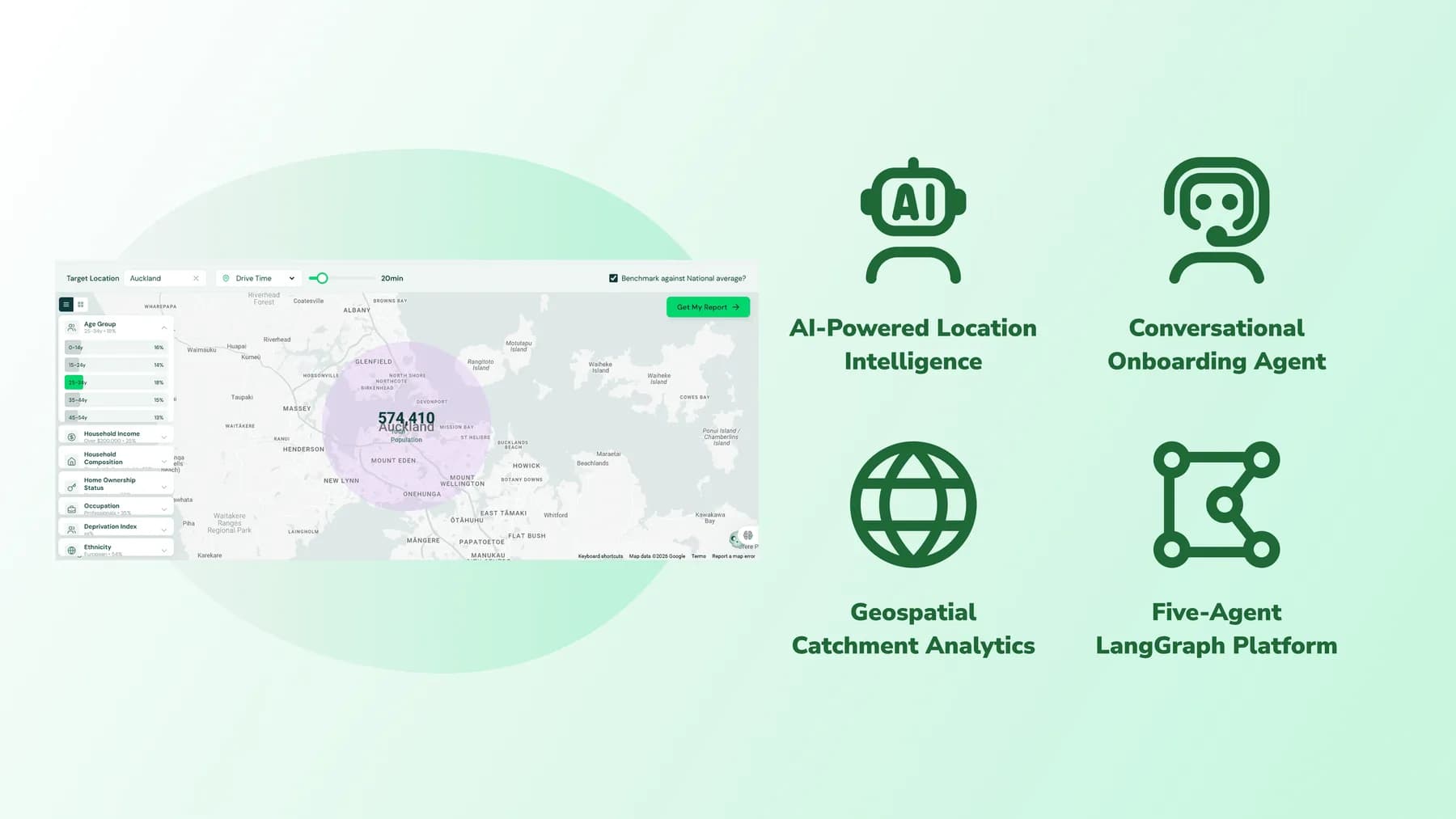 AI Engineering · New Zealand
A LangGraph Platform for AI-Powered Location Intelligence
MarketingWe built five production AI workflows on a unified LangGraph + Gemini stack, improving speed with early-return results and URL-level caching. The system supports resumable conversations, enforces governance within AI nodes, uses optimized multi-layer storage, and ensures reliability through schema-validated outputs—all accelerated by reusing Reach’s existing AI framework.Read the Full Case Study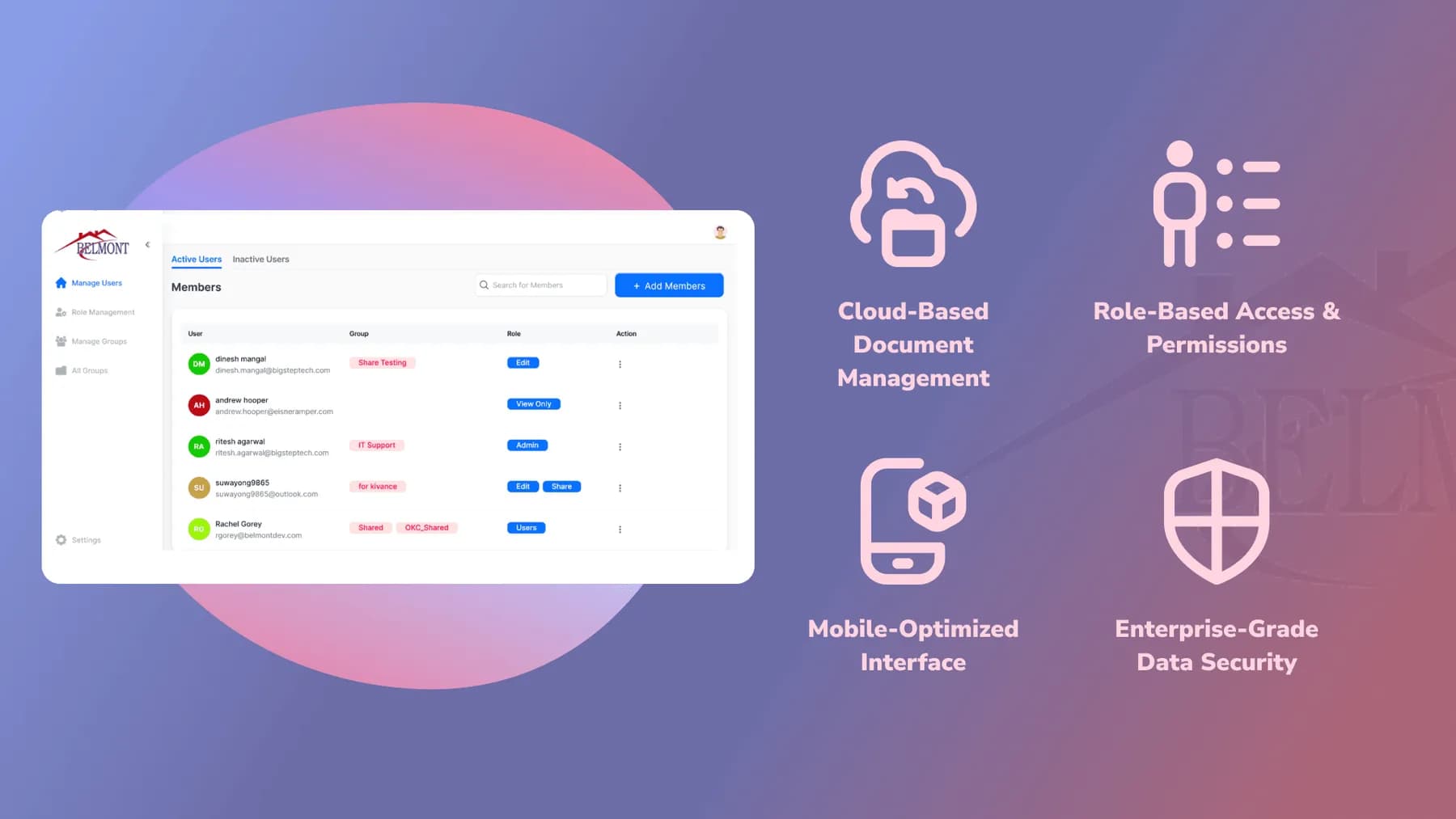 AI Platforms & Infrastructure · United States
Secure Cloud DMS Stack
PropTechWe transformed a legacy on‑prem shared drive into a secure, cloud‑based document management system with granular roles, rich collaboration, and seamless access across locations for a fast‑growing PropTech leader.Read the Full Case Study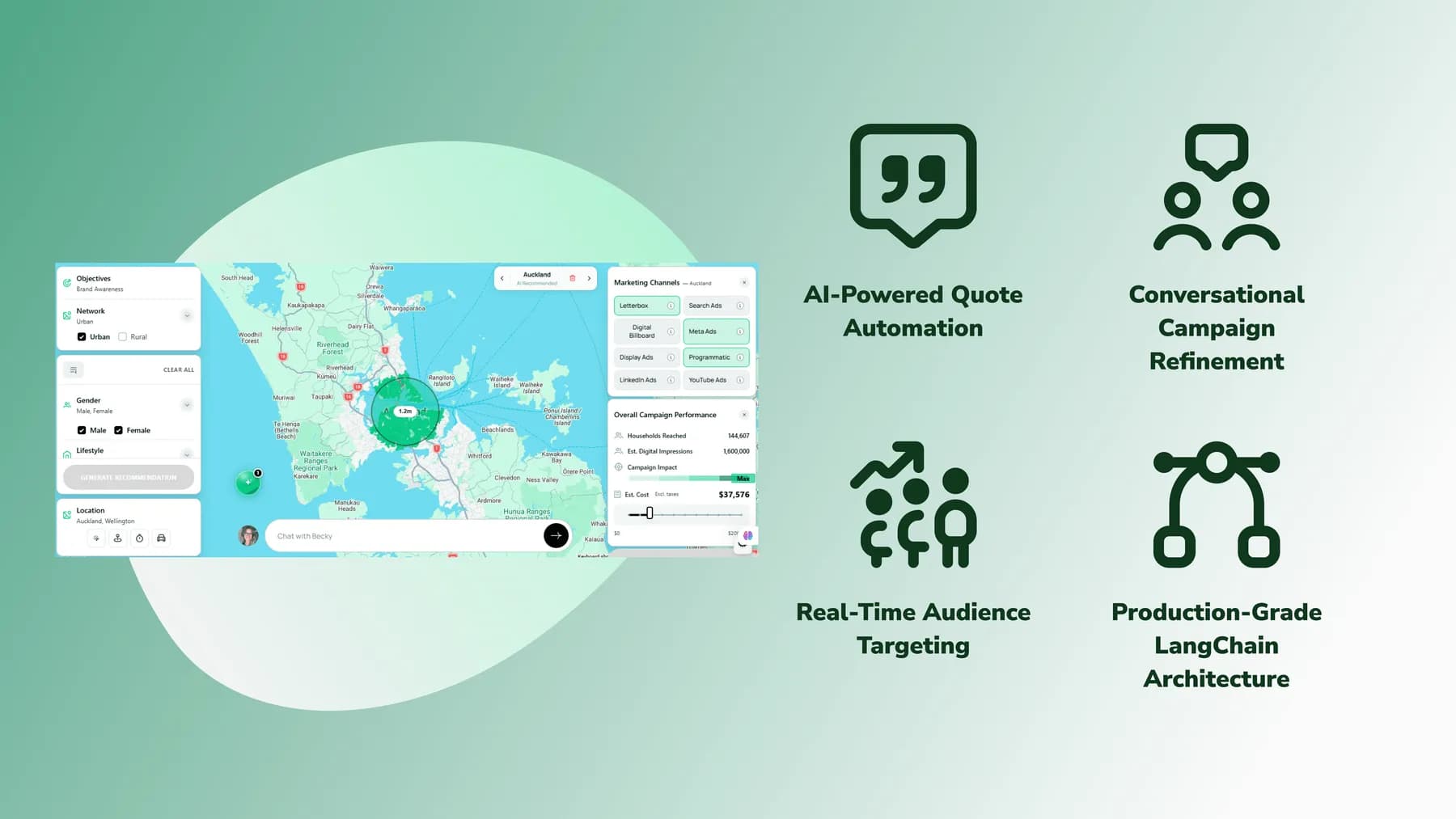 AI Engineering · New Zealand
Building an AI Agent for advertisement Targeting & Campaign Planning
AdvertisementWe built a system that combines a fast 5-step LangGraph pipeline with a real-time conversational agent to turn raw inputs into structured, cached recommendations and let users refine them via chat. It uses layered memory, tool-driven updates, and strong validation with caching to ensure reliable, efficient results.Read the Full Case Study
Where This Service Is Most Applied
The platform decision is made differently in each industry, because the data, the cloud you already run and the people who sign off on it all change.

Real Estate & PropTech
- Bedrock Document Co-Pilot
- Permission-Aware Knowledge Base
- LangGraph Workflows on AWS

Healthcare
- Bedrock Consultation Summaries
- Gemini Report Generation
- Gemini Document Extraction

Insurance
- Google ADK Voice Agents
- Real-Time Assisted Calling
- WhatsApp Follow-Up Automation

Retail, Commerce & Media
- Gemini Campaign Planning
- Market Intelligence Agents
- Real-Time Web Grounding

Manufacturing & Construction
- LangGraph Multi-Agent Planning
- LangSmith Run Tracing
- Traceable Source Decisions
Fair Questions
An AI platform partner helps you choose which AI platform to build on, then builds on it with you. That means comparing the options against your own use case, data and cloud, setting the platform up inside your accounts, connecting it to your systems, and training your team to run it. A good one will also tell you when the platform you already have is the right one. We hold Google Cloud and AWS partnerships, and we don’t resell any model provider or framework vendor, which is why our Platform Fit Assessment can say that plainly.
Claude and Gemini are families of AI models, made by Anthropic and Google. Amazon Bedrock isn’t a model. It’s Amazon’s service for running several models, including Claude, inside your own AWS account. Google’s equivalent is Vertex AI, which runs Gemini. So the choice is usually two decisions at once: which model suits the task, and which cloud you want it to run on. We build on all of them and compare them against your data, your cloud and your use case in our Platform Fit Assessment.
Keep the things that are yours outside the vendor. Prompts, connectors and the evaluation set sit in your own repository, and nothing is built that only runs on one provider. When a model changes or a better one arrives, you re-run the evaluation set on the replacement and see what moved. Some lock-in is fine, such as running on the cloud you already pay for, as long as it’s a decision you made on purpose. Every Platform Fit Assessment ends with a written recommendation and a migration path in case you ever need to move.
Start with three questions: where your data has to live, which cloud you already run, and what each request would cost at real volume. Platforms can look alike in a demo and still differ sharply on those. Then test the shortlist against your own use case rather than a vendor’s example. Our Platform Fit Assessment (2 weeks, $15K to $25K) does this across Claude, Gemini, Amazon Bedrock, LangChain and Databricks and ends with a written recommendation. If the platform you already have turns out to be the right one, that’s the answer.
It depends on the platform and how much you’re building, but a first production feature is typically a few weeks of fixed-price work. Our Claude-Powered Product Launch is 4 weeks at $35K to $60K, our Gemini Feature Launch is 3 to 4 weeks at $25K to $45K, and our Agent Bricks Launch on Databricks is 4 to 6 weeks at $35K to $65K. For a setup already running on AWS, our Bedrock Well-Architected Review (2 weeks, $15K to $25K) checks cost, security and reliability and gives you a prioritised fix list. Choosing first with the Platform Fit Assessment keeps you from paying to build on the wrong one.
If your engineers have already built on one platform and it’s working, you may not need one. A platform vendor’s own services can also be enough when everything you’re building stays inside that one platform. A partner earns its fee when you’re choosing between several platforms, crossing more than one, or moving off one. If you’re unsure, a two-week Platform Fit Assessment can confirm the platform you have is the right one.
Tell Us What You're Building and We'll Tell You Where to Build It
Two weeks, a fixed price and a written recommendation across Claude, Gemini, Bedrock, LangChain and Databricks, with a migration path if you ever need to move. If the platform you already have turns out to be the right one, that's the answer, and you'll have spent two weeks confirming it.