
AI Engineering · USA
An AI-Powered Workflow Automation Platform for Real Estate
A platform that pulls data out of documents and connected systems, automates the work that follows, and answers questions over Slack, Teams, web chat, voice and SMS.
Discuss Your AI Project- Document Data Extraction
- Visual Workflow Builder
- Conversational Queries
- Multi-Tenant Platform
About the client
The client is an AI-powered workflow automation platform. It brings fragmented data together, automates complex processes, and turns unstructured inputs into actionable insights. It started in commercial real estate (CRE) and now serves other industries too, as an enterprise-grade automation and intelligence layer built on smart document processing, reusable templates and AI-driven querying.
- Industry
- Proptech
- App type
- AI Workflow Automation Platform
- Practice
- AI Engineering (Build)
- Services
- AI Product Engineering, AI Quality Engineering & Evals, Software & Application Development, AI-Native SDLC Transformation, AI Engineering Talent (Engineers, FDE, Pods)
Tech stack
- React and TypeScript
- Node.js, Go and Python
- PostgreSQL and Redis
- LangChain and LangGraph
- Claude on AWS Bedrock
- Google Gemini
- Qdrant (vector database)
- VoyageAI embeddings and Cohere reranking
- Docling and PaddleOCR (document parsing)
- Temporal (workflow orchestration)
- AWS (EKS, RDS, S3, SQS)
- Terraform
- Datadog
- Auth0
- Twilio and ElevenLabs (SMS and voice)
- and more
Engagement summary
We built a platform that takes in documents and data from many places, extracts the information, and automates the work that follows. It reads PDFs, Excel, Word and CSV files, emails, and data from 20+ SaaS applications through APIs.
Clean, structured tables are extracted with fixed rules, with 100% accuracy. AI handles the documents that aren’t clean, such as leases, contracts and financial statements that have no fixed layout. Each task goes to the smallest model that meets its accuracy bar.
A workflow engine then handles the multi-step work, such as generating PDF and Excel reports from unstructured data, turning documents into database tables, and sending notifications. Teams can ask questions in plain English over Slack, Teams, web chat, voice or SMS, and every answer links back to its source document with page references.
Challenges faced by the client
The client faced significant operational inefficiencies and scaling issues.
Data locked in too many systems
Enterprise data sat in 30-40 siloed systems.
Manual, repetitive data entry
It consumed 60-70% of operational time.
Fragmented workflows
People had to switch between 10+ tools.
Hard-to-extract document data
It was difficult to extract structured data from complex multi-page documents such as leases, contracts and financial statements.
No real-time collaboration
Distributed teams lacked a way to collaborate in real time.
Document processing couldn’t scale
The client couldn’t scale document processing for high-volume operations.
Limited access to insights
Users had to compile information by hand from emails, PDFs and databases, with limited access to insights across multiple platforms.
Results
75% reduction in manual data entry time
10x increase in document processing capacity
50% reduction in operational errors
3x faster deal underwriting and analysis
100% audit trail compliance achieved
Lease reconciliation time reduced from 3 days to 4 hours
- 95%+ extraction accuracy for complex financial documents
- Weekly summary reports generated automatically and distributed to 200+ stakeholders
- Instant answers over Slack, chat, voice and SMS, with real-time insights that improve decision-making and team productivity
- Less reliance on manual report compilation
- 10,000+ documents processed per day
- Query response times under 2 seconds
- 99.9% uptime SLA achieved
- Sub-100ms latency for real-time collaboration
- Support for 500+ concurrent users
- Zero data breaches with the enterprise security implementation
How it works
- A second AI pass re-checks every extracted value against its source page and assigns a confidence score, catching hallucinations and parser errors before data reaches the user.
- Each organisation’s data sits in its own PostgreSQL database, with role-based access and an audit trail of all user actions.
- Live presence shows who is viewing or editing in real time, and multi-stage approval workflows send notifications.
- Every request is routed to the smallest model that clears the task’s accuracy bar, which controls cost and latency while keeping quality high.
Core solution
Discovery and analysis
We mapped the existing data sources and workflows, identified the key extraction requirements and data schemas, and defined success metrics and KPIs.
Data ingestion pipeline
We implemented multi-channel data collection (S3, API, email attachments), built a multi-engine document-parsing service for PDF processing, and created custom extractors for industry-specific documents. The parsing layer is a self-hosted Docling (layout and TableFormer) with a PaddleOCR-VL fallback for scanned pages, plus Landing AI, Reducto and LlamaParse for complex documents. Extracted content is stored in Qdrant, a vector database with hybrid search (dense and sparse embeddings), for instant retrieval.
AI model development
We fine-tuned extraction prompts for real estate terminology, implemented confidence scoring and validation rules, and built fallback mechanisms for high-accuracy requirements. Clean tables are handled deterministically, with 100% accuracy. For leases, contracts and financial statements, which have no fixed layout, Google Gemini 3.5 Flash reads the mixed prose, tables and footnotes the way an analyst would and returns structured fields. A second Gemini pass re-checks every extracted value against its source page and assigns a confidence score. Extracted data is compared against existing systems with confidence scoring.
Workflow automation
We designed reusable workflow components, integrated with existing tools via APIs, and built error handling and retry logic. A React Flow-based drag-and-drop builder lets non-technical users create workflows from a template library of pre-built workflows for common real estate operations, with 500+ pre-built integrations (Slack, Teams, email, ERP and SaaS APIs). Temporal runs the workflows with fault-tolerant, distributed execution. Multi-step operations include generating PDF and Excel reports from unstructured data, transforming documents into structured database tables, sending notifications by email, Slack or Teams, and triggering downstream processes based on data conditions. Multi-agent graphs built on LangGraph, running Claude 4.x (Opus and Sonnet via AWS Bedrock), recover hard-to-extract fields and generate workflow and app structure from natural-language intent, so purpose-built apps such as lease administration, deal underwriting and financial reporting can be created for each use case.
Platform integration
We connected the platform to Quickbase, Salesforce and other systems, implemented bi-directional sync, and built webhook receivers for real-time updates.
Multi-channel query implementation
We developed Slack, Teams, web chat, voice (Twilio and ElevenLabs) and SMS interfaces that give real-time answers from structured and unstructured data. Questions go through a RAG pipeline: query expansion, hybrid search (VoyageAI voyage-context-3 embeddings), reranking (Cohere rerank-v3.5) and extraction, orchestrated as multi-agent graphs with LangGraph. The platform keeps conversation context across sessions, links every answer to its source documents with page references, and can enrich answers with real-time web search. For example, a Slack question about an upcoming lease expiration returns the tenant, unit and date, a voice request for this month’s summary report triggers automated report generation, and a text message asking about CAM reconciliation issues returns a structured reply with a reference.
Testing and optimisation
We load tested with 10,000+ documents, achieved 95%+ extraction accuracy, and optimised for response times under 2 seconds.
Real-time collaboration
Live presence indicators show who is viewing or editing, shared workspaces give organisation-based isolation with role-based access, Socket.io delivers sub-100ms latency for real-time updates, activity streams keep an audit trail of all user actions, and approval workflows support multi-stage approval with notifications.
Enterprise platform features
Each organisation has a separate PostgreSQL database. Security uses Auth0 integration, JWT tokens and row-level security. The platform runs on Kubernetes on AWS EKS with auto-scaling, monitored with Datadog APM, custom metrics and health checks, and exposes RESTful APIs with OpenAPI documentation.
More Case Studies
 AI Engineering · India
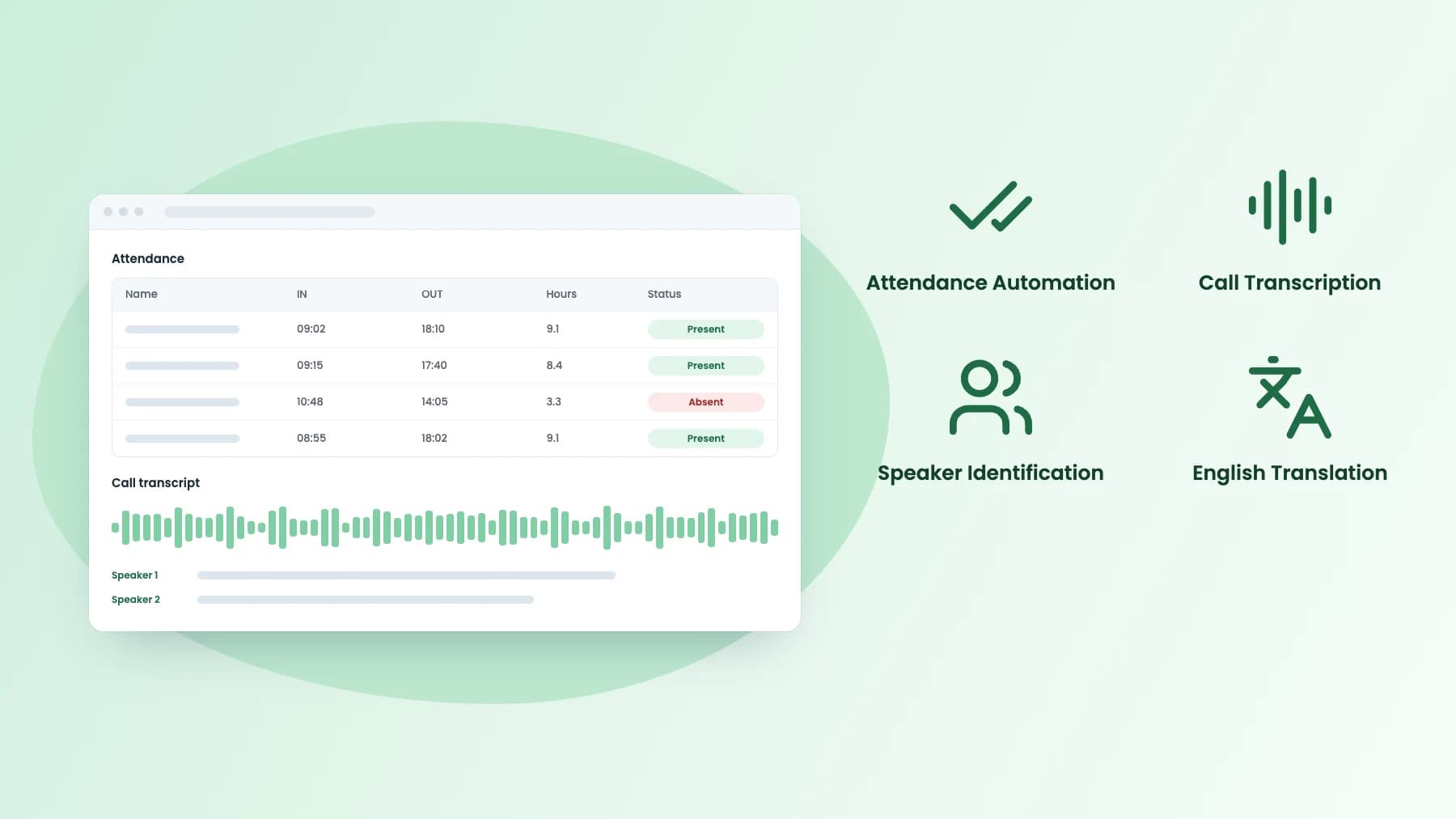
Accurex - AI Workflows for Field Sales Attendance and Call Evaluation
Medical DevicesTwo automated workflows. One checks field sales attendance. The other turns tele-caller audio files into transcripts, with speakers identified and non-English conversations translated into English.Read the Full Case Study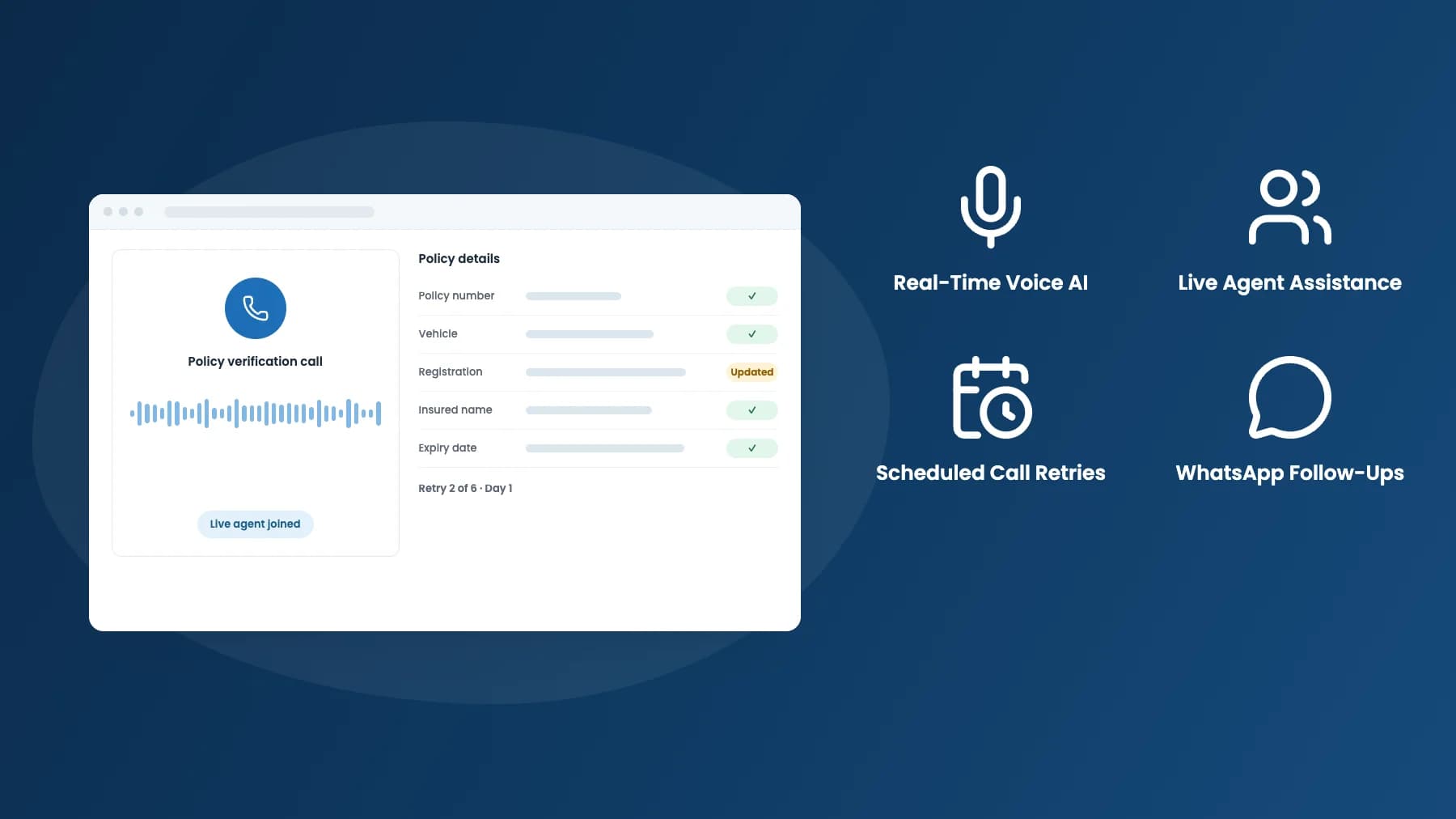 AI Engineering · India
PolicyBoss - A Voice AI Agent for Motor Insurance Policy Verification
Insurance / InsurTechA voice AI agent that supports policy verification calls alongside live agents, retries unfinished verifications, and follows up on WhatsApp after every attempt.Read the Full Case Study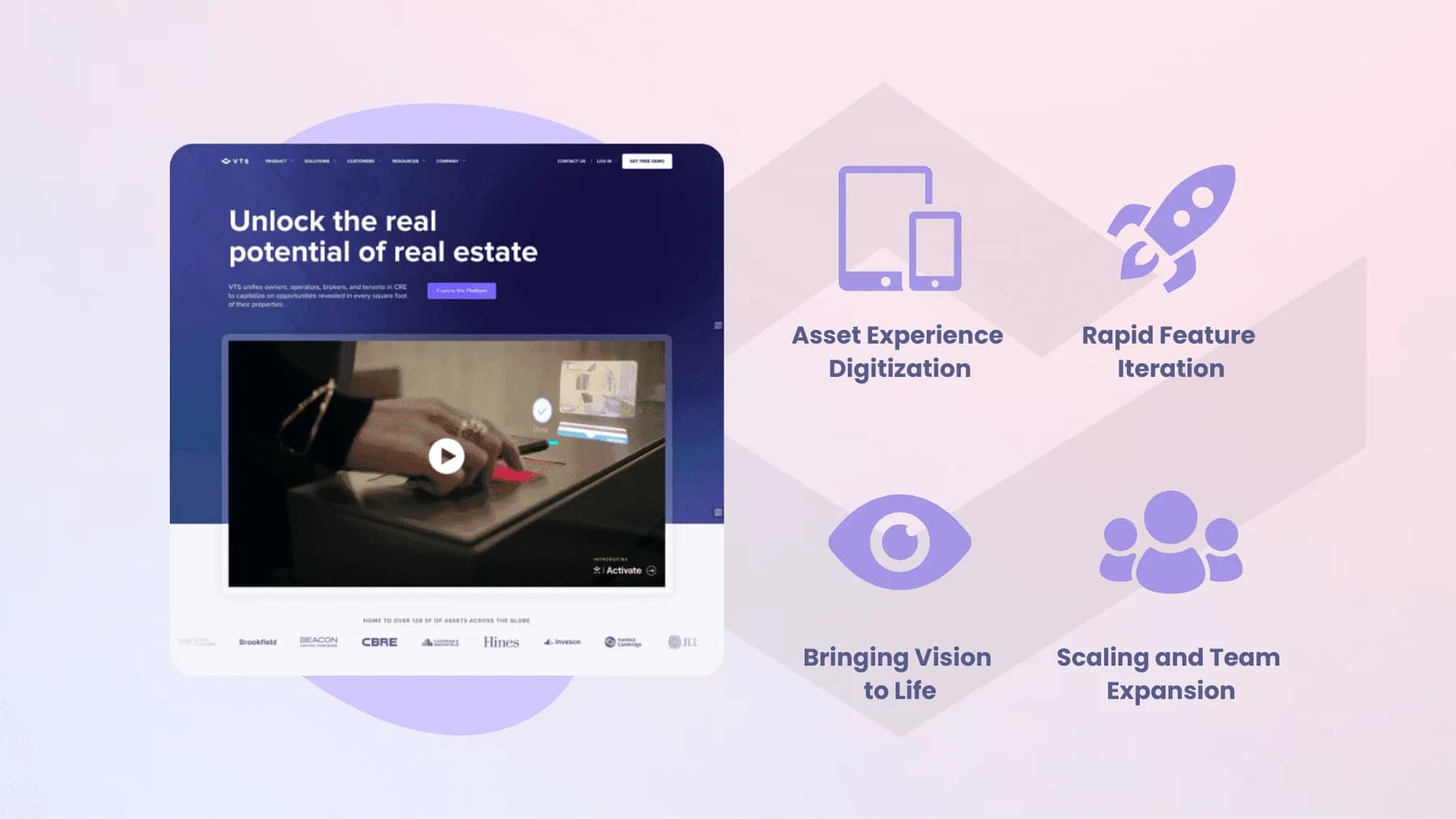 AI Engineering · United States
VTS Rise
VTS Rise · Real Estate, PropTechVTS Rise is a property operations and tenant experience platform, that digitizes the entire asset experience, for landlords. It enables asset and property managers to power their portfolio-wide operations and provides a premium experience to residents, building operators, and visitors.Read the Full Case Study
Let’s Explore How We Can Build Together
Whether you’re building a new product or modernizing an existing one, get insights from our product, engineering, and AI experts.