“Better prompts aren’t making AI smarter anymore. Better context is.”
Prompt engineering transformed how developers interacted with Large Language Models. A well-crafted prompt could dramatically improve the quality of an AI’s response, making prompt engineering one of the defining skills of the early generative AI era.
But today’s AI systems have moved far beyond answering standalone questions.
Modern AI agents retrieve documents, call APIs, interact with databases, use external tools, remember previous conversations, and execute multi-step workflows. In these scenarios, the challenge isn’t writing better instructions—it’s ensuring the model has access to the right information before it begins reasoning.
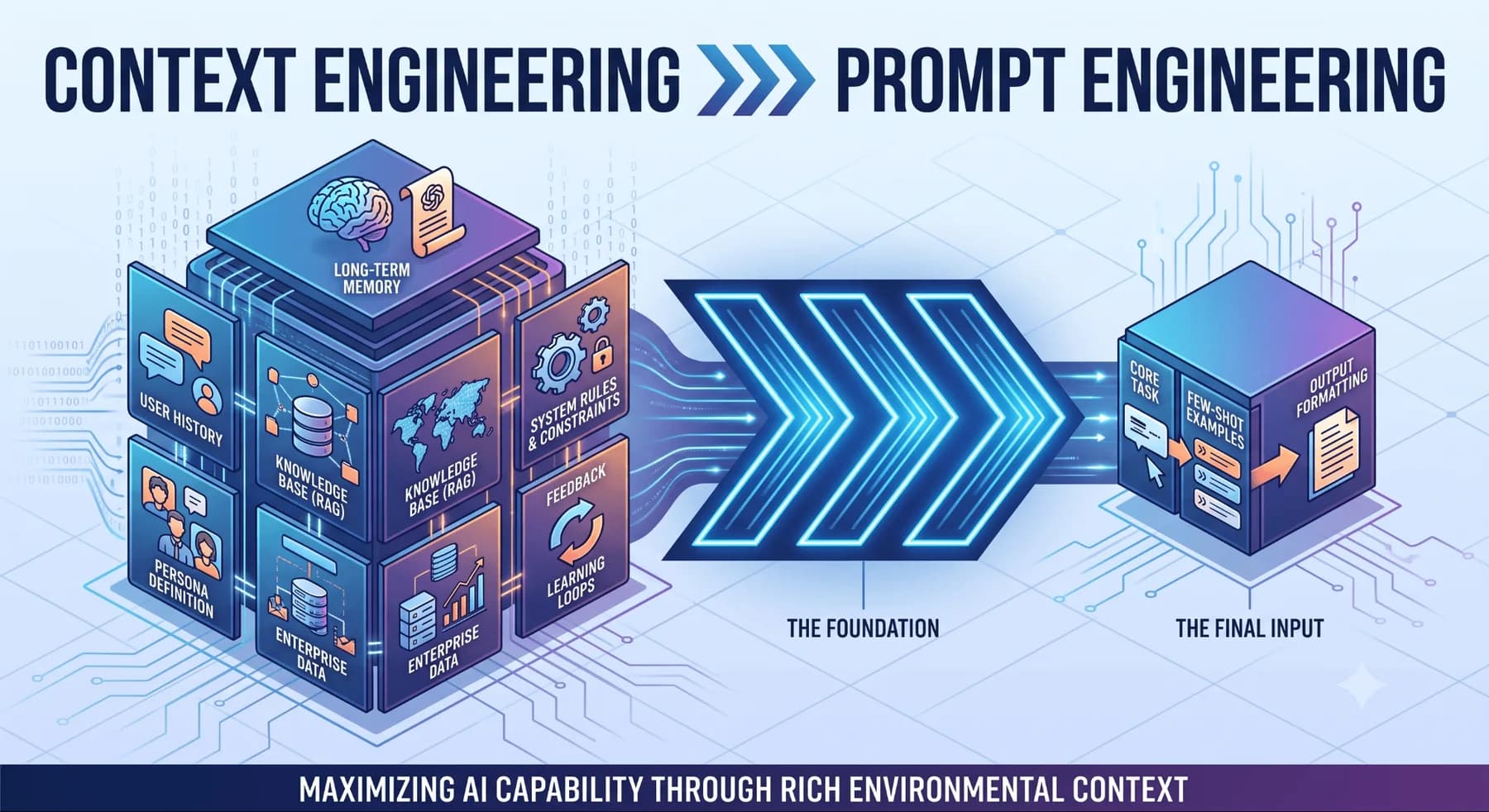
The conversation is shifting from prompt engineering to context engineering, where the focus is no longer on what we ask the model, but on everything the model knows when answering.
Why Prompt Engineering Isn’t Enough
Traditional prompt engineering assumes that every instruction and every piece of information can fit inside a single request.
Real-world enterprise systems rarely work that way.
An AI agent might need to:
- Retrieve internal documentation
- Access previous conversations
- Understand user permissions
- Query business systems
- Execute external tools
- Maintain workflow state
- Remember decisions made earlier
Without this surrounding context, even the most capable models operate with incomplete information. The result? More hallucinations, repeated reasoning, unnecessary token usage, and inconsistent outputs.
The question is no longer:
“How do we write better prompts?”
It’s becoming:
“How do we give AI everything it needs to make the right decision?”
What Is Context Engineering?
Context engineering is the practice of ensuring an AI model receives the right information, at the right time, in the right format before it begins reasoning.
Think of it as building an intelligent information layer around the model.
Instead of relying entirely on prompt wording, context engineering assembles relevant knowledge from multiple sources, including:
- Retrieval-Augmented Generation (RAG)
- Long-term and short-term memory
- Enterprise knowledge bases
- Conversation history
- External APIs
- Tool outputs
- User permissions
- Workflow state
- System instructions
The goal isn’t to provide more information.
It’s to provide better information.
Prompt Engineering vs. Context Engineering
Prompt engineering tells the model how to behave.
Context engineering determines what the model knows before it behaves.
Think of onboarding a new engineer.
A prompt is the task you assign.
Context is everything else that enables success—architecture diagrams, internal documentation, previous design decisions, coding standards, system access, and historical knowledge.
Without that context, even the most talented engineer spends time searching before solving.
AI agents work the same way.
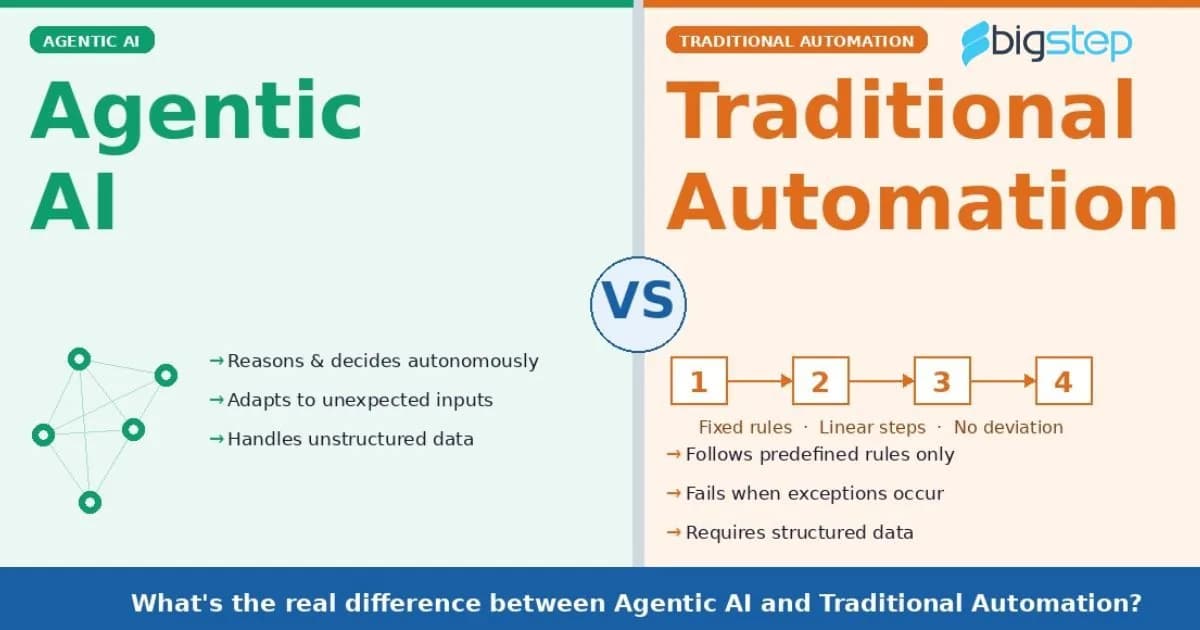
Why Context Matters for Agentic AI
Agentic AI systems don’t simply answer questions.
They plan.
They retrieve information.
They use tools.
They coordinate across workflows.
They adapt based on previous outcomes.
Every one of those actions depends on context.
Without effective context management, AI agents often:
- Retrieve unnecessary information
- Repeat searches across the same knowledge base
- Lose track of previous decisions
- Consume significantly more tokens
- Increase latency
- Produce inconsistent responses
Providing more context isn’t the answer.
The goal isn’t to provide more context. It’s to provide better context.
Building Better Context Pipelines
As organizations move AI from experimentation to production, context becomes an architectural concern rather than a prompting exercise.
A modern context pipeline often includes:
- Intelligent retrieval instead of exhaustive search
- Persistent memory across sessions
- Tool orchestration for real-time information
- Permission-aware access to enterprise data
- Context compression to reduce token usage
- Observability to understand what information reached the model
The objective isn’t to maximize the amount of information an AI receives.
It’s to maximize the relevance of that information.
Why It Matters in Practice
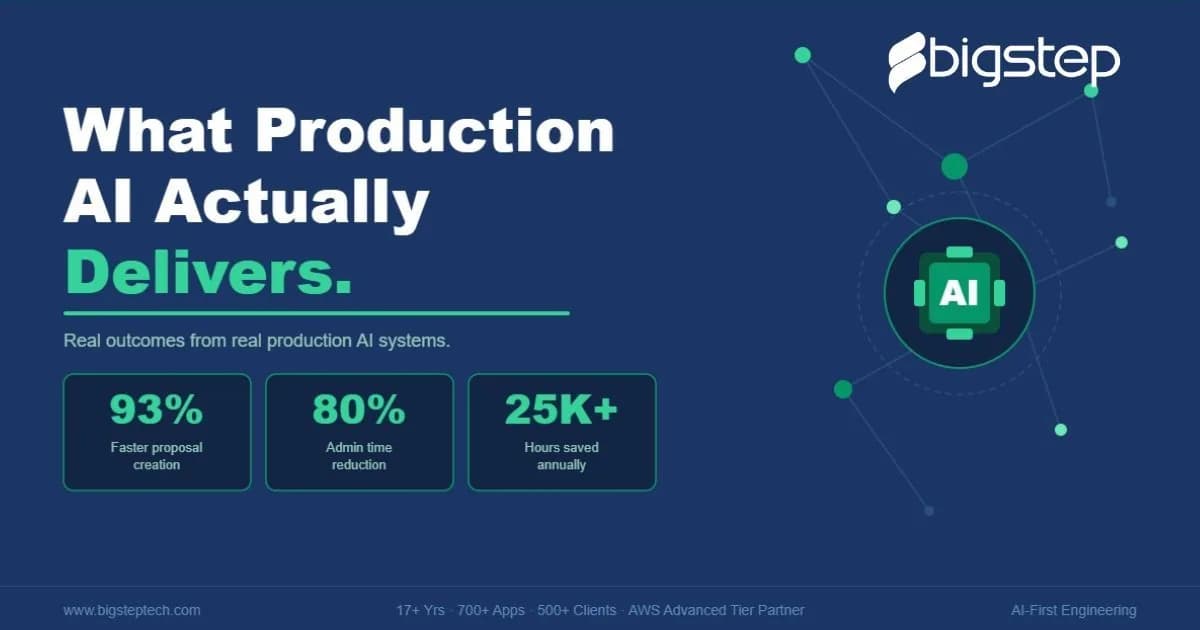
Effective context engineering leads to measurable improvements across enterprise AI systems.
- More reliable reasoning
- AI works with complete and relevant information.
- Lower token consumption
- Only the information that matters reaches the model.
- Reduced hallucinations
- Better grounding leads to more accurate responses.
- Faster execution
- Less searching, more solving.
- Higher-quality automation
- Agents maintain state and make better decisions across long-running workflows.
As AI systems become more autonomous, context quality increasingly determines production performance.
Limitations to Keep in Mind
Context engineering doesn’t replace good system design.
It can’t compensate for outdated documentation, poor data quality, missing business knowledge, or incorrect permissions.
AI can only reason with the information it’s given.
Human expertise still defines what information should be available, how it should be organized, and when it should be used.
The Takeaway
Prompt engineering helped us communicate with AI.
Context engineering helps AI understand the world it’s operating in.
As organizations build increasingly autonomous systems, success won’t be defined by who writes the cleverest prompts.
It will be defined by who builds the smartest context.
Ready to Move From Prototype to Production?
Building enterprise AI requires more than selecting the latest language model.
It demands the right architecture for retrieval, memory, orchestration, and context management.
At BigStep Technologies, we help organizations design and build production-grade AI systems that move beyond impressive demos and deliver measurable business outcomes.
Get in touch with our AI engineering team