
There’s a version of AI adoption that most businesses are stuck in: a chatbot on the website, a few prompts in a productivity tool, maybe a pilot that never made it past the boardroom. And then there’s what’s quietly happening at the companies pulling ahead AI that doesn’t just respond, but reasons, decides, and acts.
The gap between those two worlds is agentic AI development. And for business leaders who want to compete in the next three years, understanding it isn’t optional.
AI That Acts, Not Just Answers
_The first wave of enterprise AI was about answering questions. The second wave, the one happening right now is about taking action._
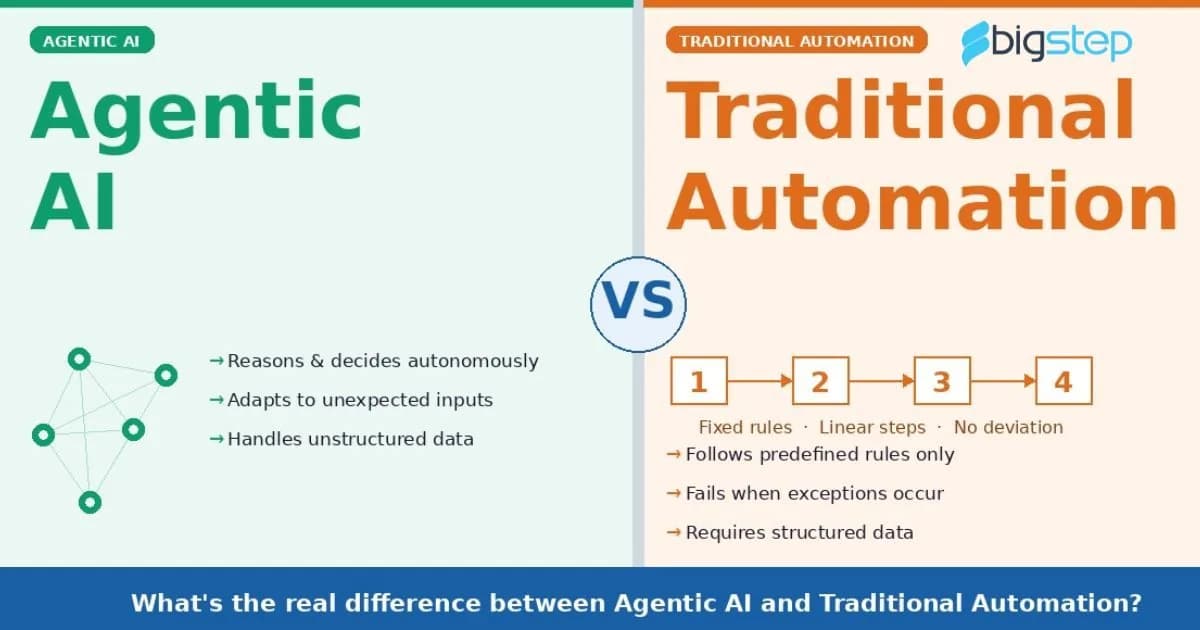
Traditional AI tools respond when prompted. AI agents operate independently: they receive a goal, break it into steps, call the tools they need, and execute without a human in the loop at every stage.
String multiple agents together, and you have agentic workflows: end-to-end automated pipelines that can handle everything from processing insurance claims to qualifying sales leads to generating radiology reports.
This shift changes what’s possible for every business function. The question is no longer “Can AI help with this?” It’s “Why is a human still doing this?”
Worth bookmarking → [Why 2026 Is the Year SaaS Becomes Agentic.](/blog/ai-native-enterprise-agentic-workflows-2026)
What Building an AI Product Actually Involves
There’s a meaningful difference between adding an AI feature, building an AI product, and deploying AI agents and conflating them leads to wasted budgets and failed projects.
An AI feature is a single capability bolted onto an existing product — a summarisation button, a smart search bar.
An AI product is built AI-first from the ground up — the intelligence is the product, not an add-on.
An AI agent is an autonomous system that pursues goals across multiple steps, tools, and data sources.
Building any of these well requires more than picking a large language model. It demands clean, well-structured data, the right infrastructure, thoughtfully designed prompts and retrieval systems, and engineering rigour that ensures the system performs reliably in production — not just in demos.
The Rise of Agentic Workflows
An agentic workflow is a sequence of AI-driven steps that automates a multi-stage business process from start to finish. Think of it as a digital colleague who receives a task, figures out what needs to happen, pulls information from the right systems, and delivers a result — at any hour, at any scale.
Real examples of what agentic AI development looks like in practice:
Insurance: An AI agent handles 24/7 inbound customer calls, understands policy queries, processes renewals, and initiates claims — through natural audio conversation, without a human agent.
Property Management: An AI system ingests tenant service requests from emails, texts, and calls, converts them into structured work orders, assigns urgency based on severity, and syncs updates in real time — reducing administrative time by 80% and saving 47 minutes per manager, per day.
HR & Recruitment: Intelligent systems automate resume screening, skill matching, and candidate shortlisting with high accuracy, cutting time-to-hire without compromising quality.
Sales: Multi-channel AI agents capture lead data, detect buyer intent, qualify prospects, schedule meetings, and automate follow-ups — keeping every opportunity moving without manual intervention.
_These aren’t prototypes. They’re production systems delivering measurable business outcomes today._
Must Read → Why Most LLM Projects Stall Before Production.
The Foundation Most Businesses Skip: Data
Here’s an uncomfortable truth about AI projects: the model is rarely the problem. The data is. Most AI initiatives fail not because the technology isn’t capable, but because the data feeding it is siloed, inconsistent, incomplete, or inaccessible. Before any agentic AI development can deliver results, the data foundation has to be right.
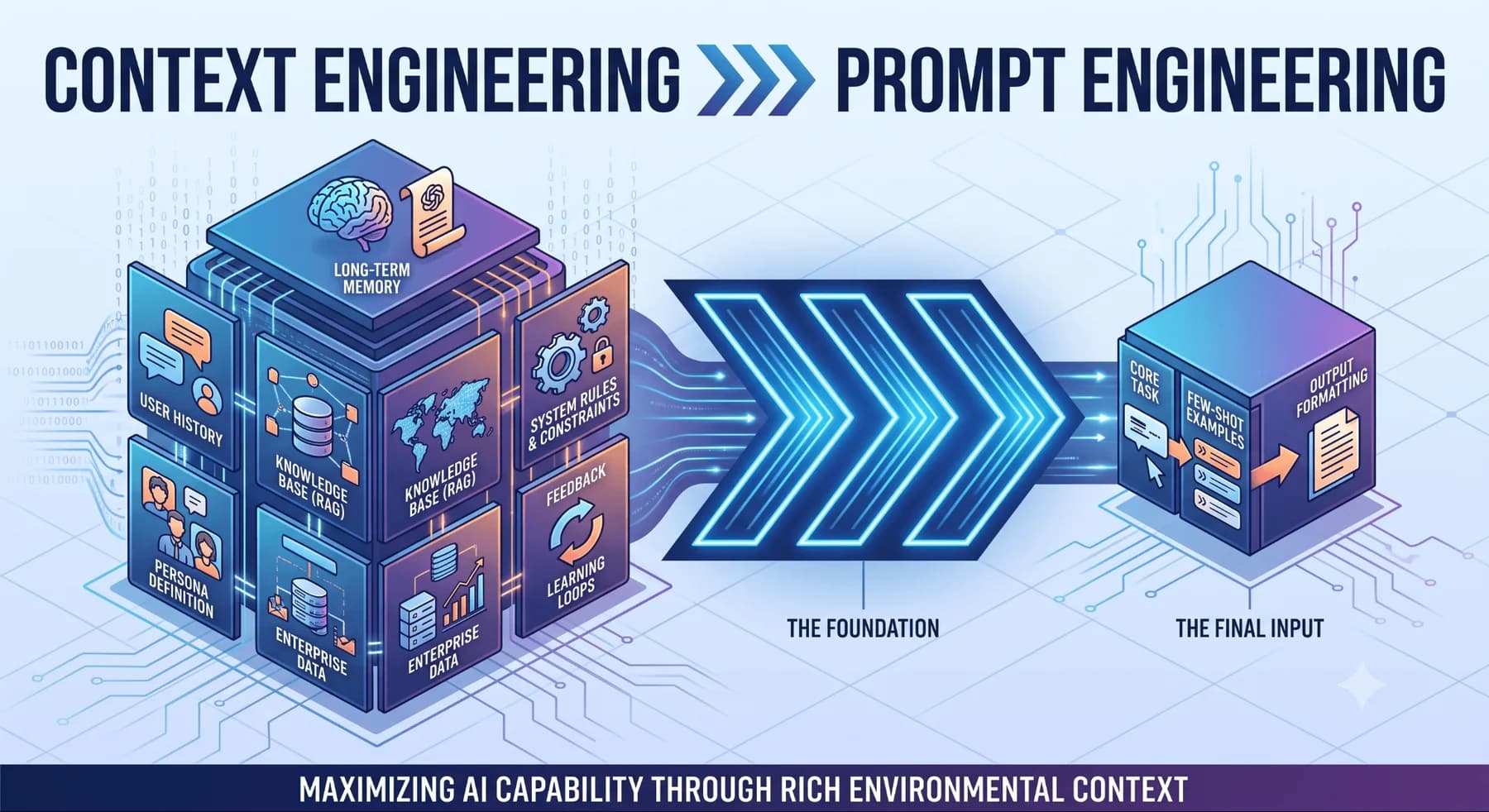
This means building scalable, secure data pipelines — from model design through extraction, consolidation, cleaning, and validation. It also means implementing Retrieval-Augmented Generation (RAG), a technique that allows AI systems to query live, governed enterprise data rather than relying solely on what a model learned during training.
RAG is what separates AI that gives generic answers from AI that gives accurate, context-aware, enterprise-specific responses.
Data engineering is not the glamorous part of AI. It is, however, the part that determines whether your investment pays off.
A Practical Roadmap for GenAI Adoption
Getting from “we want to use AI” to “AI is running in production and delivering ROI” requires a structured approach. Here’s the framework that works:
Phase 1: Use Case Selection & Prioritisation Identify where AI can drive the most impact: customer experience, operational efficiency, data intelligence, or revenue acceleration. Rank use cases by business value, feasibility, and alignment with strategic goals. The goal is to pick the right first initiative — not the flashiest one.
Phase 2: Reviewing the Foundation for AI Adoption Assess your data: Is it available, structured, and accessible? Assess your infrastructure: Can it handle AI workloads at scale? Skipping this phase is the single most common reason AI pilots fail to reach production.
Phase 3: Development, Deployment & Iteration Select the right model for the use case. Fine-tune it with your specific data. Build the application. Deploy with continuous monitoring. Iterate based on real-world performance. AI is not a one-time build — it’s an evolving system that improves with use.
What the Numbers Look Like
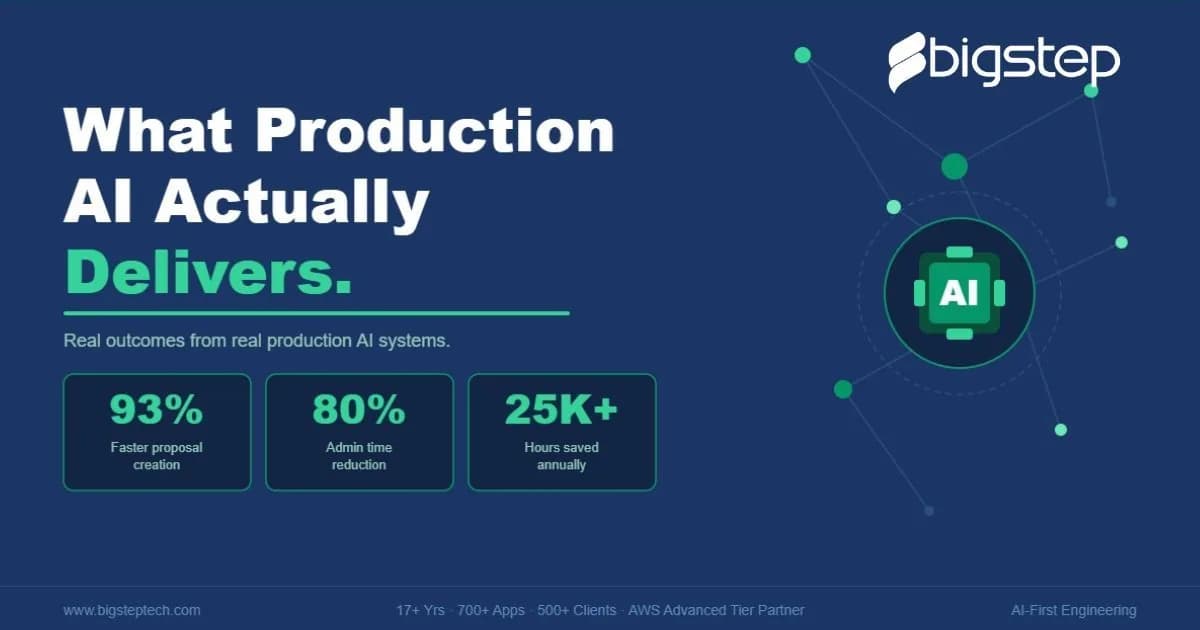
Abstract promises about AI don’t move business decisions. Outcomes do. Here’s what production agentic AI development has delivered for real clients: 93% faster proposal creation — lease proposals that took hours now generate in seconds, saving 25,000+ hours annually across teams.
80% reduction in administrative time for property managers, with tenant issues resolved 65% faster.
90% reduction in call review time through automated multilingual transcription and AI-driven quality analysis.
95%+ decision accuracy in commercial real estate operations through domain-specific AI models.
These results share a common thread: they came from AI built for production, not for pilots. Engineered to be observable, scalable, and compliant — not just impressive in a demo.
Why the Engineering Partner Matters More Than the Model
Every major AI model provider offers impressive capabilities. The differentiator isn’t which model you use — it’s how well it’s built, integrated, and maintained.
Effective agentic AI development requires full-stack delivery: one team that owns the AI layer, the application layer, the infrastructure, and the CI/CD pipeline. It requires production-first thinking — structured outputs, deterministic fallbacks, audit trails, and performance monitoring built in from day one, not retrofitted after go-live.
It also requires genuine domain expertise. AI that works in insurance is different from AI that works in real estate, which is different from AI that works in healthcare. The ability to build domain-specific models — and to fine-tune, deploy, and iterate them responsibly — is what separates AI-first engineering from generic software development.
The Window Is Open — But Not Indefinitely
Agentic AI development is no longer early-stage technology. It is production-ready, ROI-proven, and being deployed right now by the companies that will define their industries over the next decade.
The question for every business leader reading this isn’t whether to build. It’s how fast — and with whom.
Ready to move from exploration to execution?
BigStep Technologies offers a free consultation, a comprehensive audit of your current AI setup, and a custom roadmap built around your business objectives. Talk to our team → https://bigsteptech.com/contact-us