
Surveys across industries keep landing on a similar pattern:
most companies say they are testing AI, but only a fraction can clearly point to the productivity gains, revenue lift, or customer‑experience improvements they expected.
That gap is exactly where AI for business becomes interesting: not as a buzzword, but as a practical way to redesign the workflows that actually run a company.
For growing organizations of all sizes, from ambitious startups to large established enterprises, the opportunity is no longer to ask “Should we use AI?” but “Where should we use AI first so it actually moves the needle?”.
When AI for business is done well, it stops being a side project and starts becoming the invisible engine behind faster sales cycles, smoother operations, and happier customers.
What “AI for Business” Really Means
When people say “AI for business”, they often mean “we opened ChatGPT in a browser”.
For a SaaS or startup, that’s not enough.
AI for business is the use of AI models inside your real processes: sales, marketing, product, and support. It’s when AI:
- reads and routes inbound leads
- drafts personalized outreach
- triages tickets
- detects churn risk
- summarizes customer feedback for product decisions
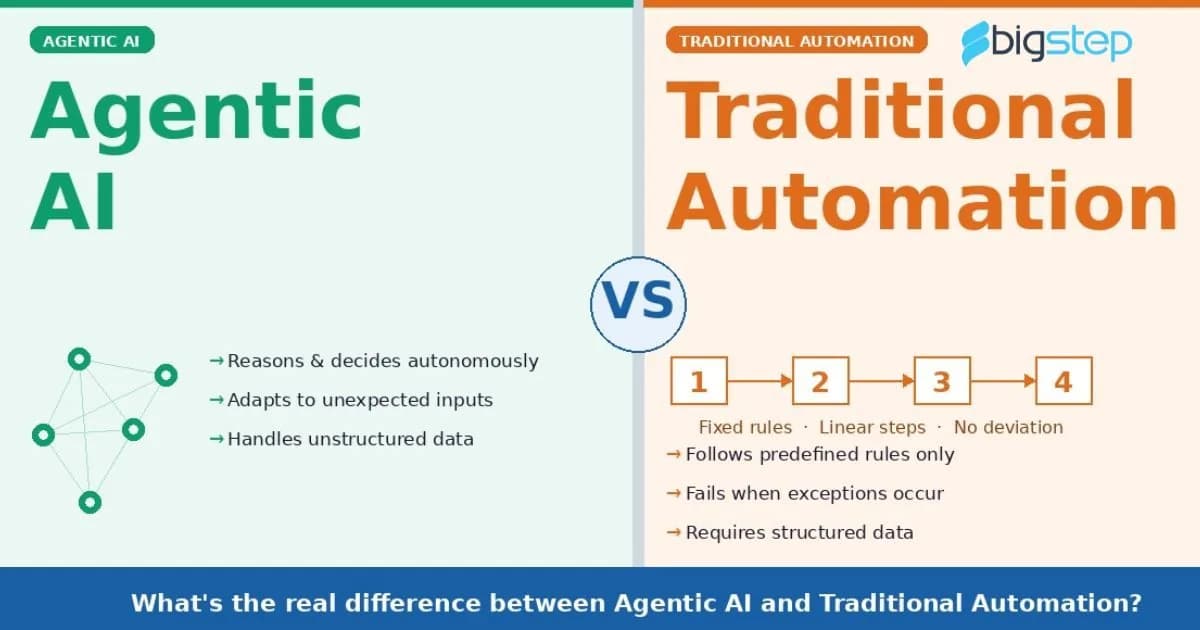
The key shift: you’re not asking AI to write random content; you’re asking it to work inside a workflow with a clear goal. That’s where concepts like AI workflows and AI agents come in.
Why Businesses Are Moving So Fast on AI
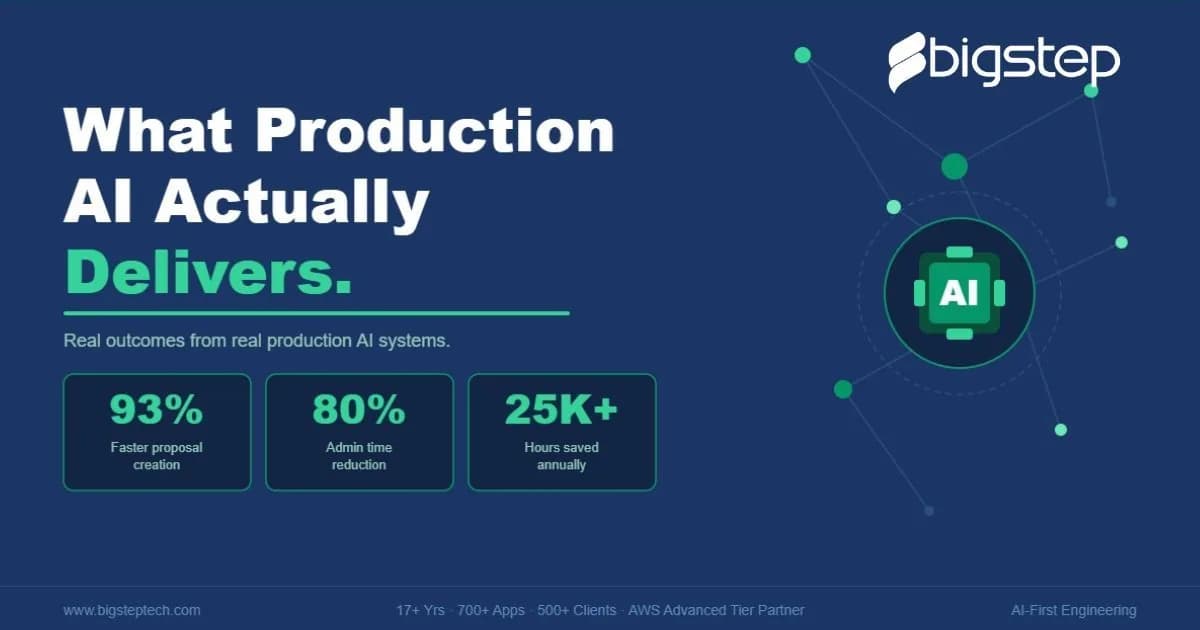
The urgency is not just hype. When AI is thoughtfully embedded into processes, many organizations report productivity gains of 20–30% in knowledge‑work teams, especially in roles that spend a lot of time reading, summarizing, and drafting information.
That shows up as more projects shipped, fewer delays, and teams that can handle more work without proportional headcount increases.
On the revenue side, companies that connect AI directly to their customer journey—lead qualification, pricing experiments, onboarding flows—often see measurable revenue lift from better conversion rates and higher expansion. Even modest improvements at each stage of the funnel compound into meaningful bottom‑line impact.
Customer‑facing functions, sales, marketing, success, and support also see clear customer‑experience improvements when AI is done right.
Faster responses, fewer dropped conversations, and more personalized interactions are difficult for competitors to copy quickly. In many cases, it’s not the presence of AI that customers notice; it’s the feeling that “this company just understands and responds to me faster and better than others”.
All of this is anchored in three big drivers:
Speed. AI can read, analyze, and generate text, images, and patterns in seconds. When AI is embedded in AI workflows, tasks like drafting responses, tagging data, or summarizing long documents shrink from hours to minutes, which is a direct source of productivity gains.
Efficiency. Repetitive work is expensive and demoralizing. Offloading that work to AI agents lets teams spend their time on high‑value activities: strategy, relationship‑building, creativity. That efficiency directly supports both margin improvement and sustainable revenue lift.
Better decisions. AI is very good at compressing complex information into usable insights. Imagine having every meeting transcript, every support conversation, and every product review instantly summarized by AI. Leaders can finally see patterns instead of drowning in noise—one of the most underrated aspects of AI transformation and a major driver of better customer‑experience improvements.
Where AI Fits Inside a Modern Business
Almost every function in a modern organization can benefit from AI for business when you give it a clear job to do. Here are the most powerful places to start, with simple use‑cases.
1. Revenue and Growth AI helps you talk to the right people, at the right time, with the right message. Example: An AI workflow reads new leads from your website, their LinkedIn profiles, and your CRM. It scores each lead, adds a short “who they are + what they care about” summary, and drafts a tailored email for sales. High‑fit leads go straight to a rep; low‑fit leads go into a nurturing sequence.
Result: Higher win rates and more pipeline without hiring a bigger sales team.
2. Customer Experience and Support AI turns support from “ticket firefighting” into “always‑on help”. Example: An AI agent sits on your help center and chat. It answers common questions instantly (“How do I reset my password?”), suggests replies to human agents for tricky questions, and groups recurring issues so product can see what to fix next.
Result: Faster replies, fewer repeat tickets, and a smoother experience that customers actually feel.
3. Operations and Internal Processes AI quietly cleans up the messy, manual work nobody has time for. Example: After every important meeting, AI generates clean notes, action items, and owners, then updates your project tool. It also keeps your internal wiki fresh by summarizing new documents into clear how‑to pages.
Result: Fewer bottlenecks, less copy‑paste work, and more time for real problem‑solving.
4. Strategy and Product Decisions AI makes your data finally usable instead of overwhelming. Example: AI reviews support tickets, reviews, NPS comments, and usage data each week. It clusters the biggest pains, highlights which features drive retention, and gives leaders a short “here’s what changed this week” brief.
Result: Better decisions on what to build, which markets to focus on, and which campaigns to scale—leading to both higher revenue and happier customers.
A Practical Path to AI Transformation
A lot of organizations get stuck at the “let’s try a few tools” stage. What separates the leaders is not access to better models, but a more deliberate path into AI transformation.
A practical starting point looks like this:
- Pick one measurable problem that actually matters—maybe response times are too slow, handoffs between teams are messy, or reporting eats half your week.
- Map the current workflow in clear steps and identify where information gets stuck.
Insert AI where it can create immediate leverage: summarizing inputs, drafting outputs, routing cases, flagging anomalies.
- Wrap that into a stable AI workflow or AI agent, then measure the before‑and‑after impact in terms of productivity gains, revenue lift, and customer‑experience improvements.
- Once that first workflow delivers results, you can expand horizontally into other processes without losing control. This approach works whether you’re a small team or a complex organization with multiple departments.
Common Mistakes to Avoid with AI for Business
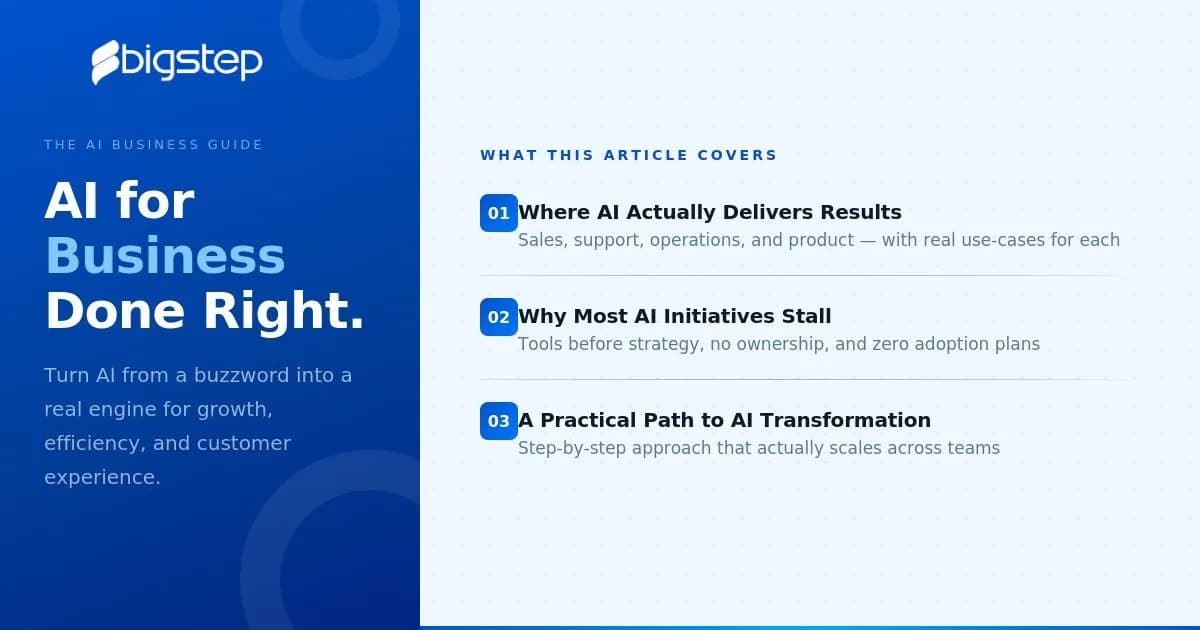
Despite the potential, many AI initiatives stall out. A few patterns show up again and again:
Tools before strategy. Buying a new AI platform without a clear use‑case leads to excitement, then disappointment. The strategy should start with a business problem, not a feature list.
No owner. If nobody “owns” the AI workflow, it quickly drifts out of date. Every AI for business initiative needs a clear owner, just like any other critical process.
Ignoring adoption. People don’t automatically trust new systems. Without training, communication, and small early wins, teams quietly revert to old habits—even if the AI solution is better. Avoiding these traps is as important as choosing the right technology.
Worth bookmarking → Why 2026 Is the Year SaaS Becomes Agentic.
Conclusion: Turn AI for Business into a Real Advantage with BigStep
AI for business is now core, not optional. When done right, it stops being a side experiment and becomes the engine behind day‑to‑day growth, operations, and customer experience.
The real value is measurable.
- Thoughtful AI for business shows up as:
- productivity gains across teams
- revenue lift along your funnel
- customer‑experience improvements that drive loyalty and referrals
Technology isn’t the main barrier—execution is.
- Most companies struggle not because AI models are weak, but because:
- they don’t know which workflows to start with
- pilots never turn into stable, owned processes
- there’s no clear way to scale what works
This is the gap BigStep is designed to fill.
BigStep Technologies is an AI‑first, cloud‑native software engineering and data & AI services company that turns AI for business from a buzzword into working systems.
What BigStep actually builds.
- Agentic workflows that automate end‑to‑end processes
- AI agents that handle focused, high‑impact tasks
- Product and data architectures that plug into your existing stack
Your next step. If you’re ready to move beyond experiments and turn AI for business into a real competitive advantage, BigStep can help you design, build, and grow the systems that make it happen.
Talk to our team → Contact us