
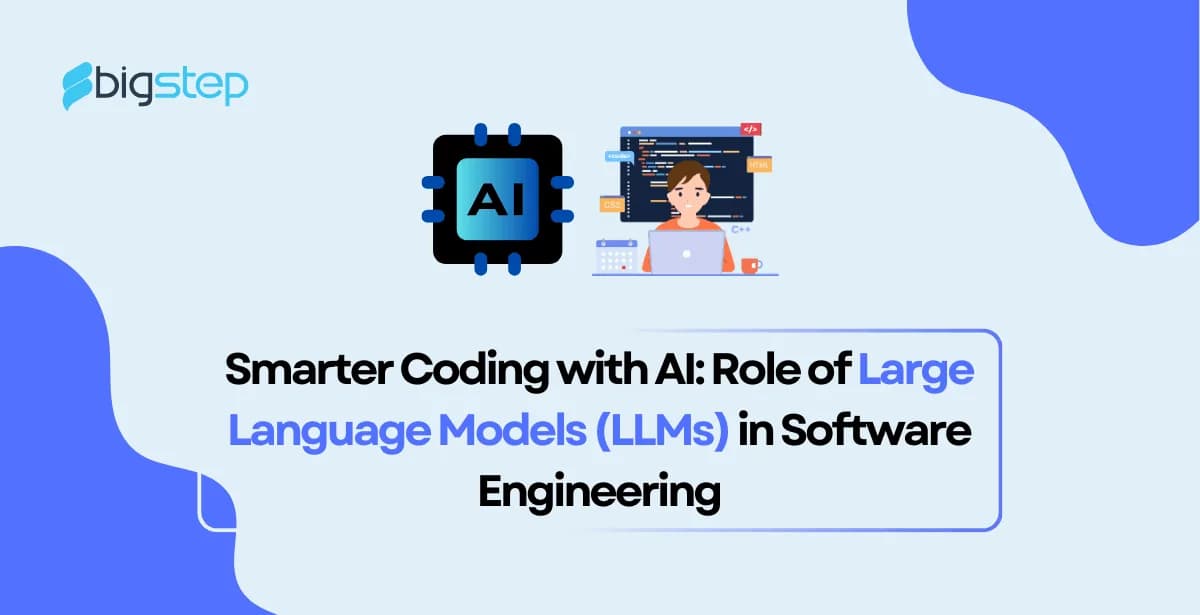
The rapid evolution of Large Language Models (LLMs) like OpenAI’s GPT-4, Google’s Gemini, Meta’s LLaMA, Grok 3 by xAI, Muse by Microsoft, and others is reshaping software engineering. These advanced AI tools are not just improving productivity but they are redefining how we write, test, and maintain code. As these AI-driven tools continue to evolve, their influence on software engineering will only deepen. But what does this mean for us as a developer on the ground? Let’s see how LLMs are changing the software engineering world.
1. Code Generation and Automation
LLMs enable developers to generate high-quality code with minimal effort, transforming natural language instructions into executable code. Tools like GitHub Copilot and Tabnine act as intelligent coding assistants, suggesting complete functions, fixing syntax errors, and even optimizing code. Other tools such as Amazon CodeWhisperer, Codeium, Codiga, Sourcery, and Kite also provide similar functionalities, boosting productivity through smart code suggestions and automation. Instead of spending time on repetitive tasks, developers can now focus on higher-order problem-solving.
Real-World Example
Imagine you’re building a REST API in Node.js and need to write basic CRUD operations. Instead of manually coding each endpoint, you can prompt GitHub Copilot to generate the code for you. Not only does it create the necessary functions, but it also suggests best practices for error handling and data validation. Check out below video for this: Generating CRUD APIs
2. Debugging Made Easy
Debugging is often a tedious and time-consuming process. LLMs like GPT-4 are transforming this by analyzing code patterns to identify potential vulnerabilities and errors before they manifest in production. Imagine encountering an error in earlier days, rather than spending hours checking through Stack Overflow, now you can ask the model directly for insights.
Real-World Example
For instance, when faced with a NullPointerException in GoLang, LLMs can analyze the stack trace and pinpoint where the null reference originated, suggesting fixes such as adding null checks or refactoring the code. Check out below video for this: DebuggingMadeEasy
3. Code Reviews and Quality Assurance
Conducting thorough code reviews is always a challenge, especially with large codebases. LLMs streamline this process by identifying code smells, unused variables, or inconsistent naming conventions. Tools like DeepSource and SonarQube already implement AI to detect issues that might slip past human reviewers.
Real-World Example
Imagine submitting a pull request for a new feature. An AI-powered code review tool not only flags potential security vulnerabilities but also suggests performance improvements, like using more efficient data structures.
4. Natural Language Programming
With the rise of conversational AI, developers can now write code using plain English. Projects like OpenAI Codex, GitHub Copilot, Amazon CodeWhisperer, Tabnine, Google Bard, Replit’s Ghostwriter, and Salesforce CodeGen allow users to describe what they want, and the models generate corresponding code snippets. This approach lowers the barrier to entry for non-programmers and speeds up for experienced developers.
Real-World Example
Imagine saying, “Create a function that calculates the Fibonacci sequence up to the nth term,” and getting a complete Python function in seconds. This level of abstraction allows developers to rapidly iterate and experiment. Check out below video for this: Natural Language Programming
5. Bridging the Skills Gap with AI Mentorship
For junior developers or those learning new technologies, LLMs act as mentors. Platforms like Replit are integrating AI tutors that provide explanations and guidance on coding challenges. Instead of relying solely on tutorials or documentation, developers can interact with AI to get real-time feedback. Other tools such as Codeium, Sourcery, Amazon CodeWhisperer, and Kite also offer similar mentorship features.
Real-World Example
A developer struggling with asynchronous programming in JavaScript can ask, “How do I handle errors in async functions?” and get not only the answer but also sample code snippets and explanations. Check out below video for this: Bridging skill gaps with AI Mentor
Conclusion: A New Era for Software Engineering
LLMs are not just tools—they are partners in our coding journey. They reduce friction in development processes, enhance productivity, and support us at every skill level. While challenges remain, especially around ethics and security, the future of software engineering will undeniably be shaped by AI-driven assistance. To stay ahead, developers should embrace these tools while maintaining a strong foundation in core programming principles (problem-solving, architecture, security, etc). Stay curious, keep experimenting, and let AI be a co-pilot in our software engineering journey!