
In this blog, we’ll explore why context engineering is crucial for effective AI agent design and how it shapes the future of intelligent systems.
Introduction
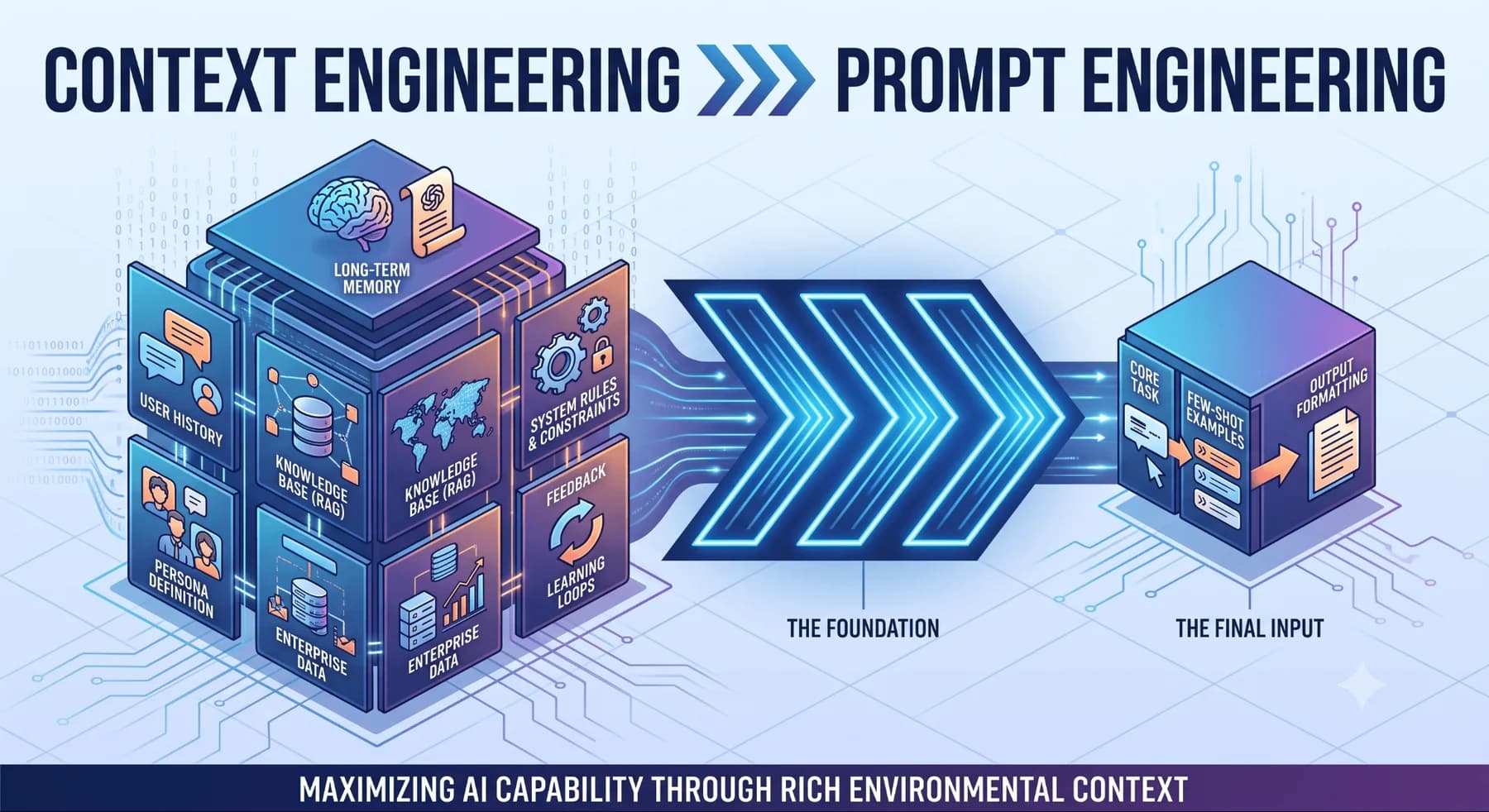
As AI agents take on more complex roles, understanding user intent requires more than just processing language; it demands context. Context engineering is the practice of designing systems that give AI the right information at the right time, enabling smarter, more personalized interactions.
_Source_
Understanding Context Engineering in AI
Context engineering in AI involves designing environments that help AI systems understand user data, goals, and external signals like time or location. Unlike static software, these systems adapt in real time, enabling smarter decisions.BigStep Technologies uses this approach to build more intuitive, intelligent, and context-aware AI solutions.
Why Is Context Engineering So Important for AI Agents?
AI agents like chatbots and voice assistants must do more than process commands; they need to understand intent and timing. Context engineering is vital for two main reasons:
Intent Recognition & Personalization
Commands like “Book a table” can be ambiguous without additional context. Through context engineering, AI agents can draw on past interactions—such as previous bookings or user preferences—to infer intent and deliver more relevant responses.
For example: User: Book a table Agent: Would you like to reserve the same table at Restaurant XYZ for dinner, like last time? User: Yes
In this case, the agent intelligently recalls past behavior to interpret the vague request, showcasing how memory and context work together to personalize user experiences.
Managing Multi-Turn Conversations
Tasks like trip booking need agents with memory to retain past inputs. Context engineering enables continuity, making interactions smooth and natural. BigStep Technologies uses this in financial bots, healthcare assistants, and smart support agents.
Key Benefits of Context Engineering in AI
- Improved Intent Recognition AI agents can better understand vague or incomplete user inputs by referencing relevant context.
- Highly Personalized Interactions Tailors responses based on user history, preferences, and behavior for a more human-like experience.
- Seamless Multi-Turn Conversations Enables AI to maintain memory across steps, making interactions coherent and task-oriented.
- Greater Decision Accuracy Context-aware systems can make smarter choices by factoring in real-time data and environmental cues.
Context Engineering in Action: Real-World Applications
Context engineering enables real-world AI applications by making systems more adaptive and user-centric. In sectors like healthcare, finance, e-commerce, and customer support, AI leverages historical data, user behavior, and sentiment analysis to deliver highly personalized and relevant experiences.
Challenges in Context Engineering
While powerful, context engineering comes with its own set of challenges:
- Data Privacy: Managing sensitive user data demands robust encryption, access control, and ethical usage.
- Context Overload: Feeding too much context to an AI model can confuse rather than help. It’s critical to filter and prioritize relevant signals.
- Scalability: As the number of users and use cases grows, managing context across millions of sessions becomes a technical feat.
- Bias and Inference Errors: If the underlying context is flawed or biased, the AI’s decisions will be too.
Designing AI Agents with Context in Mind
To design effective AI agents, companies must follow context-aware development principles:
- Modular Design: Separate components for memory, state tracking, and decision-making to maintain system clarity and scalability.
- Context Prioritization: Only retain and use what is relevant to the user and task at hand.
- Real-Time Updates: Continuously update the agent’s understanding as new context becomes available.
- Testing and Simulation: Run agents in diverse scenarios to see how they adapt to changing contexts, ensuring robustness.
The Future of Context Engineering in AI
As AI agents become more autonomous and human-like, context will be the key to delivering exceptional user experiences. Emerging technologies like context-aware LLMs, neural-symbolic reasoning, and edge AI will drive real-time personalization across sectors such as healthcare, education, and governance. Future AI systems will rely on hybrid architectures that blend large language models with domain knowledge graphs, real-time data, and persistent memory—making context the foundation of intelligent behavior, not just a supporting feature. BigStep Technologies is already leveraging these innovations to future-proof AI agent design and performance.
Conclusion
Context engineering isn’t a luxury—it’s a necessity for next-gen AI agent design. As AI continues to reshape industries, those who understand and leverage context engineering will be the ones leading the charge in innovation, efficiency, and human-AI harmony.
For developers, architects, and business leaders alike, the message is clear: build for context, or risk being misunderstood. BigStep Technologies is committed to helping businesses achieve this with intelligent, context-aware AI solutions.
Quick FAQs
Q1. What is context engineering in AI? It’s the practice of enabling AI systems to understand and adapt using user data, task flow, and real-time signals.
Q2. Why does context matter for AI agents? It helps AI understand intent, personalize responses, and manage multi-step interactions.
Q3. Where is it used? In healthcare bots, financial advisors, e-commerce recommenders, and smart support systems.
Q4. How does it benefit AI performance? Boosts accuracy, personalization, and user satisfaction.
Q5. What powers context-aware AI? Tools like RAG, LLMOps, and hybrid AI stacks with memory and reasoning abilities.