
Most engineering teams have already made the call. Copilot, Cursor, Claude, and a growing set of agentic coding tools now sit inside the pipeline.
The productivity boost is real, and nobody serious is arguing otherwise.
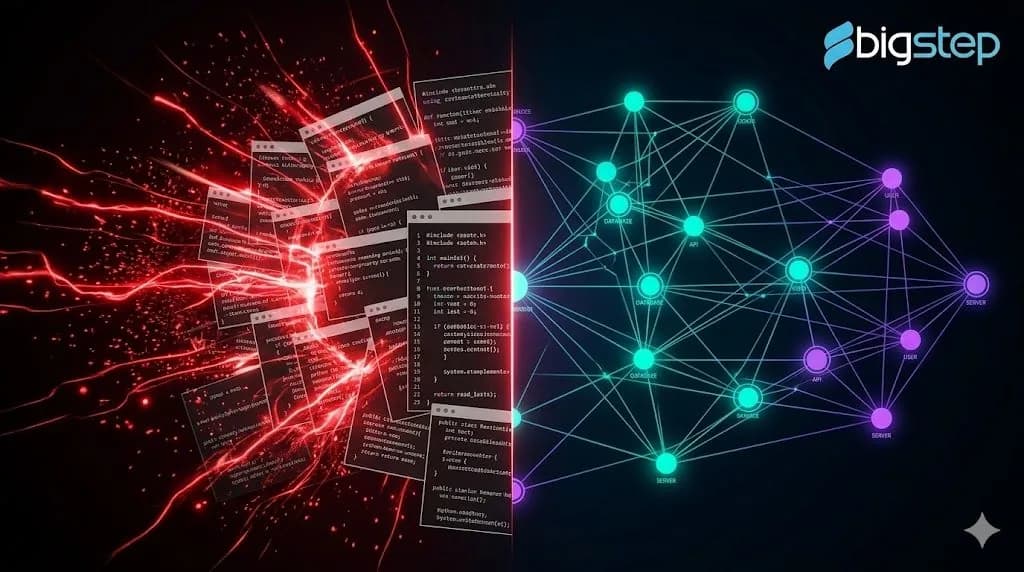
But here is the part fewer leaders are talking about. The same AI tools that ship features faster are also quietly introducing a new class of failures, ones that do not show up in your test suite, do not trigger your security scans, and do not surface until six or twelve months after the velocity gains got celebrated in a board deck.
If you lead engineering at an enterprise, the question has shifted. It is no longer whether to use AI.
It is how to govern it so the velocity does not turn into a maintenance bill you cannot afford.
This article walks through the four hidden costs we keep seeing in AI-assisted codebases, the engineering disciplines that actually contain them, and the questions worth asking any partner, internal or external, claiming to build AI for production.
What AI Development Services Actually Mean in 2026
The term has become loose enough to mean almost anything, so it is worth being precise. AI development services are professional engineering services that design, build, and maintain AI-powered products, features, and agentic workflows with the methodology rigor production demands.
Worth bookmarking → Why 2026 Is the Year SaaS Becomes Agentic.
In practice, the work falls into three tiers, and each one carries a different risk profile.
• AI feature add-ons. Layering capabilities like summarization, semantic search, or classification onto an existing product. Lowest complexity, but easy to underestimate.
• AI-native products. Building software where AI is the core value, not a feature toggle. The architecture has to assume non-determinism from day one.
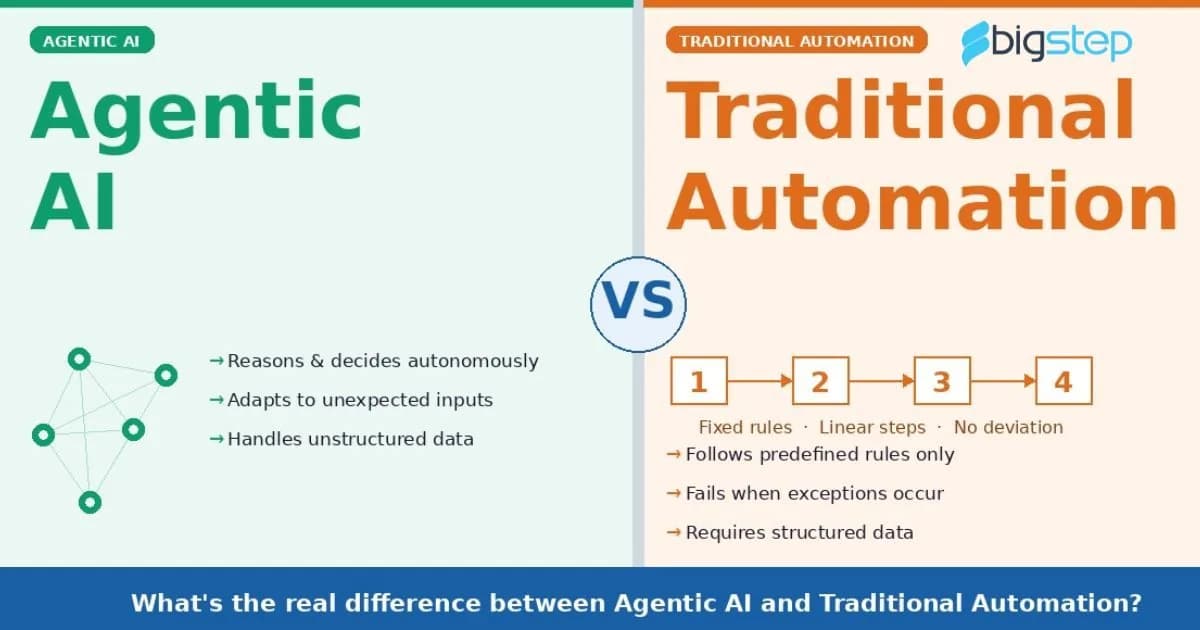
• Agentic workflows. Autonomous or semi-autonomous systems that reason, plan, and act across tools and data sources. This is where failure modes compound across steps, and where governance matters most.
The further you move down the list, the more the hidden costs we are about to unpack start to bite.
The Four Hidden Costs of Unchecked AI-Assisted Development
1. Silent Bugs at Scale
This is the failure mode that surprises teams the most. AI-generated code compiles. It passes the tests the developer remembered to write. And it carries subtle logic errors, race conditions, and edge-case failures that only show up under production load.
The reason it slips through is uncomfortable to admit. AI code reads as plausible to a human reviewer, which means it gets approved faster than human-written code would. The same fluency that makes the output useful also makes it harder to scrutinize. Velocity becomes a multiplier on whatever defects nobody caught.
Must Read → Why Most LLM Projects Stall Before Production.
2. Security Drift
AI tools do not know your threat model. They do not know which library versions your security team has banned, which endpoints handle PII, or what your secrets management policy looks like. So they cheerfully suggest deprecated dependencies, generate code that bypasses input validation, and occasionally hardcode credentials that came from training data.
Junior engineers, working at AI-assisted pace, do not catch what AI misses. The OWASP LLM Top 10 now formalizes a category of risks specific to AI-integrated software, and most enterprise codebases have never been mapped against it.
3. Requirements Misalignment
This one is the most expensive, because automated checks cannot detect it. The code does what the prompt asked for. The prompt did not capture what the business actually needed. The result is features that compile, pass tests, ship to production, and quietly solve the wrong problem until a customer reports it or a metric moves the wrong way.
AI optimizes for plausible code. Your business logic is not always plausible. It is specific, sometimes counterintuitive, and shaped by constraints the model has no way to know about.
4. Code Quality Decay
Look at any individual pull request and the AI-assisted code looks fine. Look at the codebase twelve months later and the pattern becomes obvious. Inconsistent conventions across files. Duplicated logic with subtle variations. No architectural coherence between modules written by different engineers using different prompts.
Onboarding takes longer. Refactoring cost rises. The compounding interest on AI-assisted shortcuts gets paid by whoever inherits the system, usually the senior engineers you were hoping to free up for higher-leverage work.
How does your current setup compare?
BigStep applies a documented methodology to prevent each of these failure modes on every engagement. If you are governing AI use across your engineering org, we can walk you through the framework.
Talk to our team → Contact us
What Production-Grade AI Development Actually Looks Like
None of this is an argument against AI-assisted development. Slowing down adoption is not the answer, and would not work even if it were.
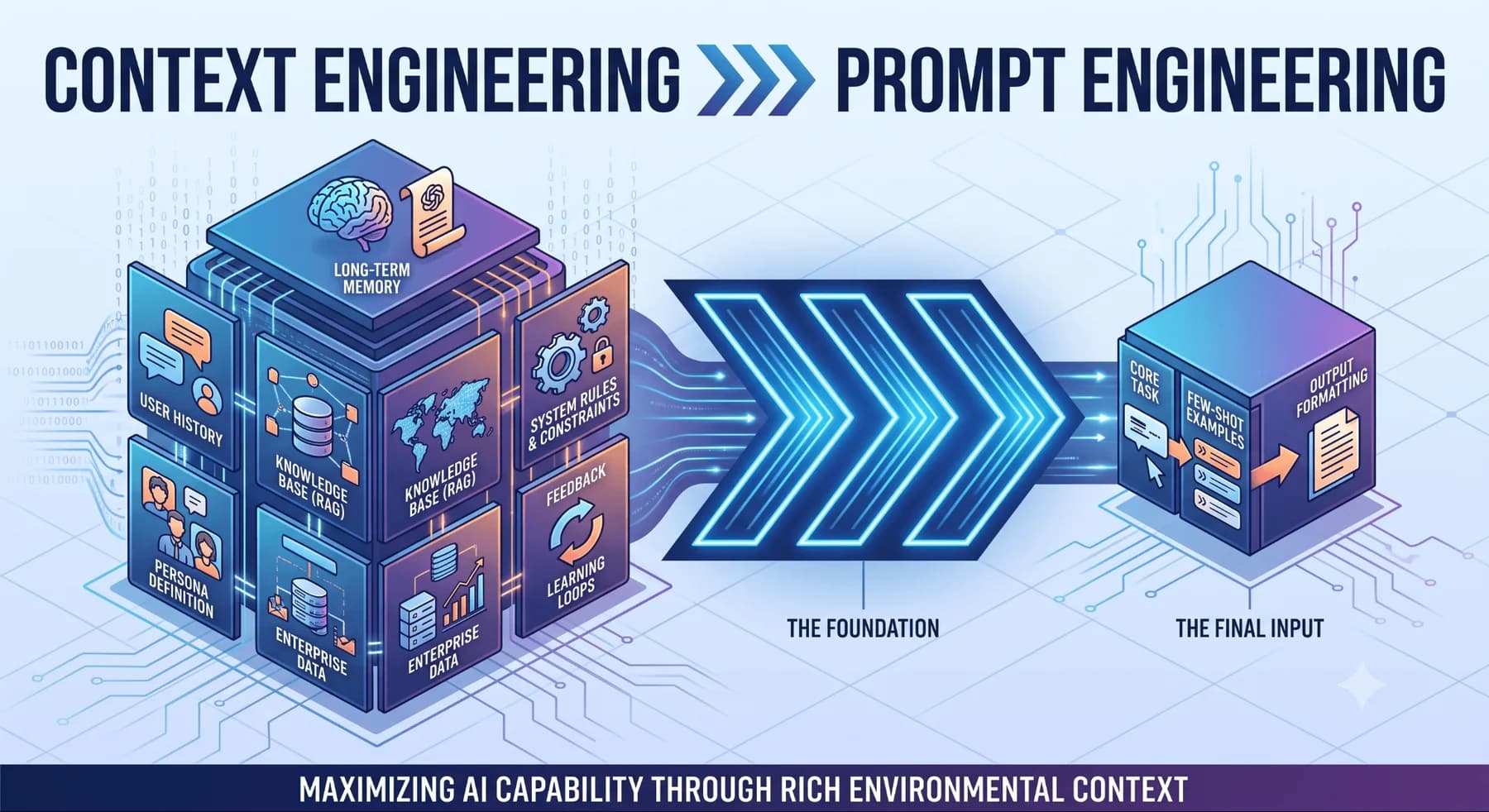
The answer is to wrap AI in the engineering discipline mature teams already apply to any production system. At BigStep, every AI engagement runs through five practices that are non-negotiable.
Senior-Led Code Review for Every AI-Generated Change
Junior engineers cannot catch what senior engineers catch. That has always been true. What AI changes is the volume of code junior engineers can now produce, which makes the gap matter more, not less.
Every AI-generated change passes through a senior reviewer who knows the system’s architecture, threat model, and historical failure patterns. Review stops being a checkbox and starts being the primary defense against silent bugs. Yes, it costs more. The bugs you do not catch cost more still.
Structured Output Validation
AI outputs that cross into production code or agentic workflows have to conform to schemas, not free-form text. Type checking, JSON schema validation, and contract tests at every LLM boundary catch the malformed responses that would otherwise propagate as runtime errors deeper in the stack.
The phrase trust but verify breaks down when the verifier is also AI. Structured validation is deterministic and auditable. It is the only honest control surface we have at LLM boundaries.
Automated Test Coverage Gates
AI-generated code clears coverage thresholds before merge, and mutation testing runs against high-risk modules. Coverage on its own is not enough. Mutation testing confirms that tests actually fail when behavior changes, which is the only reliable signal that the test suite has teeth.
Security Scanning in the AI Loop
Static analysis (Semgrep), dependency scanning (Snyk), secret detection, and prompt injection testing all run on every commit, not periodically. Security drift gets caught at the point of introduction, not at the next quarterly audit.
Observable Production Traces
AI systems demand deeper observability than traditional software. What was the prompt? What did the model return? Which tools did the agent call, in what order, with what arguments? OpenTelemetry-based tracing across the AI execution path is the foundation for production debugging, performance work, and post-incident learning.
Without it, an AI failure in production is unreproducible. And unreproducible failures are the ones that recur.
How to Evaluate an AI Development Agency: Seven Questions to Ask
Use these in your next vendor evaluation. The quality of the answers will tell you, fast, whether you are talking to a production-grade builder or someone riding the hype cycle.
- What is your senior-to-junior review ratio for AI-generated code, and how is it actually enforced?
- How do you validate structured outputs at LLM boundaries in production systems?
- What is your minimum test coverage threshold, and do you apply mutation testing to high-risk modules?
- How do you handle dependency drift and security scanning in AI-assisted pipelines?
- What observability do you build into AI features by default, before launch?
- Can you share a redacted post-mortem from an AI feature you shipped to production?
- What is your maintenance and handoff model after the initial build is complete?
- A capable partner will answer all seven with specifics. If the answer reduces to we use AI tools and follow best practices, you are looking at marketing, not methodology.
Frequently Asked Questions
What is AI-assisted development?
AI-assisted development is the use of large language models and AI tools (Copilot, Cursor, Claude, and others) to generate, refactor, or review code during the software development lifecycle. It accelerates output, but introduces risks like silent bugs, security drift, requirements misalignment, and long-term code quality decay that require governance to manage.
What are the biggest risks of AI-generated code in production?
Four show up consistently. Silent logic bugs that pass review but fail in production. Security drift from pasted secrets and deprecated dependencies. Requirements misalignment, where the code compiles but solves the wrong problem. And long-term code quality decay from inconsistent patterns across the codebase.
How should enterprises govern AI use in software development?
The baseline practices: senior-led code review for AI-generated changes, structured output validation at LLM boundaries, automated test coverage gates with mutation testing, integrated security scanning in CI, and OpenTelemetry-based observability for any AI execution path that reaches production.
Should we build AI features in-house or hire an AI development agency?
Build in-house when AI is core to your product moat and you can hire and retain senior AI engineers. Partner with an agency when speed to production matters, when proven methodology beats building one from scratch, or when your in-house team is focused on the core product and AI is a supporting capability.
The Bottom Line
Production-grade AI development is a discipline, not a default. The teams that win the next decade will not be the ones that adopted AI tools fastest. They will be the ones that wrapped AI adoption in the engineering rigor that turns velocity into durable advantage instead of accumulated risk.
If you are deciding how to build AI products, features, or agentic workflows for your enterprise, the methodology in this article is the bar to hold any partner accountable to. Internal or external. No exceptions.
Building AI features that survive production is not optional anymore.
BigStep partners with enterprise engineering teams across the US, UK, and Europe to build AI products and agentic workflows with the methodology rigor production demands.
Talk to our team → Contact us